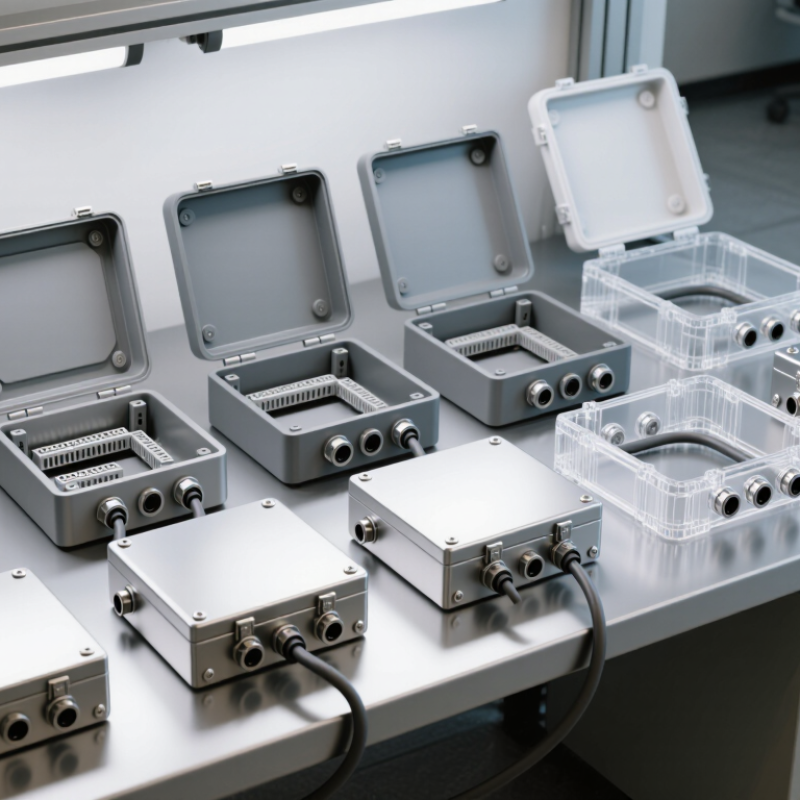
| 1. General-Purpose Junction Box | ABS, polycarbonate, or coated steel | Joining and protecting wiring, terminal blocks, and small electrical components in buildings or equipment. | Check internal space, cable-entry options, mounting points, lid access, and whether the material suits the installation environment. | Choose an ingress-protection rating appropriate to dust and water exposure. Cable glands and covers must be installed as specified to maintain the enclosure’s rating. |
| 2. Outdoor Weatherproof Enclosure | UV-stabilized polycarbonate, fiberglass-reinforced polyester, or coated metal | Outdoor controls, sensors, small distribution components, and equipment exposed to rain or sunlight. | Consider UV exposure, temperature range, condensation, mounting orientation, and whether the enclosure will receive direct water spray. | IP65 indicates dust-tight protection and protection against water jets under specified test conditions. Confirm the complete assembly—including seals and cable entries—meets the required rating. |
| 3. Corrosion-Resistant Enclosure | Stainless steel or fiberglass-reinforced polyester | Food-processing areas, washdown zones, coastal locations, and installations exposed to corrosive cleaning agents or atmospheres. | Match material and finish to the chemicals, salt exposure, cleaning routine, and required hygiene practices. Stainless steel grade selection matters. | “Corrosion-resistant” does not mean suitable for every chemical or marine environment. Verify material compatibility, gasket compatibility, and the enclosure’s tested ingress rating. |
| 4. Die-Cast Aluminum Enclosure | Die-cast aluminum, sometimes with a painted or anodized finish | Compact instrumentation, machine controls, communication devices, and applications where a rigid metal housing is useful. | Assess enclosure size, heat dissipation, weight, surface finish, grounding requirements, and compatibility with nearby metals. | Aluminum can help conduct heat, but it does not replace thermal design. Check sealing details and corrosion risks in wet or dissimilar-metal installations. |
| 5. Wall-Mount Control Enclosure | Painted steel, stainless steel, polycarbonate, or fiberglass-reinforced polyester | Wall-mounted control panels, automation equipment, small drives, and operator or maintenance components. | Allow room for wiring bends, devices, ventilation or cooling, door swing, and future maintenance. Confirm mounting strength and access clearance. | Select a rating for the actual indoor or outdoor environment. Ventilation openings can reduce protection against dust and water unless suitable rated components are used. |
| 6. Floor-Standing Electrical Cabinet | Painted steel or stainless steel | Larger control systems, power distribution equipment, and assemblies needing substantial internal mounting space. | Review dimensions, equipment weight, cable-entry location, lifting and anchoring needs, door access, and the available floor footprint. | Check heat-load requirements, enclosure ventilation, and the floor’s load capacity. The protection rating depends on the cabinet design and all installed openings and accessories. |
| 7. DIN-Rail Modular Enclosure | Polycarbonate, ABS, or sheet metal | Compact control and monitoring assemblies built around DIN-rail-mounted terminals, relays, or electronic modules. | Confirm rail type, module width, usable depth, wiring access, and whether the design allows enough room for heat-producing components. | Often suited to protected indoor panels. For exposed locations, verify the enclosure’s rating and the compatibility of glands, covers, and ventilation features. |
| 8. Transparent-Lid Enclosure | Polycarbonate or another transparent engineering plastic | Applications where status indicators, displays, or internal components need to be viewed without opening the enclosure. | Check clarity, impact resistance, chemical compatibility, UV exposure, and whether the lid material is suitable for the operating temperature. | A clear cover does not automatically provide UV resistance or a particular ingress rating. Confirm the rating of the complete enclosure and its installed components. |
| 9. Portable Handheld Enclosure | ABS, polycarbonate, or a blend of engineering plastics | Portable instruments, handheld controllers, test devices, and small battery-powered electronics. | Prioritize grip, impact resistance, operating comfort, button and display layout, battery access, and provisions for cable strain relief. | Protection depends on seams, buttons, connectors, and battery doors as well as the shell. Verify the rating for the assembled device, not just the empty case. |
| 10. Certified Hazardous-Location Enclosure | Materials and construction specified by the applicable certified product design | Electrical equipment intended for locations where flammable gases, vapors, dust, or fibers may create an explosive atmosphere. | Identify the required hazardous-area classification, zone or division, gas or dust group, temperature class, and applicable local regulations before selection. | Use only equipment certified or approved for the specific location and installation. A standard enclosure, by itself, does not make electrical equipment suitable for a hazardous area. |