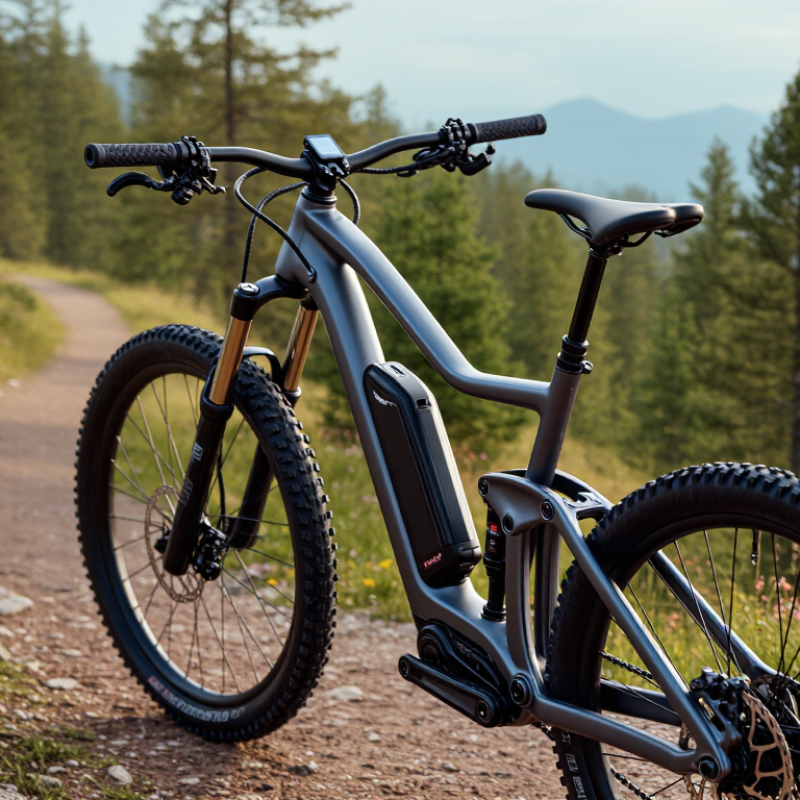
| 1 | Confirm the EU EPAC cutoff | For an EU EPAC, verify that assistance cuts off when pedaling stops and is progressively reduced and finally cut off before the bicycle reaches 25 km/h. The motor’s maximum continuous rated power must not exceed 250 W. | These are key conditions for the EPAC classification under EU rules. Assistance above the cutoff is not provided, though the rider can continue faster by pedaling or coasting. |
| 2 | Match the bike to your trails | Compare the intended use—cross-country, trail, or technical downhill—with the bike’s geometry, suspension travel, tires, and component specifications. | A setup designed for smoother cross-country routes may feel less suitable on steep, rough, or jump-filled trails. |
| 3 | Check frame fit and reach | Use the maker’s size chart as a starting point, then check standing clearance, reach to the handlebar, and saddle adjustment. If possible, test-ride the bike. | A suitable fit supports control and comfort. A size label alone does not account for every rider’s proportions or preferences. |
| 4 | Compare battery capacity realistically | Check battery capacity in watt-hours (Wh), removable-battery options, charging time, and replacement availability. Treat advertised range as an estimate. | Actual range varies with terrain, rider and cargo weight, assist level, temperature, tire pressure, and riding style; a larger Wh figure does not guarantee a specific distance. |
| 5 | Test motor response on climbs | If possible, try the bike on a climb and assess how smoothly assistance starts and changes. Check the available assist modes and controls. | Smooth, predictable assistance can make technical climbs easier to manage. Motor feel is affected by both the system and the way the rider pedals. |
| 6 | Inspect the brakes | Check brake type, rotor condition and size, lever reach, and the availability of replacement pads. Test braking in a safe area before riding trails. | An electric mountain bike can be heavy, and dependable braking is important for controlling speed on descents and in changing conditions. |
| 7 | Choose suspension for your terrain | Compare fork and rear-suspension travel, adjustment options, and service requirements. A hardtail has front suspension only; a full-suspension bike has front and rear suspension. | Suspension affects comfort, traction, control, maintenance, and price. More travel is not automatically better for every route or rider. |
| 8 | Review total weight and handling | Check the listed bike weight and, if possible, lift and maneuver the bike. Consider how you will transport, store, and carry it up stairs. | The motor and battery add weight compared with many non-electric mountain bikes, which can affect handling when assistance is off and make lifting more difficult. |
| 9 | Check tires, wheels, and clearance | Look at tire width and tread, wheel size, tubeless compatibility, and frame clearance. Confirm that replacement tires and tubes are easy to source. | Tire choice influences grip, rolling feel, and puncture protection. The best tread depends on the surfaces and conditions you usually ride. |
| 10 | Plan for servicing and safe charging | Before buying, check where the electrical system and suspension can be serviced, how the battery is charged, and what the owner’s manual requires for storage and care. | Routine maintenance and following the supplied charging instructions help keep the bike usable and support safe battery handling. |