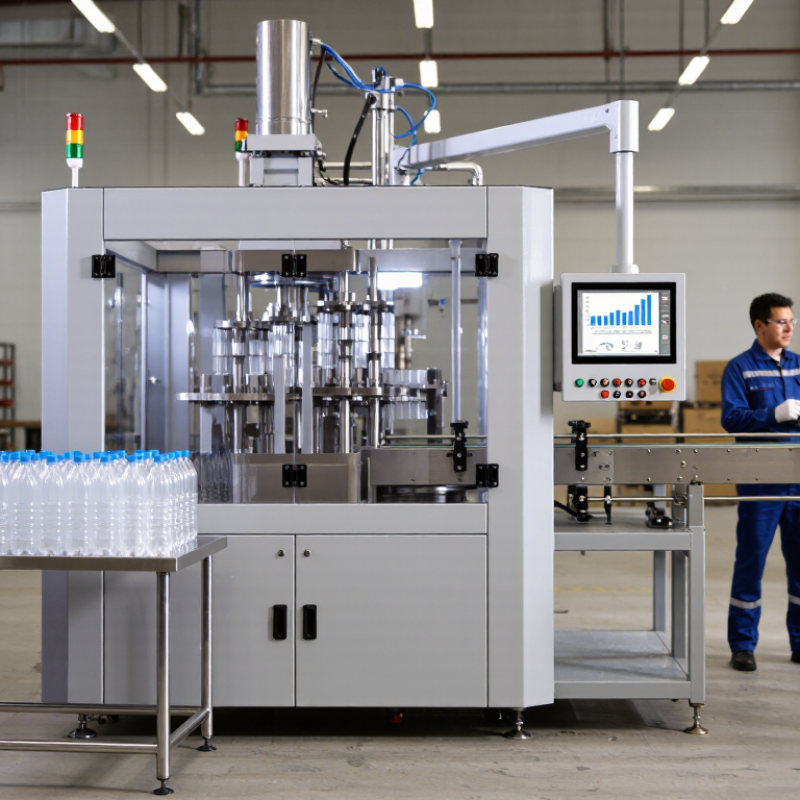
| Typical machine scope | 2-cavity PET stretch blow machine; approximately 3,000–4,000 bottles/hour | 2-cavity PET stretch blow machine; approximately 2,500–3,500 bottles/hour | 2-cavity PET stretch blow machine; approximately 2,000–3,000 bottles/hour | 2-cavity PET stretch blow machine; approximately 3,000–4,000 bottles/hour | 2-cavity PET stretch blow machine; approximately 2,500–3,500 bottles/hour |
| Indicative equipment price, EXW | US$28,000–48,000 | US$35,000–60,000 | US$30,000–55,000 | US$85,000–150,000 | US$40,000–70,000 |
| Typical tooling cost for one PET bottle mold | US$2,500–6,000 | US$3,500–8,000 | US$3,000–7,000 | US$8,000–20,000 | US$4,000–9,000 |
| Estimated total landed cost to a major seaport | EXW price + approximately 8%–18% for export packing, inland haulage, ocean freight, and basic cargo insurance | EXW price + approximately 8%–20% | EXW price + approximately 10%–24% | EXW price + approximately 6%–16% within Europe; more for intercontinental delivery | EXW price + approximately 8%–18% |
| Normal production lead time | 45–75 calendar days | 60–90 calendar days | 60–100 calendar days | 90–180 calendar days | 60–100 calendar days |
| Indicative ocean transit time | 18–40 days, route dependent | 18–42 days, route dependent | 25–50 days, route dependent | 10–30 days within Europe; 25–50 days overseas | 15–35 days, route dependent |
| Common trade terms offered | EXW, FOB, CIF, and FCA | EXW, FOB, CIF, and FCA | EXW, FOB, CIF, and limited DAP support | EXW, FCA, DAP, and project-based DDP | EXW, FOB, CIF, and FCA |
| Electrical and safety documentation | Usually available: wiring diagram, risk assessment, manual, and CE technical file on request | Usually available: wiring diagram, manual, and declaration documents; verify test evidence | Usually available: manual and electrical documents; confirm guarding and emergency-stop testing | Typically comprehensive documentation aligned with applicable EU machinery requirements | Usually available: standard manuals and electrical drawings; customer-specific documentation may cost extra |
| Quality-management evidence | ISO 9001 may be available; request current certificate and issuing-body verification | ISO 9001 commonly available; audit scope should be checked | ISO 9001 availability varies; conduct a process audit before payment | Documented quality systems and factory acceptance testing are commonly offered | ISO 9001 availability varies; inspect production and final-testing records |
| Energy and operating profile | Competitive purchase price; verify heater power, compressor demand, and actual output at target bottle weight | Moderate energy efficiency; servo and infrared-heating upgrades may be optional | Competitive operating cost; local utility and compressed-air quality must be assessed | Often stronger automation and energy-management features, with higher capital cost | Balanced efficiency; confirm spare-parts availability for proprietary controls |
| Installation and commissioning | Remote commissioning commonly included; on-site service usually extra | Remote support standard; paid engineer visits typically available | Remote commissioning common; local integrator support may be needed | On-site installation and validation packages commonly available | Remote support standard; regional field service depends on destination |
| Warranty structure | Typically 12 months from shipment or commissioning; clarify coverage exclusions | Typically 12 months; consumables and misuse usually excluded | Typically 12 months; response and freight terms require written confirmation | Typically 12–24 months, often with defined service-level options | Typically 12 months; confirm whether labor and travel are included |
| Spare-parts support | Common parts often available from stock; specialized control parts may take 2–8 weeks | Standard parts generally available; maintain a critical-spares kit | Lead times can vary by component; request a two-year recommended-parts list | Structured parts catalogs and long-term support are commonly available | Standard parts usually manageable; proprietary items require advance planning |
| Best fit for global sourcing | Cost-sensitive buyers with technical staff and established import processes | Buyers seeking a balance of price, customization, and export experience | Buyers prioritizing competitive pricing and regional service access | High-utilization plants prioritizing documentation, automation, and lifecycle support | Buyers needing moderate customization with shorter regional communication lines |
| Overall sourcing position | Best initial price potential | Strong value-to-support balance | Competitive for budget-led projects | Best documentation and lifecycle depth | Good regional sourcing compromise |