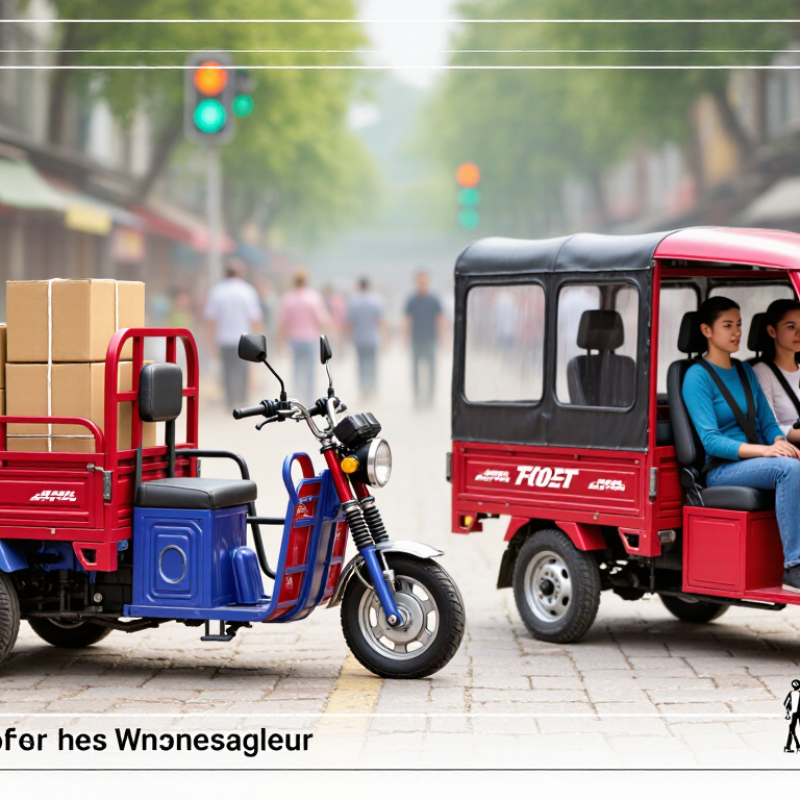
| Urban cargo | Typically a 150–200 cc four-stroke petrol engine; suited to frequent stops and moderate loads on paved roads. Check the maker’s rated payload, not just the size of the cargo bed. | For planning, allow roughly 3.5–5.0 L/100 km under working conditions. Actual consumption varies with load, traffic, road gradient, tyre pressure, and driving style. | Confirm the permitted vehicle category, registration class, required driving licence, and whether the cargo body and load comply with local dimensions and weight limits. |
| Heavy-duty cargo | Typically a 200–250 cc petrol engine with a suitably rated chassis, brakes, suspension, and rear axle. Select by verified payload and gross vehicle weight rather than engine capacity alone. | Heavier loads and hills can increase fuel use and wear on tyres, brakes, clutch, chain or final drive, and suspension. Avoid exceeding the manufacturer’s rated limits. | Check axle and gross-weight limits, load restraint rules, required reflectors or lamps, and any commercial-vehicle inspection or permit requirements. |
| Passenger transport | Choose a passenger-configured model with approved seating, passenger handholds, suitable footrests, and brakes designed for the vehicle’s rated passenger capacity. | Passenger load affects acceleration, braking distance, fuel consumption, and component wear. Keep the vehicle within its rated seating and weight limits. | Passenger carriage may require a specific vehicle approval, commercial registration, operating permit, insurance, or driver qualification. A cargo model is not automatically legal for passengers. |
| Mixed cargo and passenger use | Use only a configuration explicitly approved for both purposes. Verify that the combined occupants and cargo remain within the stated payload and that seating does not obstruct the cargo or safety equipment. | Mixed loads can shift the centre of gravity. Secure cargo, distribute weight evenly, and check tyre pressure against the load specified in the owner’s manual. | Do not add seats or alter the frame without the required approval. Local rules may classify a converted or dual-purpose vehicle differently. |
| Fuel-cost estimate | Example planning assumption: 4.0 L/100 km average consumption and petrol priced at US$1.10/L. | Estimated fuel cost: about US$4.40 per 100 km, or US$0.044 per km. Replace the assumed fuel price and consumption with local figures; this excludes oil, repairs, tyres, insurance, and depreciation. | Fuel prices, taxes, and required insurance vary by location. This estimate is for budgeting only, not a guaranteed operating cost. |
| Pre-use checks | Check tyres, brakes, steering, lights, horn, mirrors, leaks, fasteners, and cargo or passenger restraints before operation. | Correct tyre pressure and prompt attention to unusual noise, vibration, smoke, or fluid leaks can help prevent more costly damage. | Ensure required safety equipment is present and working. Do not operate a vehicle with defective brakes, tyres, lights, or steering components. |
| Engine oil and routine servicing | Use the oil grade and service intervals specified in the owner’s manual. Check the oil level at the interval stated by the manufacturer. | Service intervals differ by engine and operating conditions. Frequent short trips, dust, heavy loads, and high temperatures may require more frequent inspection or servicing. | Keep service and repair records where required for inspection, warranty, fleet, or commercial-use purposes. |
| Air filter, spark plug, and fuel system | Inspect and service these items according to the maintenance schedule; dusty work environments may call for more frequent air-filter attention. | A clogged air filter or poorly maintained ignition and fuel system can reduce performance and increase fuel consumption. Use compatible parts and follow the manual. | Any emissions or noise requirements depend on local vehicle standards and inspection rules. Do not remove required emissions-control equipment. |
| Brakes, tyres, and drivetrain | Inspect brake operation, tyre condition and pressure, wheel bearings, chain or other final-drive components, and suspension regularly. | Heavy loads, rough roads, and stop-start use can accelerate wear. Replace worn safety-critical parts promptly and have complex repairs performed by a qualified technician. | Tyre type, tread condition, brake performance, and equipment standards may be checked during roadworthiness inspections. |
| Registration and road use | Before purchase, obtain the vehicle identification details and confirm the exact category under the rules where it will be operated. | Budget for registration, inspection, insurance, fuel, scheduled service, and wear items; costs depend on the vehicle and jurisdiction. | Requirements may include registration, roadworthiness inspection, third-party or commercial insurance, a valid licence, number plates, and local operating permits. Verify with the relevant transport authority. |
| Load and passenger safety | Follow the stated payload and seating capacity. Secure loads so they cannot shift, fall, block lamps, or interfere with steering or braking. | Overloading increases fuel use and can damage tyres, brakes, suspension, and the frame, while reducing stability and control. | Follow local rules for helmets, seat belts where fitted or required, passenger limits, load projection, and cargo restraint. Requirements differ by jurisdiction. |