2026 Best Tree Lights for Global Buyers?
Choosing the best Tree Lights for global buyers in 2026 requires more than comparing brightness and price. It requires evidence.
The U.S. Department of Energy reports that LED bulbs use at least 75% less energy than incandescent bulbs and can last up to 25 times longer. That difference matters on a tall outdoor tree, where replacement work becomes costly and inconvenient. Grand View Research also identifies decorative lighting as a growing global market, driven by energy efficiency, smart controls, and seasonal design demand. However, market reports often group Tree Lights with broader decorative lighting categories. Their figures are useful, but not perfectly precise.
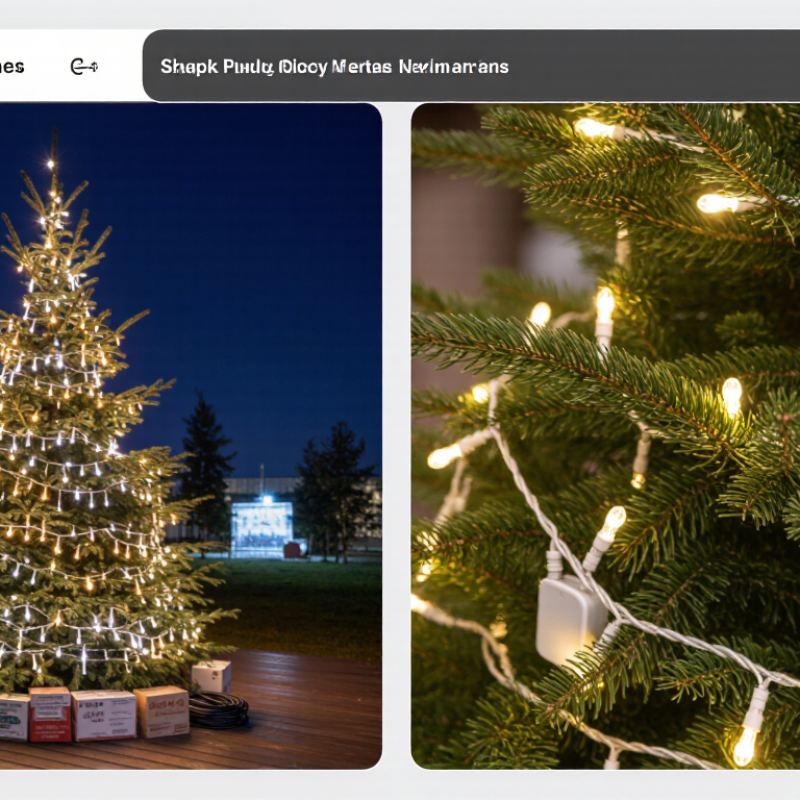
Nancy Clanton, a respected lighting designer and educator, has said, “Light is the fourth dimension of architecture.” Her observation applies to holiday trees too. A warm 2,700K strand can make a wooden porch feel welcoming, while cool white light can sharpen a modern commercial display. Small details matter. Look for sealed connectors, clear voltage labeling, stable wire insulation, and suitable ingress protection for outdoor use. Smart functions are attractive, but poor app support can become frustrating after one season.
This guide evaluates Tree Lights through practical buyer experience, technical performance, and regional purchasing needs. It considers brightness, color consistency, energy use, weather resistance, warranty terms, packaging, and compatibility with local electrical systems. No ranking is perfect. Climate, tree size, installation habits, and personal taste can change the final choice. The strongest product is not always the brightest one; it is the one that remains safe, reliable, and visually balanced after repeated use.
What Tree Lights Are and How They Work
2026 Best Tree Lights for Global Buyers?
What Tree Lights Are and How They Work
Tree lights are small electric lamps arranged along an insulated cable. They create decorative light when current passes through each lamp or LED. Most modern sets use LEDs because they produce less heat and consume less electricity. They also remain bright with smaller power supplies. That matters.
Inside an LED set, a driver controls the incoming electricity. The driver changes household power into a safer output for the lights. Some sets connect LEDs in series, while others use parallel circuits. A series fault can darken an entire section. Parallel wiring may keep other sections working. The design affects repair, brightness, and reliability.
For global buyers, check the rated voltage before ordering. A 120-volt set should not connect directly to a 230-volt outlet. The plug shape, adapter rating, cable length, and local certification also deserve attention. Outdoor use requires suitable weather protection, often shown through an IP rating. Keep connectors away from standing water. Simple, but often missed.
In practical selection, I would inspect the cable flexibility and timer response, not only the light color. Warm white looks softer on green branches, while cool white appears sharper against snow. Flashing modes can seem impressive online but feel tiring indoors. The word “best” is slippery. A bright set may still disappoint if its controller fails after one season. Check replacement policies and clear electrical instructions before purchase.
Regional Standards, Plug Types, and Weather Requirements
2026 Best Tree Lights for Global Buyers?
Regional Standards, Plug Types, and Weather Requirements
Choosing tree lights for international use requires more than checking brightness or color. Electrical standards differ by market. North America commonly uses 120 volts and 60 hertz. Much of Europe uses 220–240 volts and 50 hertz. The United Kingdom and Australia use different plug designs. A simple travel adapter changes the socket shape, not the voltage. Check the product label, transformer rating, and local approval marks before installation. Standards can also vary within regional markets.
For outdoor trees, inspect the weather rating carefully. An IP44 rating generally handles splashing water, while IP65 offers stronger protection against dust and water jets. These ratings do not guarantee safe use when connectors sit in puddles. Keep junctions elevated and protect the transformer from direct rain. Cold regions need flexible cables that resist cracking. Hot, sunny areas need insulation with good ultraviolet resistance. Strong wind also demands secure clips rather than loose hanging wires.
A practical buying checklist should include plug type, voltage, frequency, cable length, and replacement parts. It should also confirm whether the lights are approved for indoor or outdoor use. Local rules may require residual-current protection, especially around gardens and wet surfaces. My own checklist is not perfect. Product labels can be unclear, and online listings sometimes omit regional details. Ask the seller for test documents and installation guidance. When specifications conflict, pause the purchase and consult a qualified local electrician. Safety should not depend on guesswork.
How to Choose the Best Tree Lights for Your Needs
2026 Best Tree Lights for Global Buyers?
Choosing the best tree lights starts with the tree, not the trend. Measure its height, branch width, and distance from the nearest outlet. A 1.8-meter tree usually needs more cable than expected, especially when lights spiral around inner branches. For living rooms, warm white light between 2,200K and 3,000K often creates a softer appearance. Cool white can look sharper outdoors. I have found that adjustable brightness is more useful than excessive brightness. Too much glare hides ornaments.
Energy use also matters. The U.S. Department of Energy reports that LED bulbs use at least 75% less energy than incandescent bulbs and can last up to 25 times longer. Look for low-voltage LED strings, insulated wiring, and a reliable timer. Outdoor buyers should check the product’s IP rating, temperature range, and moisture instructions. Indoor-only lights do not belong on exposed balconies. Check the plug, voltage, and local conformity requirements before ordering internationally. IEC 60598-2-20 is a relevant safety standard for light chains.
Color consistency deserves attention. Some strings show uneven white tones between sections. That small defect becomes obvious on a dark green tree. Read independent test results, not only seller descriptions. Confirm total wattage, replaceability, cable length, and controller quality. A remote may fail after storage. It happens. Packaging should protect connectors from bending and moisture. The best choice balances safety, energy efficiency, appearance, and practical installation—not just the lowest price.











