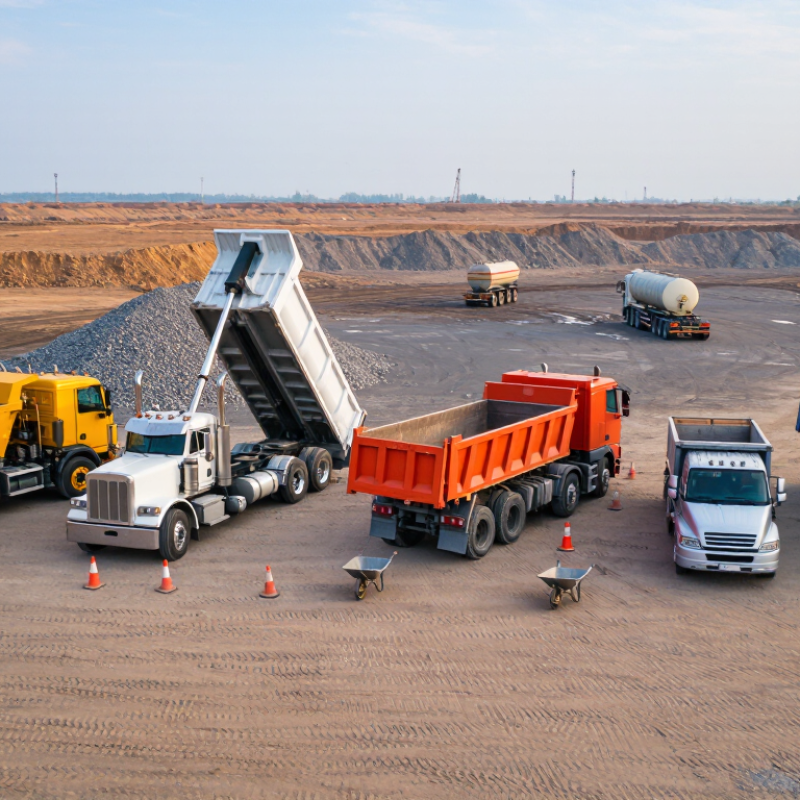
| Heavy-Duty Diesel Rigid Dump Truck | 6×4 or 8×4 chassis; rear tipping body; high-clearance construction specification | 20–40 t | 250–450 kW | 35–65 L/100 km | 500–900 km per refueling cycle | Long-haul aggregates, mining support, infrastructure projects, remote worksites | Requires the latest applicable heavy-duty diesel certification, particulate filtration, selective catalytic reduction, and low-sulfur fuel. Buyers should verify local requirements because 2026 rules differ by jurisdiction. |
| Articulated Diesel Dump Truck | 6×6 articulated hauler; oscillating joint; all-wheel drive for uneven terrain | 25–45 t | 300–600 kW | 45–90 L/100 km | 350–700 km per refueling cycle | Quarries, earthmoving, off-road construction, steep or low-traction routes | Off-road machines may follow different rules from on-road trucks. Confirm whether the vehicle is regulated under road-vehicle or non-road-engine standards in the destination market. |
| CNG Rigid Dump Truck | 6×4 or 8×4 chassis; spark-ignited natural-gas engine; compressed-gas cylinders mounted behind the cab or along the frame | 18–35 t | 220–400 kW | 35–60 kg CNG/100 km | 250–500 km per refueling cycle | Urban construction, municipal projects, regional aggregate delivery where gas stations are available | Tailpipe nitrogen oxides and particulate emissions can be lower than conventional diesel, but methane leakage and fuel origin affect total climate impact. Compliance depends on the local heavy-duty certification pathway. |
| CNG Articulated Dump Truck | 6×6 articulated configuration; gas engine; reinforced frame and high-capacity storage system | 25–40 t | 300–500 kW | 45–75 kg CNG/100 km | 200–400 km per refueling cycle | Controlled quarry or construction fleets with on-site or nearby high-flow CNG refueling | The additional cylinder weight can reduce payload. Safety certification, pressure-vessel inspection, venting, and fueling-site requirements must be checked before import or fleet deployment. |
| Battery-Electric Rigid Dump Truck | 4×2, 6×4, or 8×4 chassis; high-voltage battery pack; electric drive axle or e-axle; regenerative braking | 15–30 t | 200–500 kW peak | 1.0–2.0 kWh/km | 120–300 km, depending on load, terrain, and temperature | Urban construction, quarry shuttle routes, ports, recycling, and fixed-base operations | Produces zero tailpipe emissions during operation. It can support zero-emission-zone access, but buyers must assess battery manufacturing, electricity generation, charging standards, and local weight limits. |
| Battery-Electric Articulated Dump Truck | 6×6 articulated hauler; large traction battery; electric drive motors; regenerative downhill control | 25–45 t | 400–900 kW peak | 1.5–3.0 kWh/km | 80–250 km, depending on duty cycle and charging access | Short-cycle quarrying, mine-site haulage, tunneling, and return-to-base operations | Zero tailpipe emissions can simplify compliance in restricted areas. High-voltage maintenance procedures, thermal management, charging capacity, and battery payload trade-offs are critical purchasing factors. |
| Electric-Assisted or Hybrid Dump Truck | Diesel engine combined with electric motor, battery, and regenerative braking; rigid or articulated chassis | 20–40 t | 250–600 kW combined or peak output | Typically 10–25% lower fuel use than a comparable conventional diesel cycle | Similar to diesel, subject to fuel-tank and battery capacity | Repeated stop-start routes, haul roads with downhill sections, and fleets needing gradual electrification | Still requires certification as an internal-combustion vehicle unless designed for a separate zero-emission category. Verify real-world carbon reduction rather than relying only on laboratory fuel-consumption data. |