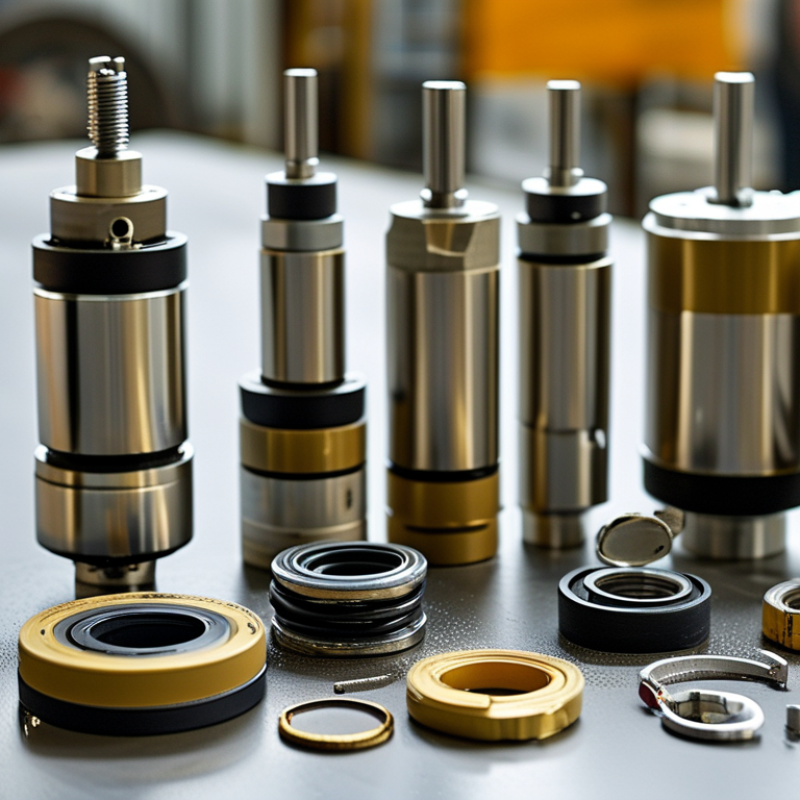
| 1 | Cylinder Tube or Body | The pressure-containing chamber in which the piston travels. | Compressed air enters one side of the tube and creates pressure on the piston, producing linear movement. | Anodized aluminum, stainless steel, or coated steel. | Bore diameter, stroke length, pressure rating, corrosion resistance, and mounting envelope. | Check for dents, internal scoring, corrosion, and air leakage around the tube joints. |
| 2 | Piston | A movable disc that separates the two air chambers inside the cylinder. | The pressure difference between the two sides generates force according to the effective piston area. | Aluminum alloy, engineered polymer, or coated steel. | Bore compatibility, load force, speed, temperature, and resistance to wear. | Look for uneven wear, sticking, reduced force, or bypass leakage across the piston seal. |
| 3 | Piston Rod | The rod that transfers piston force to an external load or linkage. | The rod extends or retracts as air pressure moves the piston, creating linear output motion. | Chromium-plated carbon steel, stainless steel, or nickel-plated steel. | Rod diameter, stroke, buckling load, side-load exposure, surface hardness, and corrosion environment. | Inspect for bending, pitting, scratches, misalignment, and damage to the rod seal. |
| 4 | Seals and Wipers | Flexible components that retain compressed air and prevent contaminants from entering. | Seals maintain an air barrier around the piston and rod while allowing controlled sliding movement. | Polyurethane, nitrile rubber, fluorocarbon rubber, or other engineered elastomers. | Temperature, air quality, lubricant compatibility, pressure, speed, and chemical exposure. | Use a leak test and check for hardened, cracked, swollen, or excessively worn sealing lips. |
| 5 | End Caps | Front and rear closures that seal the cylinder and provide mounting or port locations. | They contain the air pressure and guide the piston rod through the front cap. | Aluminum alloy, stainless steel, or coated steel. | Port thread standard, mounting style, pressure rating, environmental protection, and serviceability. | Check fasteners, cap seals, mounting threads, cracks, and leaks at the end-cap joints. |
| 6 | Air Ports and Fittings | Threaded or push-in connections that deliver and exhaust compressed air. | Directional control valves route air through the ports to extend or retract the actuator. | Brass, nickel-plated brass, stainless steel, aluminum, and engineering plastics. | Thread standard, tube outside diameter, flow capacity, pressure rating, and installation space. | Apply leak-detection fluid and inspect threads, tubing cuts, fitting collets, and connection tightness. |
| 7 | Cushioning Components | Adjustable needles, cushion sleeves, or air-cushion passages used near the stroke ends. | They restrict exhaust air near the end of travel, reducing impact and noise during deceleration. | Steel, stainless steel, aluminum, brass, and polymer components. | Load inertia, operating speed, stroke length, adjustment range, noise limits, and cycle frequency. | Check for hard end-of-stroke impact, inconsistent stopping, blocked passages, or incorrect adjustment. |