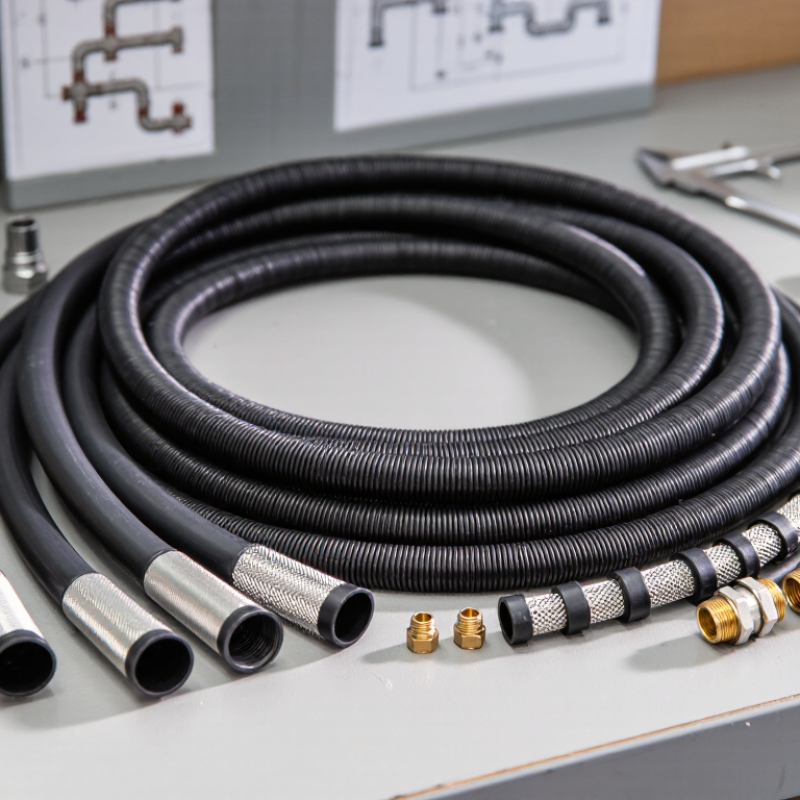
Understand the Application and Operating Conditions
A rubber hose should match its actual duty, not only its diameter. Identify the medium first. Water, air, oil, chemicals, and abrasive slurry affect the tube differently. Check the fluid temperature, concentration, pressure, and flow speed before selecting materials. A hose carrying hot water may need different construction from one carrying cool water.
Look closely at the working environment. Will the hose bend repeatedly, drag across concrete, or remain outdoors? Sunlight, ozone, vibration, and sharp edges can shorten its service life. Measure the minimum bend radius during operation, not while the hose lies straight. Also consider pressure surges. A pump starting suddenly can create loads that a normal pressure reading will miss.
Small details matter.
In practical inspections, failures often begin near fittings. Clamps, couplings, and poorly supported bends can create local stress. Select reinforcement that suits the pressure and movement requirements. Confirm compatibility with published technical data, and request test evidence when the application is critical. Standards and manufacturer instructions should guide the final decision.
Do not treat every operating condition as permanent. Temperatures may rise, cleaning fluids may change, and operators may pull the hose beyond its intended range. I have seen otherwise suitable hoses fail because storage conditions were ignored. That is a useful warning, although field assumptions can still be wrong. Record real operating conditions, inspect the hose regularly, and replace it when cuts, swelling, exposed reinforcement, or unusual stiffness appears.