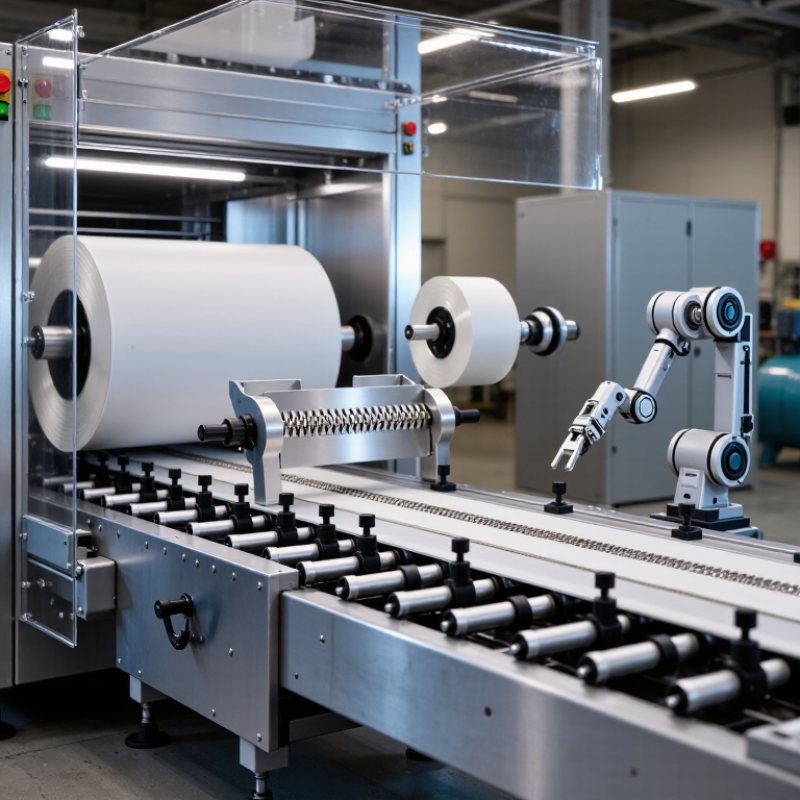
| Material Feeding System | Supplies zipper tape, chain, or finished zipper sections to the processing area. | Rollers, guides, and tension devices move the material at a controlled speed and keep it aligned. | Guide rollers, feed wheels, tension controls, and adjustable feed paths. | Stable feeding helps reduce wrinkles, skewing, material waste, and interruptions. |
| Unwinding Unit | Holds and releases rolls of zipper tape or chain. | A powered or controlled reel rotates as material is pulled into the machine. Tension control prevents sudden unwinding. | Reel shaft, brake or servo control, roll supports, and edge guides. | Consistent unwinding supports uniform length and reliable machine timing. |
| Alignment and Centering Guides | Keeps the zipper tape, teeth, or coil centered before processing. | Adjustable guides position the material along the programmed travel path. | Low-friction guide plates, rollers, sensors, and lateral adjustment mechanisms. | Accurate alignment improves the position of cutting, sealing, slider insertion, and sewing operations. |
| Length Measurement System | Measures the required zipper length or feed distance. | An encoder, measuring wheel, or servo feedback system tracks material movement and sends data to the controller. | Measuring wheel, rotary encoder, proximity sensor, or servo feedback. | Precise measurement supports repeatable product dimensions and reduces overfeeding. |
| Cutting Unit | Cuts continuous zipper material into specified lengths. | A blade, die, or heated cutting tool operates after the controller confirms the programmed length. | Mechanical blades for tape and chain; heated tools may be used for some synthetic materials. | Clean, repeatable cuts improve output consistency and minimize frayed or uneven ends. |
| End Stop or Top-Stop Unit | Creates or positions stops at the end of a zipper. | The machine places, crimps, molds, or heat-sets a stop according to the zipper construction and production method. | Metal stop applicators, forming tools, molds, or thermal elements. | Correct stop placement helps prevent slider separation during normal use. |
| Slider Insertion Mechanism | Installs the slider onto the zipper chain. | Guides separate or joined zipper elements into the slider and advances the slider to the programmed position. | Insertion guides, positioning jaws, pneumatic actuators, and changeable tooling. | Automated insertion improves assembly speed and reduces variation caused by manual placement. |
| Clamping and Positioning System | Holds the zipper securely during cutting, stopping, insertion, or inspection. | Pneumatic, electric, or mechanical clamps grip the material while the operation is performed. | Clamping jaws, fixtures, stops, and adjustable holders. | Firm positioning prevents movement-related defects and improves repeatability. |
| Drive System | Provides movement for rollers, cutters, feeders, and other operating parts. | Servo motors, stepper motors, or other electric drives receive commands from the control system. | Motor, gearbox, coupling, drive controller, and motion feedback devices. | Accurate motion control affects production speed, synchronization, and product quality. |
| Pneumatic System | Operates cylinders, clamps, cutters, and positioning mechanisms where compressed air is used. | Valves direct compressed air to actuators in a programmed sequence. | Air preparation unit, valves, cylinders, tubing, pressure regulator, and exhaust controls. | Reliable air pressure supports fast and repeatable mechanical actions. |
| Control System | Coordinates the machine sequence and stores operating parameters. | A programmable controller receives sensor signals and commands motors, valves, cutters, and alarms. | PLC or industrial controller, input/output modules, and motion-control software. | Centralized control enables repeatable recipes, automatic sequencing, and fault monitoring. |
| Human-Machine Interface | Allows an operator to set parameters and monitor machine status. | An industrial display provides access to length settings, speed, counters, alarms, and operating modes. | Touchscreen or control panel with password-protected settings where required. | Clear controls shorten setup time and make troubleshooting more efficient. |
| Detection and Inspection Sensors | Detects material presence, position, length, faults, and operating conditions. | Optical, proximity, pressure, or encoder signals are compared with programmed conditions. | Photoelectric sensors, proximity switches, limit switches, and vision systems when installed. | Automatic detection can reduce missed cuts, empty cycles, misalignment, and defective output. |
| Conveyor or Collection System | Transfers completed zipper pieces to a collection area or the next process. | Finished pieces are discharged by conveyor, chute, stacker, or guided collection tray. | Belts, trays, bins, stackers, and adjustable discharge guides. | Organized collection helps maintain continuous operation and simplifies counting and packing. |
| Safety System | Protects operators from moving parts, cutting tools, and unexpected machine operation. | Guards, interlocks, emergency stops, and safety circuits stop or inhibit hazardous motion. | Safety doors, emergency-stop buttons, protective covers, and safety relays. | Proper safety controls support safer operation and reduce the risk of injury or equipment damage. |
| Lubrication and Maintenance Points | Reduces wear and maintains smooth operation of mechanical parts. | Specified bearings, chains, guides, and moving assemblies receive periodic lubrication or inspection. | Lubrication ports, grease points, service panels, and replaceable wear parts. | Regular maintenance helps preserve accuracy, reduce downtime, and extend component life. |