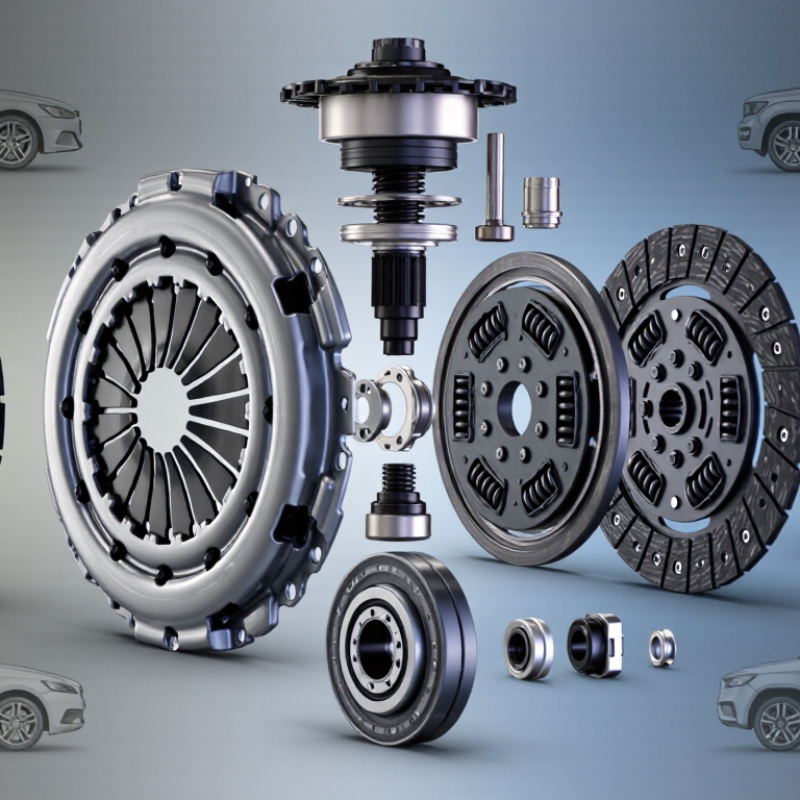
A 240mm clutch kit is not automatically stronger than every smaller option. For global buyers, the key question is capacity. Can the clutch handle engine torque with a 1.5× safety margin? Measure peak crank torque, not brochure horsepower. Then multiply that figure by 1.5.
If an engine produces 420 Nm, choose a kit rated for at least 630 Nm.
This buffer helps cover hard launches, heat, towing, and imperfect engagement. Real use is rough.
When comparing ten 240mm kits, inspect the testing conditions behind each torque rating. Some figures come from controlled laboratory tests, while others reflect short-term peak capacity. Friction material, pressure-plate force, flywheel condition, and disc design all affect performance.
A stronger pressure plate may hold more torque, but it can also increase pedal effort. That trade-off matters in daily traffic.
I once saw a high-capacity setup slip because the flywheel surface was uneven. The advertised rating did not solve poor installation.
Fitment requires equal attention. Verify spline count, disc hub depth, release-bearing travel, pilot-bearing size, and hydraulic compatibility. Regional vehicle versions may use different transmissions or flywheel patterns. Confirm service data before ordering.
A reliable supplier should provide measured specifications, test details, and replacement-part availability. I would rather reject a cheaper kit than guess about its torque rating. Even careful selection can miss real-world variables, especially after engine modifications or repeated high-temperature use.