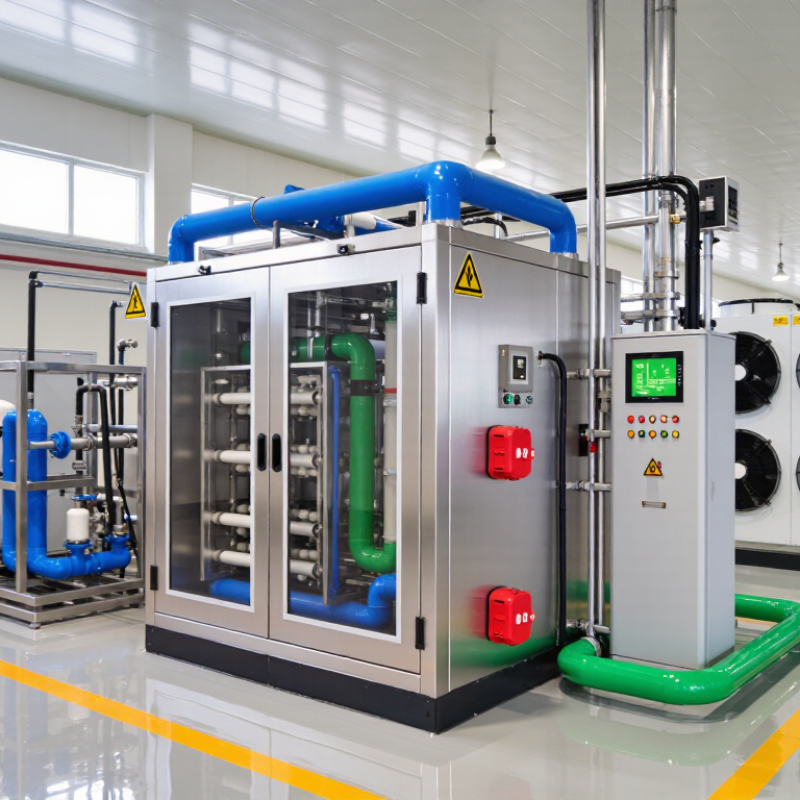
| Electrolyzer stack | Uses direct current to split water into hydrogen and oxygen in a series of electrochemical cells. | Each cell typically contains electrodes, an alkaline electrolyte, and a porous separator. Stack output depends on cell count, active area, and operating current. |
| Electrodes | Provide the surfaces where hydrogen is produced at the cathode and oxygen at the anode. | Alkaline electrolyzers commonly use nickel-based electrode materials because they are suitable for alkaline environments. |
| Separator or diaphragm | Separates the hydrogen and oxygen sides while allowing hydroxide ions to pass through the electrolyte. | It is designed to limit gas crossover while maintaining ionic conduction; it is not an impermeable barrier to electrolyte. |
| Alkaline electrolyte | Conducts ions between the electrodes and supports the electrochemical reactions. | A potassium hydroxide solution is commonly used. Electrolyte concentration and temperature are set according to the system design. |
| Power supply and rectifier | Converts incoming electrical power to controlled direct current for the electrolyzer stack. | Current and voltage control help regulate hydrogen production. Electrical protection and monitoring are part of the system design. |
| Gas–liquid separators | Separate hydrogen and oxygen from the electrolyte leaving the respective sides of the stack. | Separate gas paths are maintained for hydrogen and oxygen. The separated liquid is generally returned to the electrolyte circulation system. |
| Electrolyte circulation pumps | Circulate electrolyte through the stack and associated process equipment. | Circulation supports heat removal and helps maintain consistent electrolyte conditions throughout the system. |
| Cooling system or heat exchanger | Removes heat generated during electrolysis and keeps the process within its specified operating range. | Cooling capacity and control depend on stack size, operating conditions, and the plant's heat-rejection arrangement. |
| Hydrogen purification and drying unit | Reduces residual moisture and, where required, removes trace oxygen or other impurities from the hydrogen stream. | Purification stages are selected according to the required hydrogen quality and downstream application. |
| Gas control valves and piping | Direct and regulate hydrogen, oxygen, and electrolyte flows between process equipment. | Hydrogen and oxygen piping are kept separate and designed for the relevant pressure, temperature, and service conditions. |
| Instrumentation and control system | Monitors operating variables and coordinates process control, alarms, and shutdown functions. | Common monitored variables include temperature, pressure, liquid level, flow, and electrical parameters. |
| Safety devices | Help protect people and equipment from abnormal pressure, gas leakage, and unsafe operating conditions. | Depending on the design, safeguards can include pressure-relief devices, gas detection, ventilation, interlocks, and emergency shutdown functions. |
| Water treatment and feed-water system | Supplies appropriately treated make-up water to replace water consumed during electrolysis. | Water quality requirements are set by the equipment design; pretreatment may be needed to control dissolved minerals and contaminants. |