| Single Clear Globe | Blown or molded clear glass; metal socket and canopy | One spherical shade creates a simple, airy focal point and leaves the light source visible. | Provides direct and surrounding light. A clear shade can produce more glare than a diffusing shade, depending on bulb position and brightness. | Kitchen islands, bedside areas, entryways, and compact dining spaces | Check the permitted bulb type and maximum wattage. Choose a compatible dimmable bulb and dimmer if adjustable brightness is needed. |
| Opal Glass Globe | Opal or frosted glass; metal fittings | A smooth, softly glowing sphere with the bulb less visible through the shade. | Diffuses light more evenly than clear glass, helping reduce the visibility of a bright point source. Light output depends on the bulb and glass opacity. | Bedrooms, living rooms, hallways, and dining areas where softer light is preferred | Confirm whether the glass is fully opaque or partially diffusing, and check the bulb’s lumen output and color temperature. |
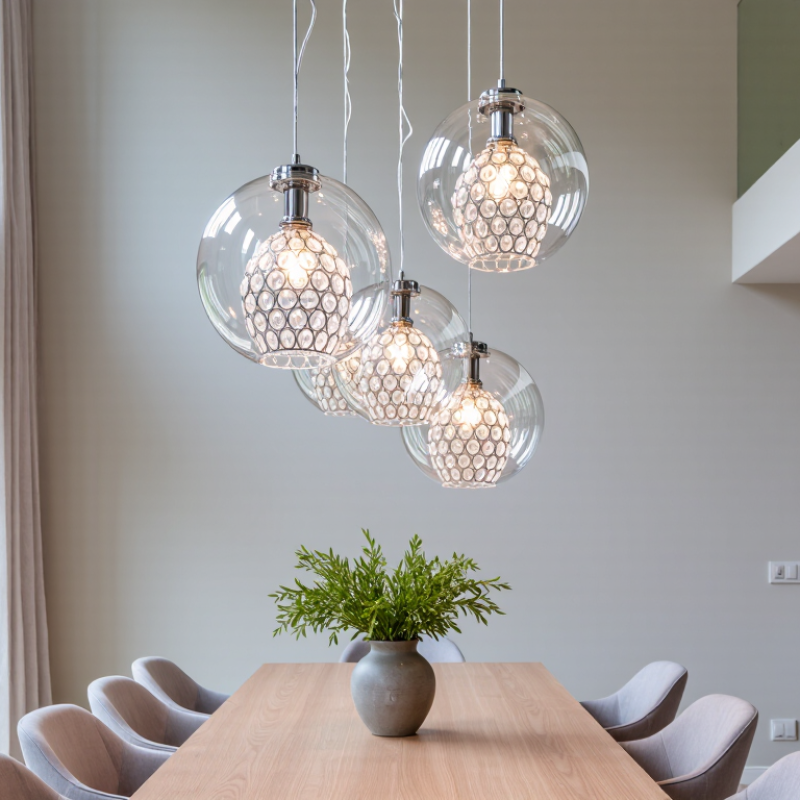
| Multi-Globe Cluster | Clear, opal, or tinted glass globes with a metal canopy and suspension cables | Several spheres arranged at different heights add dimension and distribute visual weight across a larger area. | Multiple light sources can spread illumination, but the fixture’s total output depends on the number and rating of its bulbs. | Over dining tables, stairwells, double-height rooms, and larger living spaces | Measure the ceiling height and table or floor clearance. Check the total fixture weight, mounting requirements, and whether bulbs are included. |
| Smoked Glass Globe | Gray or bronze-tinted glass; metal fittings | A tinted sphere adds contrast and a subdued, contemporary look. | Tinted glass reduces the amount of light passing through compared with clear glass. The visible bulb can still create glare. | Accent lighting in living rooms, dining areas, and kitchens with additional ambient lighting | Check the shade tint and rated light output. Avoid relying on a dark-tinted pendant as the only source of room lighting. |
| Acrylic Bubble Globe | Clear or diffusing acrylic; metal or polymer fittings | A lightweight spherical shade can resemble glass while offering a less fragile option. | Light transmission and diffusion vary by acrylic finish. Some materials may show scratches or discolor over time, depending on quality and exposure. | Children’s rooms, casual dining areas, and locations where lower weight is useful | Review the manufacturer’s cleaning instructions, heat limits, and approved light source; avoid using bulbs that exceed the fixture’s rating. |
| Mixed-Size Globe Composition | Glass globes in varied sizes, often paired with metal arms or a central frame | Combines large and small bubbles for a sculptural arrangement that reads as both lighting and a decorative feature. | Light distribution depends on globe orientation, shade finish, and bulb placement. Open gaps between globes allow some light to pass directly into the room. | Large dining rooms, open-plan spaces, and rooms with a high ceiling | Check the overall width and height, suspension adjustment range, number of light sources, and suitability for the ceiling junction box. |