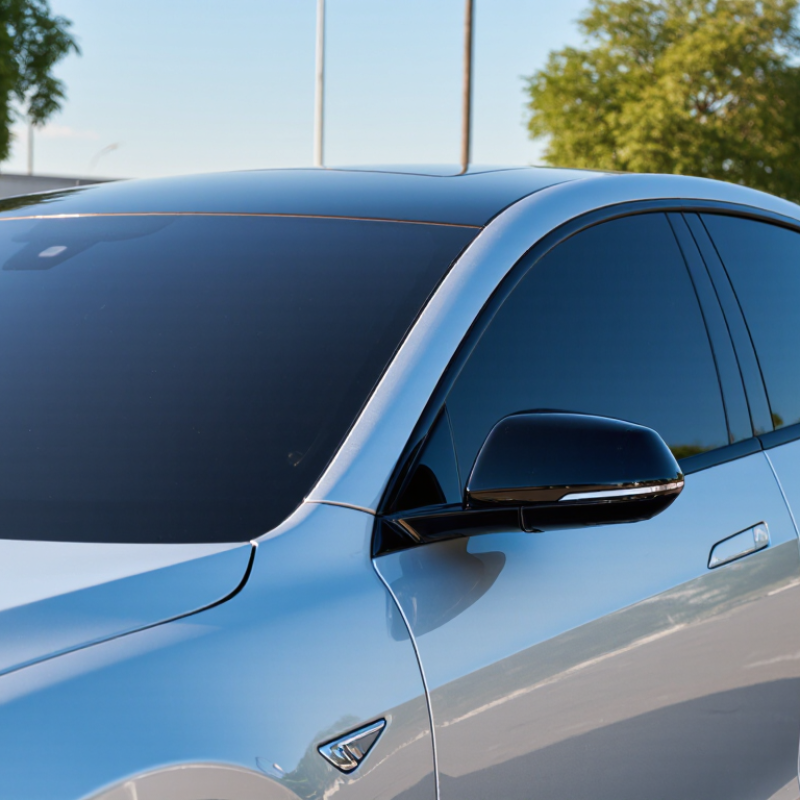
| Opaque blackout film | A highly light-blocking layer is applied to the glass, preventing a clear view through it. | Usually allows little to no useful visibility through the covered area; exact light transmission varies by product. | Stationary privacy or display applications where an unobstructed view through the glass is not needed. | Can seriously restrict the driver’s view and may be unsuitable or unlawful on road-facing windows. |
| Removable opaque cling film | A removable sheet adheres to smooth glass by static cling or a similar low-tack method, rather than permanent adhesive. | Blocks most or nearly all view where installed; performance depends on the material and fit. | Temporary privacy when the vehicle is parked or for non-driving use. | May shift, peel, or collect dust; remove it before it obstructs the driver’s required field of view. |
| Dark automotive window tint | A transparent or tinted film reduces the amount of visible light passing through the glass; it is not designed to make the window fully opaque. | Light transmission varies. Lower visible light transmission (VLT) means less visible light passes through, but the view is generally not completely blocked. | Reducing glare, brightness, or interior visibility while retaining some view through the window. | Permitted tint levels differ by location and window position; darker tint can reduce visibility, especially at night. |
| Reflective or metallic tint | A reflective layer redirects some incoming light. Depending on construction, it may also affect radio, GPS, or other signals. | Reduces visible light to a product-specific degree; it does not necessarily provide blackout-level privacy. | Drivers seeking a reflective appearance and reduced incoming light, subject to local rules. | Reflectivity may be regulated, and metallic layers can interfere with some vehicle signals. |
| Ceramic automotive tint | Non-metallic ceramic particles in the film help manage selected parts of the solar spectrum; the film remains intended to preserve a view through the glass. | Available in different VLT levels. Heat and UV performance depend on the specific film and its tested specifications. | Drivers wanting solar-control benefits without a fully opaque covering. | Not a blackout solution; check measured specifications and applicable tint limits before installation. |
| Practical choice for 2026 | Choose by purpose: opaque film for stationary privacy, or compliant automotive tint when a usable view through the glass is needed. | For driving, prioritize clear outward visibility and the legal VLT limit for each window. | A vehicle used on public roads, especially where front-side-window or windshield visibility rules apply. | There is no single best blackout film for every vehicle or jurisdiction. Verify local law, product specifications, and professional installation requirements. |