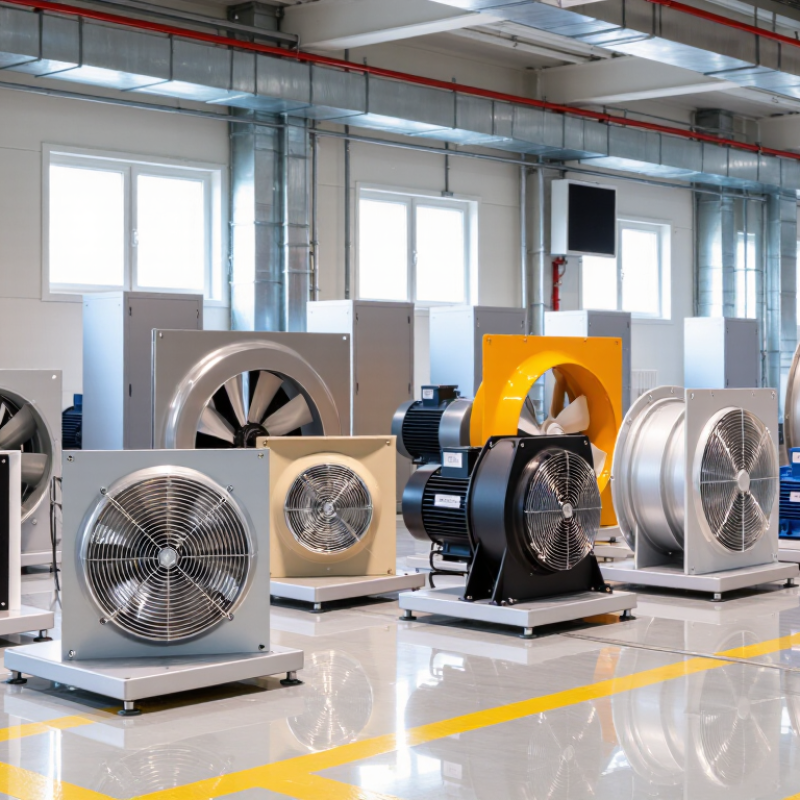
Global buyers comparing the 10 best centrifugal flow fans should begin with duty point, not catalogue airflow. Match required volume flow and static pressure to the fan curve, then check efficiency near the expected operating range. Backward-curved impellers often suit efficient, steady-duty systems; radial designs can handle dustier air, while forward-curved models fit compact, lower-pressure applications. Actual performance depends on system resistance and installation.
That matters.
The International Energy Agency’s 2011 report, Energy-Efficiency Policy Opportunities for Electric Motor-Driven Systems, estimates that motor-driven systems use about 45% of global electricity. This figure covers many applications, not fans alone, but it explains why motor efficiency and controls deserve close review.
For cross-border purchasing, compare voltage, frequency, temperature limits, noise data, materials, and replacement-part availability. Request test conditions and certified performance curves; figures measured under different conditions may not be comparable. A tidy specification sheet can still miss real installation losses. Leave room for uncertainty, especially when ductwork or inlet conditions are not final.