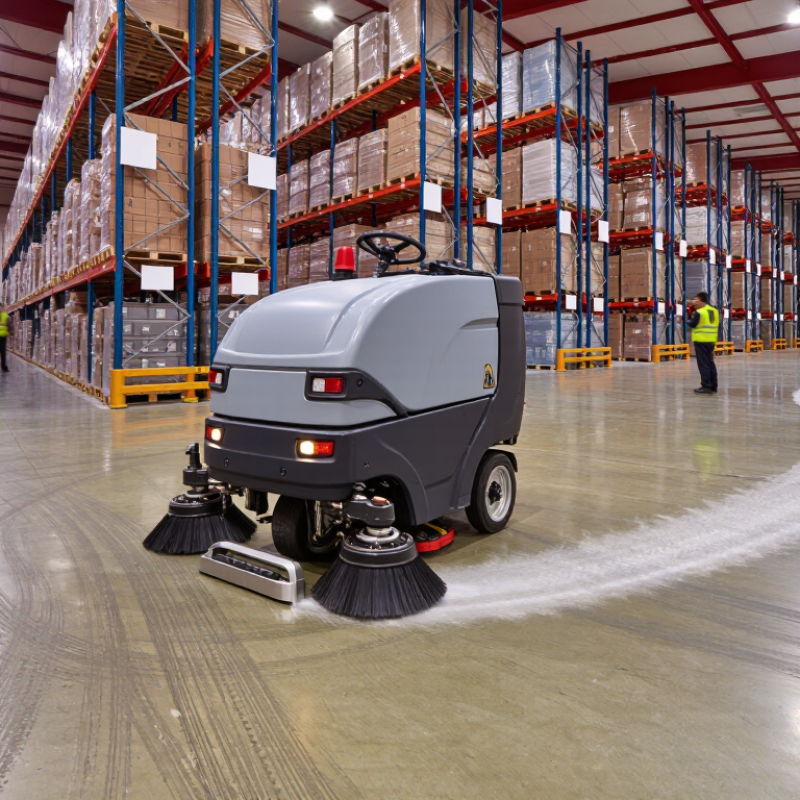
| Definition | Combination sweeper-scrubber | A floor-cleaning machine that collects loose debris and performs wet scrubbing in one pass. Depending on its design and settings, these actions may happen together or in sequence. | Confirm whether sweeping and scrubbing can operate independently, simultaneously, or only in a specified sequence. |
| Two-stage cleaning process | Stage 1: Dry debris collection | A side brush may move debris away from edges, while a main brush or pickup system gathers loose dirt into a hopper. The exact arrangement varies by machine. | Check the hopper capacity, brush access, filter arrangement, and suitability for the debris commonly found on site. |
| Stage 2: Wet scrubbing and recovery | A cleaning solution is dispensed onto the floor and worked by rotating brushes or pads. A rear squeegee gathers the resulting liquid, which is drawn into a recovery tank. | Check brush or pad options, solution and recovery tank access, squeegee design, and whether the floor is left suitably dry for the site. |
| Typical work sequence | Prepare, clean, inspect | Remove oversized objects, select the appropriate brush or pad and cleaning solution, clean the floor, then inspect the result and empty or rinse tanks as required. | Follow the machine instructions and cleaning-chemical label; use a separate pre-sweep where debris levels exceed the machine’s intended capacity. |
| Suitable environments | Large, hard-floor areas | Common applications include warehouses, distribution areas, manufacturing floors, and other sites with compatible hard flooring and enough clearance for the machine. | Assess floor type, aisle width, turning space, slopes, thresholds, traffic, and access to charging or refilling points. |
| Key selection criteria | Cleaning width and maneuverability | A wider cleaning path can cover open areas efficiently, while a more compact machine may be easier to operate in narrow aisles and around obstacles. | Compare the stated cleaning path with the site layout, including turning areas and access through doors. |
| Key selection criteria | Tank and hopper capacity | Solution and recovery tanks support wet cleaning; a debris hopper supports dry collection. Their capacities affect how often the operator needs to stop for refilling or emptying. | Match capacities to the area, soil load, cleaning schedule, and available time for servicing between runs. |
| Key selection criteria | Power and operating time | Battery-powered machines need a suitable charging plan; corded machines require safe cable management and access to power. Run time depends on the machine and operating conditions. | Verify the published operating-time information, charging requirements, and whether the planned shifts allow enough time for charging. |
| Maintenance | Daily care | Routine care commonly includes emptying and rinsing tanks, clearing the hopper and filters, checking brushes, and cleaning the squeegee according to the operating instructions. | Review access to wear parts, cleaning steps, service documentation, and availability of qualified maintenance support. |
| Performance verification | On-site demonstration | A practical trial can show how the machine handles the site’s debris, floor finish, obstacles, and cleaning routine. | Evaluate debris pickup, cleaning consistency, liquid recovery, maneuverability, operator visibility, and ease of routine maintenance. |