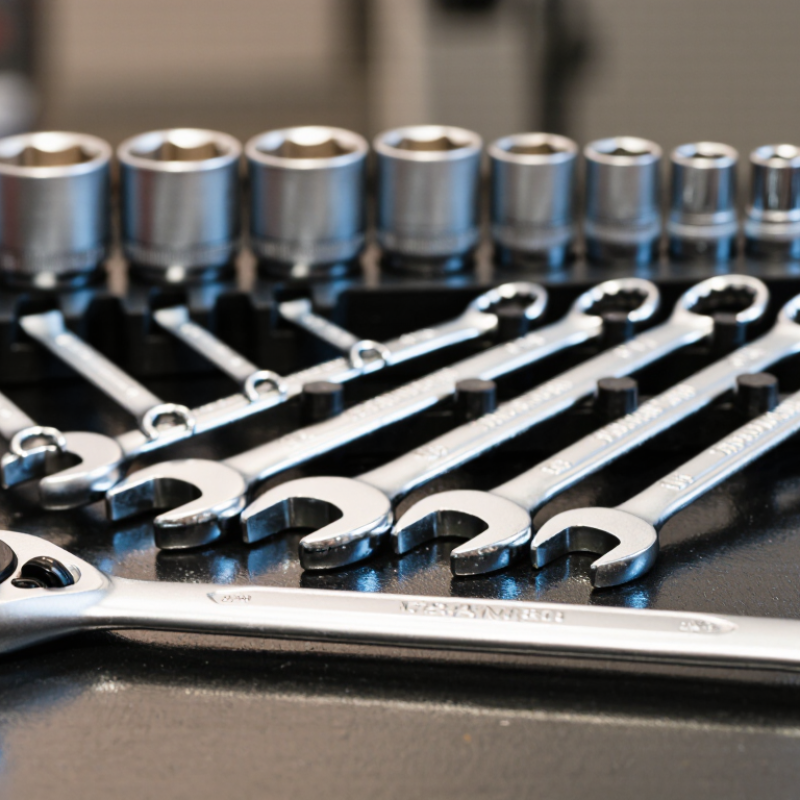
| Compact metric set | 8–19 mm, often with selected sizes | 8–10 pieces | Usually chrome vanadium steel with a polished or satin chrome finish | Open end and 12-point box end; box end commonly offset about 15° | A practical choice for household repairs and general maintenance where common metric sizes cover most fasteners. | May omit intermediate sizes and larger sizes needed for some vehicles or machinery. |
| Expanded metric set | Typically 6–24 mm, with more sizes included | 14–18 pieces | Usually chrome vanadium steel; chrome or corrosion-resistant satin finish | Often 12-point box ends for easier alignment; some sets use 6-point ends for stronger engagement | A versatile option for automotive work and regular workshop use. More sizes reduce the chance of a missing fit. | Costs more and takes up more storage space than a compact set. |
| SAE set | Commonly 1/4–3/4 in, with coverage varying by set | 8–16 pieces | Usually chrome vanadium steel with a polished or satin finish | Standard open end and offset box end; 6-point or 12-point box profiles are available | Fits fasteners specified in fractional inch sizes, often found on older equipment and some imported or specialty machinery. | Will not correctly fit metric fasteners; using a near-size wrench can damage fasteners. |
| Metric and SAE combination set | Metric and fractional-inch sizes in separate groups | Typically 20–30 pieces combined | Most commonly chrome vanadium steel with a corrosion-resistant plated finish | Usually standard combination-wrench geometry; check whether each size has a 6-point or 12-point box end | Useful for shared workshops and mixed equipment when the fastener standard is not consistent. | A larger kit can include sizes that see little use; clearly separated size markings help prevent mix-ups. |
| Long-pattern set | Often offered in metric or SAE ranges similar to standard sets | Commonly 8–14 pieces | Typically chrome vanadium steel; finish varies by set | Extended handle with a conventional open end and box end | The longer handle can provide more leverage and reach, especially on accessible, stubborn fasteners. | Needs more working clearance; extra leverage can increase the risk of overtightening or fastener damage. |
| Ratcheting combination set | Commonly sold in selected metric or SAE sizes | Typically 8–12 pieces | Often chrome vanadium steel; the ratcheting mechanism requires careful cleaning and maintenance | Open end paired with a ratcheting box end; reversible and non-reversible designs are available | Speeds repeated turning where a socket and ratchet cannot fit or when lifting the wrench after each turn is inconvenient. | The mechanism adds complexity and bulk; confirm the minimum swing arc and avoid excessive force. |