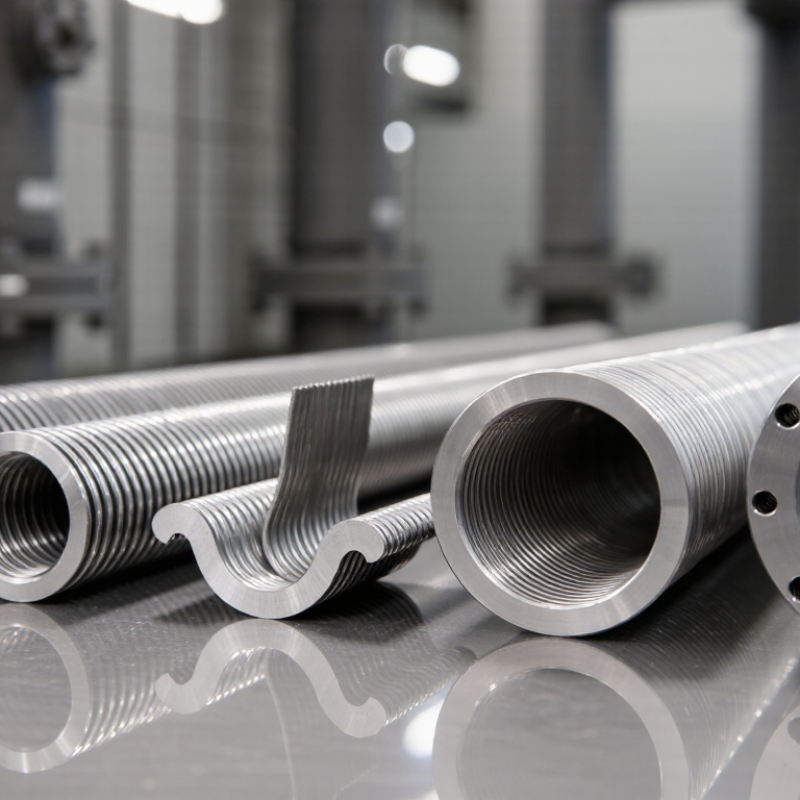
| Extruded Bimetallic Fin Tube | An aluminum outer sleeve is mechanically extruded into fins around an inner base tube. | Aluminum fins over a carbon-steel, stainless-steel, or other compatible base tube. | Provides close fin-to-tube contact and good heat conduction through the fin layer. The outer aluminum layer also shields much of the base tube from the surrounding environment. | Air-cooled heat exchangers, radiators, and process or HVAC equipment where aluminum fins are suitable. | Check compatibility with the process atmosphere and design temperature. Aluminum fins can be vulnerable to certain corrosive environments and mechanical damage. |
| G-Fin (Embedded Fin Tube) | A helical groove is machined into the tube; the fin root is inserted into the groove and secured by rolling or filling the groove over it. | Commonly aluminum fins with a steel or stainless-steel base tube; other material combinations are possible. | The mechanically secured fin root promotes reliable contact and retention. It is often selected where a stronger fin-to-tube bond is needed than a simple wrapped-foot construction can provide. | Heat exchangers exposed to elevated temperatures or conditions that place greater demands on fin retention. | Performance and maximum service conditions depend on the fin and tube materials, groove design, and manufacturing quality. |
| L-Foot Fin Tube | A thin strip fin is wrapped helically around the tube, with an L-shaped foot resting against the tube surface. | Often aluminum fins on carbon-steel or stainless-steel tubes. | Offers an economical increase in external surface area. The foot creates contact with the tube, while the wrapped fin can be removed or damaged more easily than a fully bonded construction. | General air-heating and air-cooling duties at moderate operating conditions. | Less suited to severe vibration, high temperatures, or aggressive conditions that can loosen or damage the fin. The tube surface remains partly exposed. |
| LL-Foot Fin Tube | Two adjacent L-shaped fin feet overlap around the tube to provide more extensive surface coverage beneath the fin. | Commonly aluminum fins on steel or stainless-steel tubes. | Provides broader coverage of the tube beneath the fin than a standard L-foot design and can improve protection of the covered area. | Air-side heat exchangers where a wrapped-fin construction and increased tube coverage are desired. | Still relies on a wrapped fin rather than a fully extruded or welded bond; verify suitability for the actual temperature and operating environment. |
| KL-Foot (Knurled L-Foot) Fin Tube | The tube surface is knurled before an L-foot fin is helically wrapped around it, helping the fin grip the tube. | Typically aluminum fins with a steel or stainless-steel base tube. | The knurled surface improves mechanical engagement compared with a plain L-foot arrangement, while retaining a relatively simple wrapped-fin construction. | Air-cooled equipment requiring improved fin retention over a conventional L-foot design. | It is not the same as a fully bonded fin joint. Confirm performance under the project's temperature, vibration, and corrosion conditions. |
| Welded Helical Fin Tube | A continuous fin strip is wound helically around the tube and welded to it, commonly by resistance or other suitable welding processes. | Steel fins on carbon-steel or stainless-steel tubes; material selection depends on the service. | A welded joint provides strong fin attachment and is suitable for demanding mechanical and thermal service. Fin and tube materials can be selected for higher-temperature duties. | Boilers, economizers, waste-heat recovery systems, and other rugged heat-exchange equipment. | Welding quality and material compatibility are important. Fin spacing and geometry should reflect fouling, cleaning, and pressure-drop requirements. |