| 1 | Electric Waste-Tire Pyrolysis Plant
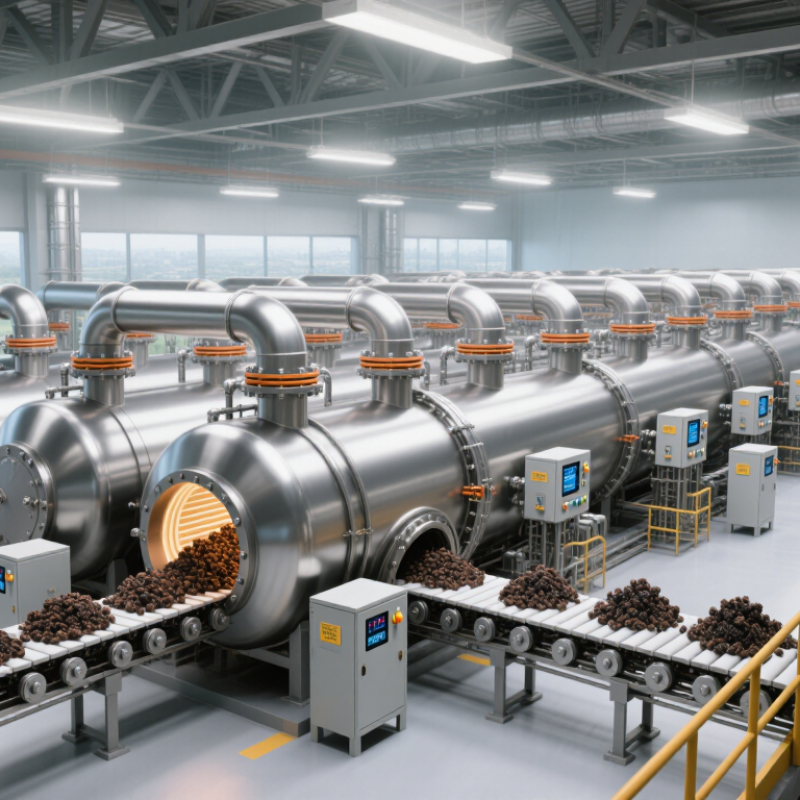
High resource recovery | End-of-life tires, rubber products | 2–5 t/h | 450–550°C | 0.7–1.2 MWh/t of feed | Pyrolysis oil: 35–45%; recovered carbonaceous char: 30–40%; non-condensable gas: 10–15%; recovered steel: 10–15% | Usually high after start-up when non-condensable gas is cleaned and recirculated; external electricity remains necessary for drives and controls. | Potentially avoids open burning and landfill disposal; requires sulfur, particulate, and volatile-organic-compound controls. | Recovered fuel oil, carbon-black substitute, steel recycling, rubber and asphalt modifiers. |
| 2 | Electric Mixed-Plastic Pyrolysis Plant
High liquid-product yield | Polyolefin-rich plastic waste such as PE and PP | 5–10 t/h | 450–550°C | 0.4–0.8 MWh/t of feed | Condensable oil and wax: 65–80%; gas: 10–20%; solid residue: generally below 10% when feed is properly sorted. | Good potential because product gas can supply part of the process heat after cleaning; sorting and pretreatment consume additional electricity. | Can reduce demand for virgin petrochemical feedstock; chlorine, nitrogen, metals, and additives must be controlled. | Plastic-to-feedstock projects, wax production, chemical recycling, and industrial fuel production. |
| 3 | Electric Biomass Fast-Pyrolysis Plant
Renewable carbon platform | Wood residues, forestry by-products, clean agricultural biomass | 1–3 t/h | 450–600°C | 0.8–1.5 MWh/t of dry feed | Bio-oil: 35–55%; biochar: 20–35%; permanent and non-condensable gas: 10–20%; remaining fraction is moisture and process loss. | Moderate to high when process gas and a portion of biochar are used for heat; feed drying can be the largest energy load. | Can provide renewable carbon storage through stable biochar; sustainability depends on residue sourcing and moisture management. | Renewable liquid fuels, soil-amendment biochar, carbon-removal projects, and biomass-derived chemicals. |
| 4 | Electric Sewage-Sludge Pyrolysis Plant
Waste-risk reduction | Dried municipal sewage sludge and biosolids | 0.5–2 t/h | 450–650°C | 0.9–1.6 MWh/t of dry feed | Mineral-rich biochar: 35–50%; condensable products: 15–30%; gas: 10–20%; yield varies considerably with ash and moisture content. | Limited to moderate because drying requires substantial heat; heat recovery from hot char and product gas is essential. | Reduces pathogen and odor risks and concentrates minerals; heavy metals and contaminants must be tested before beneficial reuse. | Wastewater-treatment facilities, phosphorus recovery, fuel-gas production, and controlled soil or construction-material applications. |
| 5 | Electric Agricultural-Residue Pyrolysis Plant
Distributed rural deployment | Rice husks, nut shells, corn residues, straw pellets, and other dry residues | 1–4 t/h | 400–600°C | 0.7–1.4 MWh/t of dry feed | Biochar: 25–40%; bio-oil: 25–45%; gas: 10–20%; actual yield depends on ash content, particle size, and residence time. | High potential for dry feedstocks when product gas is recirculated; low-moisture preparation is important for stable operation. | Can convert residues that are often burned in fields into usable products; air-quality benefits depend on feedstock collection and emission treatment. | Biochar production, decentralized heat and power, agricultural carbon projects, and renewable chemical intermediates. |
| 6 | Electric Refuse-Derived-Fuel Pyrolysis Plant
Municipal waste diversion | Prepared refuse-derived fuel, textiles, paper-rich waste, and mixed dry residuals | 3–8 t/h | 450–650°C | 0.6–1.2 MWh/t of feed | Condensable hydrocarbons: 35–55%; solid char and inert fraction: 15–30%; gas: 10–20%; remaining material depends on ash content. | Moderate when the feed is dry and well prepared; high ash, moisture, and inert content reduce net energy performance. | May reduce landfill use and avoid direct combustion emissions; requires robust removal of chlorine, metals, dust, and acid gases. | Municipal waste diversion, industrial fuel production, recovered-carbon products, and waste-management hubs. |
| 7 | Electric Laminated-Plastic and Composite-Waste Plant
Specialty recycling | Composite packaging, laminated films, coated textiles, and selected thermoset-rich residues | 0.5–3 t/h | 500–700°C | 0.9–1.8 MWh/t of feed | Condensable hydrocarbons: 25–50%; solid carbon and mineral residue: 25–45%; gas: 10–20%; composition is strongly feed-dependent. | Moderate; electric heating offers precise temperature control, while product-gas recovery can reduce operating electricity demand indirectly through heat recovery. | Enables treatment of difficult-to-recycle materials; fluorinated, chlorinated, brominated, and metal-containing components need dedicated controls. | Specialty polymer recovery, composite-material recycling, coated-fabric treatment, and production of controlled carbonaceous solids. |