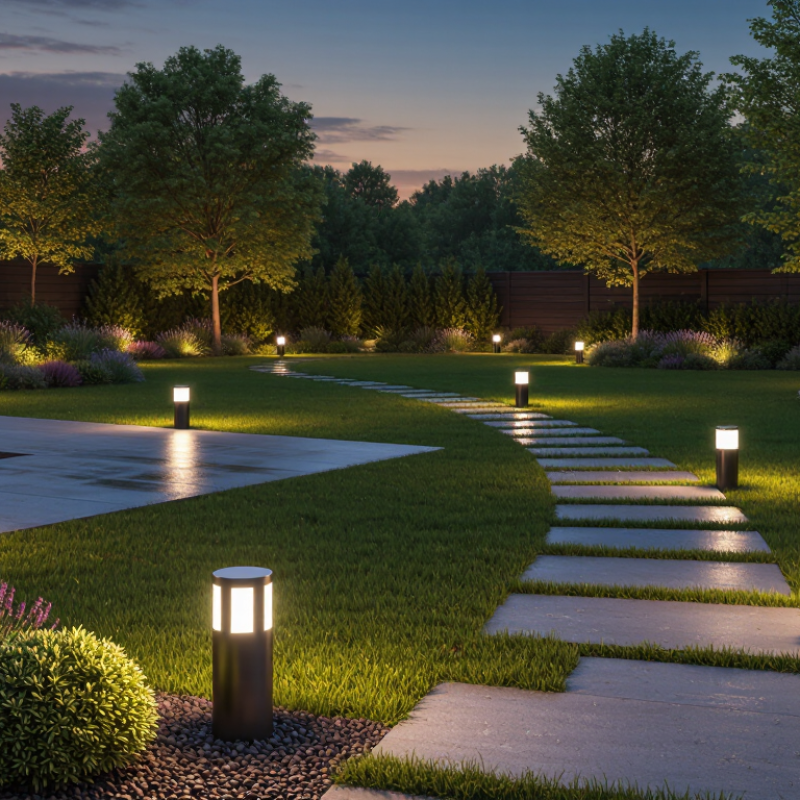
For path lights, judge brightness by useful coverage, not the largest lumen figure. A narrow beam can leave gaps, while a softer, wider spread makes steps and borders easier to see. Check beam angle and spacing alongside output; a sample placed at dusk reveals more than a product chart. Numbers can mislead. For seating areas, choose enough light to see faces without washing out the garden.
Solar units avoid trenching, but shade and short winter days can reduce runtime. Compare stated run time with charging conditions, and look for replaceable batteries where possible. Low-voltage wired lights offer steadier output, though they need a transformer, cable planning, and careful connections. Battery models install quickly, but frequent charging may become tiresome. That matters.
For durability, inspect the ingress-protection rating, housing material, lens seal, and warranty terms. A rating indicates resistance to dust and water, but cannot guarantee performance in every climate. Metal housings can feel sturdy, yet coatings may chip; plastic resists rust but can fade or crack. Installation is easier when stakes suit the soil and fixtures can be aimed after placement. I would leave room to adjust them.