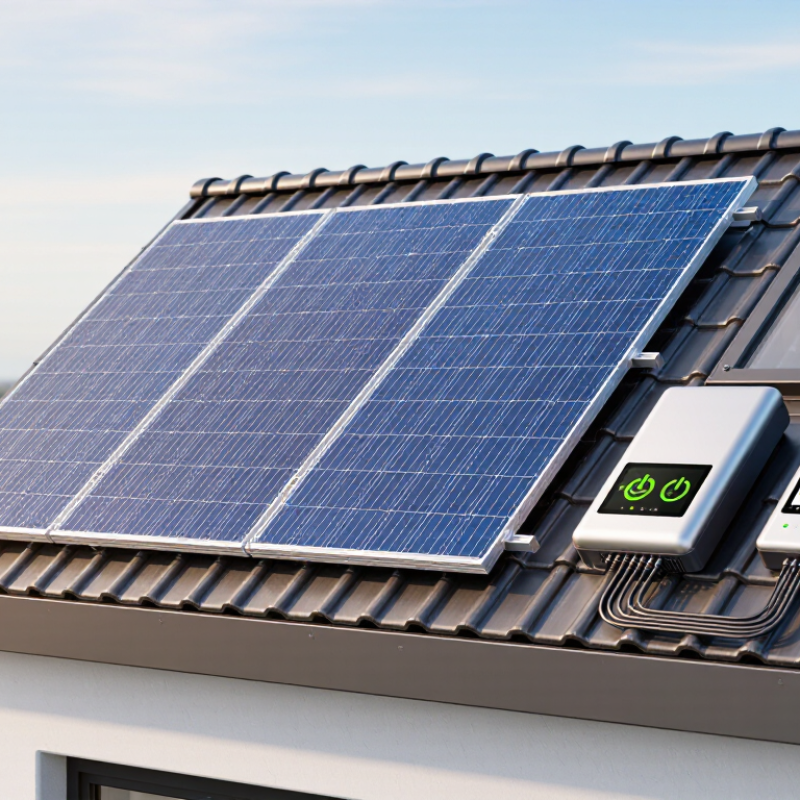
| Grid-tied solar inverter | Synchronizes solar output with the utility grid. Anti-islanding and grid-support functions depend on the model, settings, and applicable local requirements. | May offer export limiting when used with a compatible meter or current transformer and configured correctly. | Usually does not manage batteries directly unless designed for battery integration. | Normally shuts down during a grid outage unless paired with approved backup equipment and an islanding arrangement. | Homes and businesses seeking to convert solar power for use alongside a live utility connection. | Confirm local grid-code approval, rated AC output, input range, monitoring, export-control compatibility, and required protection equipment. |
| Grid-interactive hybrid inverter | Coordinates solar, grid, and battery operation. Grid-support capabilities vary by model and must be configured for the installation. | Often supports export limits through a compatible meter or sensor; verify response behavior and supported wiring. | Manages charging and discharging with compatible batteries, subject to supported battery specifications and settings. | Can provide backup only when the system includes the required transfer or isolation equipment and a supported backup output. | Sites that want solar self-consumption, battery storage, and optional backup capability. | Check battery compatibility, backup-output rating, transfer arrangements, operating modes, grid approval, and warranty conditions. |
| Export-limiting controller | Typically monitors grid power and sends control commands to compatible inverters; it does not replace the inverter’s grid protection. | Its main function is to regulate site export, often toward a configured export limit or zero-export target. | Does not inherently manage batteries; storage control requires compatible equipment and system integration. | Does not inherently provide backup power or isolate a site from the grid. | Installations with a utility-imposed export limit or a requirement to reduce or prevent electricity exported to the grid. | Verify meter placement, supported inverter protocols, response time, communications-loss behavior, commissioning requirements, and utility acceptance. |
| Plant-level power plant controller (PPC) | Coordinates multiple inverters and other plant equipment to meet configured site-level operating requirements. | Can regulate aggregate active power or export when supported by the plant design, measurements, and utility requirements. | May coordinate storage as part of a larger plant, but battery functions depend on the connected equipment and control design. | Not inherently a backup system; outage operation requires suitable protection, switching, and grid-forming equipment. | Commercial, industrial, or utility-scale sites with multiple inverters or plant-level control requirements. | Check supported devices and protocols, control functions, redundancy, communications architecture, commissioning, and project-specific grid-code requirements. |