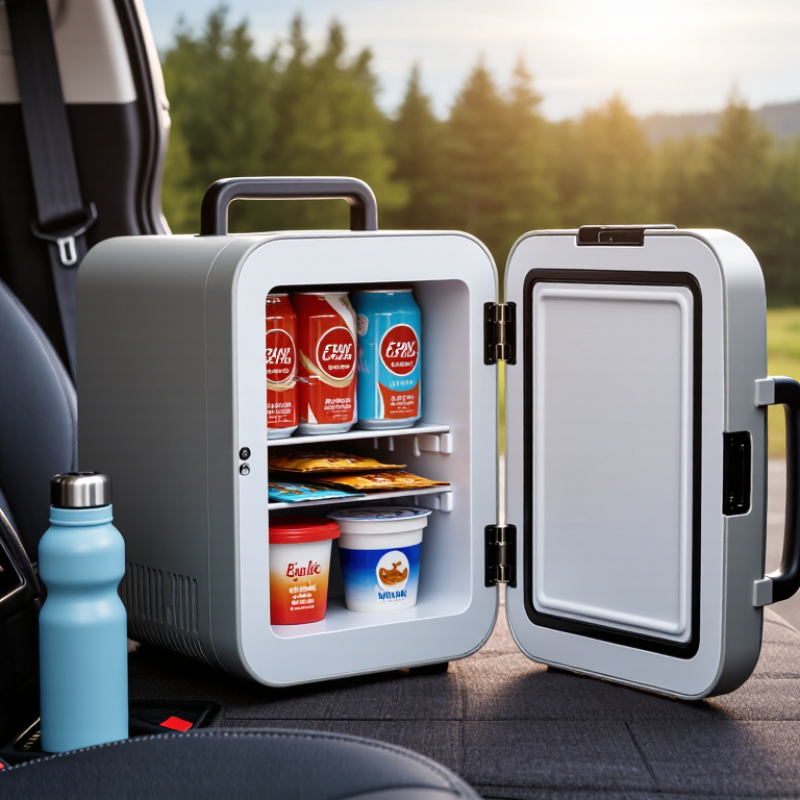
| Compressor Mini Fridge | A compressor circulates refrigerant through an evaporator and condenser, moving heat out of the insulated cabinet. | Portable models commonly range from about 15 to 50 L. Many can cool to refrigerator temperatures and some can freeze; exact limits depend on the model. | Usually runs from 12/24 V DC, AC power, or both. The compressor cycles on and off, so average power use depends on ambient temperature, insulation, and set temperature. | Most suitable for reliable cold storage in hot weather, temperature control, and occasional freezing. | Has moving parts and may make some operating noise. A good general choice for camping, vehicles, and longer trips when dependable cooling matters. |
| Thermoelectric mini fridge | A Peltier module transfers heat between its two sides when electricity passes through it; a fan helps move heat away from the hot side. | Often sold in compact capacities of roughly 4 to 30 L. Cooling is commonly specified as a temperature difference below the surrounding air, often around 15–20°C, rather than a fixed internal temperature. | Typically powered by 12 V DC or an AC adapter. The fan and cooling module may draw power continuously while cooling. | Simple construction, no refrigerant circuit, and generally light and compact. | Cooling is strongly affected by ambient temperature and may not keep food at a safe refrigerator temperature in a hot environment. Best for drinks or short-term cooling in moderate conditions, not freezing. |
| Absorption mini fridge | Heat drives a refrigerant and absorbent cycle, usually using ammonia, water, and hydrogen in a sealed system. | Portable units are commonly in the small-to-medium range, often about 20–40 L. Cooling performance depends on ambient temperature and the selected heat source. | Some models can use AC electricity, DC electricity, or LPG. Many require careful leveling; follow the operating instructions for the specific unit. | No compressor or conventional moving cooling parts, and some models can operate without an electrical supply when used with an approved fuel source. | Often cools slowly and may be less effective in high heat. Best where quiet operation or fuel flexibility is useful and ventilation and safe fuel handling are available. |
| Compressor | Pressurizes refrigerant vapor so the refrigeration cycle can reject heat at the condenser and absorb it at the evaporator. | Key component in compressor-type fridges; cooling capacity is not the same as storage capacity. | Requires electrical power and startup current can be higher than steady running current. Check the unit’s rated input and power-source requirements. | Enables effective cooling across a broader range of outdoor temperatures than typical thermoelectric units. | Noise, vibration, ventilation clearance, and power-source capacity are important considerations. |
| Evaporator and condenser | The evaporator absorbs heat from inside the cabinet; the condenser releases that heat into the surrounding air. | Present in compressor systems. Their ability to exchange heat affects how quickly the fridge cools and how efficiently it runs. | Keep air inlets and outlets unobstructed. Hot surroundings and poor ventilation can reduce performance. | Efficient heat transfer supports stable cabinet temperatures. | Do not enclose the fridge tightly or place it next to a strong heat source unless the manufacturer allows it. |
| Peltier module and fan | The module pumps heat across a semiconductor junction; fans move air over the hot and cold heat sinks. | Used in thermoelectric units, generally suited to modest cooling rather than freezing. | Needs a suitable DC supply. Fan airflow and clean vents help the system operate as intended. | Compact cooling system with few mechanical parts. | Performance falls as the temperature difference between the cabinet and the surrounding air increases. |
| Insulated cabinet and lid seal | Slows heat entering the storage compartment and limits loss of cold air when the lid is closed. | Found across portable fridge types; insulation quality and seal condition affect temperature stability and energy use. | Keep the lid closed, minimize warm-air exchange, and avoid direct sunlight when possible. | Helps the cooling system maintain temperature with less frequent or less demanding operation. | Repeated opening, damaged seals, and warm items placed inside increase the cooling load. |
| Temperature control and sensor | A sensor measures cabinet temperature; the control system adjusts the cooling cycle or power level. | Available on many compressor fridges and some other designs. Displayed settings may differ slightly from the temperature in every part of the cabinet. | Use the recommended setting and allow time for the contents to cool. A separate thermometer can help verify storage temperature. | Makes it easier to manage chilled or frozen storage. | Temperature can vary by location and change when the lid is opened or the fridge is heavily loaded. |
| Power input and battery protection | Connects the fridge to an AC outlet, vehicle DC outlet, or compatible battery system; some models include low-voltage protection. | Compatibility varies. Check voltage, connector type, rated current, and battery-protection settings before purchase. | Battery runtime depends on battery capacity, ambient temperature, set point, insulation, and compressor cycling or continuous operation. | Multiple input options can make a fridge more useful at home and on the road. | Do not assume a vehicle outlet or battery can supply enough power. Follow the fridge and battery manufacturers’ instructions. |
| Practical selection guide | Match the cooling system to the intended temperature, climate, power source, and trip length. | Choose capacity based on the amount of food or drink you need to store, while allowing room for airflow inside. | Compare the specified operating voltage and power draw with the available outlet or battery system. | For broad outdoor use and stronger cooling, a compressor model is often the most versatile type. For simple drink cooling in mild conditions, a thermoelectric model may suffice. | Consider an absorption model when its quiet operation or approved fuel options suit the setting. Always check temperature capability, ventilation, leveling, and safety instructions. |