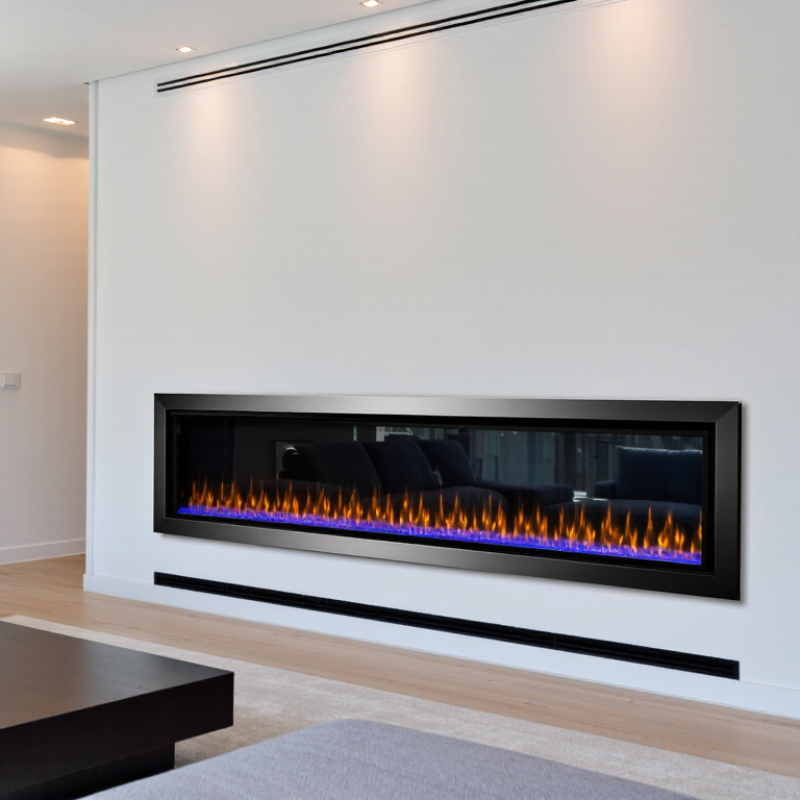
| Heating and Energy Performance |
| Rated heating output | Prefer a selectable output range rather than a single fixed setting. | 1.0–1.5 kW is a common electric-heating range for residential units; 1.5 kW equals approximately 5,118 BTU/h. | Selectable heat levels improve comfort and help users manage electricity consumption. | Confirm the rated output at each heat setting and check whether the heating function can operate independently from the flame effect. |
| Heating control | Electronic thermostat with adjustable temperature control. | A thermostat cycles the heater on and off after the selected room temperature is reached. | Thermostatic control is more practical than continuous manual operation, especially in variable climates. | Check temperature-adjustment range, remote-control access, and whether the thermostat sensor can read room temperature accurately. |
| Flame-only operation | Available as a standard operating mode. | The flame and ember visuals can operate without activating the heating element. | Allows year-round decorative use in warm regions or during summer. | Verify that flame-only mode does not energize the heater or increase the rated electrical load. |
| Energy consumption | Choose the lowest output that meets the room’s heating requirement. | A 1.5 kW heater consumes up to approximately 1.5 kWh per hour when operating continuously at full rated power. | Actual energy cost depends on operating time, thermostat cycling, and the local electricity tariff. | Calculate estimated cost using: rated power in kW × operating hours × local electricity price. |
| Electrical Compatibility for International Markets |
| Nominal supply voltage | Use a model specifically rated for the destination market. | Common residential systems include 100 V, 120 V, and 220–240 V nominal supplies. | Voltage mismatch can cause unsafe operation, malfunction, or permanent equipment damage. | Read the product rating label; do not rely on a plug adapter to convert voltage. |
| Operating frequency | Match the product to the local supply frequency. | Common grid frequencies are 50 Hz, 60 Hz, or dual-frequency operation. | Fans, timers, motors, and control electronics may behave differently when frequency compatibility is not confirmed. | Look for a rating such as 50 Hz, 60 Hz, or 50/60 Hz on the nameplate and installation manual. |
| Approximate full-load current | Check circuit capacity before installation. | At 1.5 kW, the approximate current is 12.5 A at 120 V and 6.25 A at 240 V, excluding minor control loads. | Higher current at lower voltage may affect circuit selection, plug type, and installation requirements. | Confirm whether a dedicated circuit, fixed wiring, or a specific overcurrent protection rating is required by local regulations. |
| Plug and wiring configuration | Destination-market plug or approved fixed-wiring arrangement. | Plug shapes and wiring rules vary by country; an inexpensive travel adapter is not a substitute for compliant installation. | Correct connection is essential for grounding, thermal safety, and warranty validity. | Verify plug standard, cable length, grounding method, and whether installation must be completed by a qualified electrician. |
| Recessed Installation and Physical Dimensions |
| Typical visible width options | Select the width according to the wall opening and room proportions. | Common residential formats are approximately 760–1,520 mm wide, equivalent to about 30–60 inches. | Width affects visual balance, framing requirements, shipping volume, and installation labor. | Use the manufacturer’s exact cutout drawing rather than the external glass or trim dimensions. |
| Typical visible height | Confirm whether the unit is a landscape, portrait, or multi-sided design. | Many landscape units are approximately 400–600 mm high, although designs vary significantly. | Height determines the required wall cavity and the relationship between the fireplace and television or mantel. | Check external height, trim height, glass height, and minimum clearance above the floor. |
| Typical installation depth | Choose a shallow model when wall cavity depth is limited. | Many recessed electric units require approximately 180–300 mm of cavity depth, depending on construction. | Depth affects compatibility with stud walls, masonry walls, media walls, and decorative surrounds. | Confirm the required cavity depth, ventilation space, cable route, and whether the unit can also be surface-mounted. |
| Wall opening tolerance | Use the specified cutout dimensions exactly. | Cutout width, height, and depth are product-specific and are not interchangeable with nominal fireplace dimensions. | An oversized or undersized opening can create structural, alignment, and heat-clearance problems. | Require a dimensioned installation drawing before cutting the wall or ordering custom cabinetry. |
| Front-glass and trim design | Tempered safety glass with a removable or properly fitted trim system. | Glass temperature, thickness, and trim construction differ by model and must be confirmed in the technical documentation. | Front-glass design affects appearance, cleaning, child safety, and installation finish quality. | Check glass-care instructions, replacement availability, edge temperatures, and whether the trim conceals the full cutout. |
| Safety, Compliance, and Reliability |
| Overheat protection | Mandatory evaluation criterion. | An independent thermal safety device should interrupt heating if abnormal temperature conditions occur. | Provides an additional layer of protection against blocked airflow or overheating components. | Confirm the protection method in the manual and identify whether the unit automatically resets or requires service. |
| Clearance requirements | Follow the product-specific minimum clearances on every side. | Clearances vary according to heater location, airflow design, combustible materials, and installation method. | Incorrect clearance can increase fire risk and may invalidate local approval or warranty coverage. | Check clearances to flooring, curtains, furniture, combustible wall materials, mantels, and televisions. |
| Regulatory documentation | Purchase only products with destination-market compliance documentation. | Applicable requirements differ by market and may include electrical safety, electromagnetic compatibility, radio equipment, and environmental rules. | Documentation supports customs clearance, legal sale, insurance, and safer installation. | Request the declaration of conformity, test reports or certification references, user manual, and rating label before purchase. |
| Ingress and installation location | Use indoors in a dry location unless the product is explicitly rated for another environment. | Standard indoor electric fireplaces are generally not suitable for outdoor, wet, or splash-prone areas without a specific environmental rating. | Moisture can damage electronics and create an electrical safety hazard. | Confirm the stated environmental rating and prohibit installation in bathrooms or exposed outdoor areas unless specifically approved. |
| Controls, Appearance, and Ownership Value |
| Flame and ember adjustment | Prefer independently adjustable flame brightness, ember-bed brightness, and color options. | LED-based visual effects generally produce less heat and consume less power than the heater, but exact lighting power varies. | Independent adjustment improves realism and allows a low-light setting for bedrooms or hospitality spaces. | Check adjustment steps, memory function, remote-control range, and whether the display can be dimmed or disabled. |
| Noise level | Prefer a low-noise fan and quiet flame-effect mechanism. | Noise depends on fan speed, airflow path, motor design, and installation enclosure; there is no universal acceptable value for every room. | Audible fan noise is more noticeable in bedrooms, study rooms, and quiet hospitality spaces. | Request a measured sound-level value, test conditions, and whether the value was measured at a defined distance. |
| Remote and smart controls | Basic remote control should remain available even if app or voice functions are offered. | Wireless features may require a specific Wi-Fi band, app region, account, or internet connection. | Regional software support and network compatibility may differ between countries. | Confirm app availability, data requirements, firmware support, offline operation, and manual control access. |
| Warranty and spare parts | Prioritize written warranty terms and long-term availability of heating and control components. | Warranty duration, coverage, labor terms, and cross-border service conditions vary by seller and destination. | Large recessed appliances can be costly to remove and replace if a control board, fan, or heater fails. | Confirm service location, replacement-part process, return freight responsibility, and warranty exclusions before ordering. |
| Shipping and installation logistics | Assess packaged dimensions, weight, damage protection, and delivery method. | Glass panels and large trim pieces require protective packaging; final shipping weight is higher than the appliance’s net weight. | International freight damage, import duties, and access restrictions can materially change the total purchase cost. | Obtain packed dimensions, gross weight, tariff information, insurance terms, and an inspection procedure for delivery. |