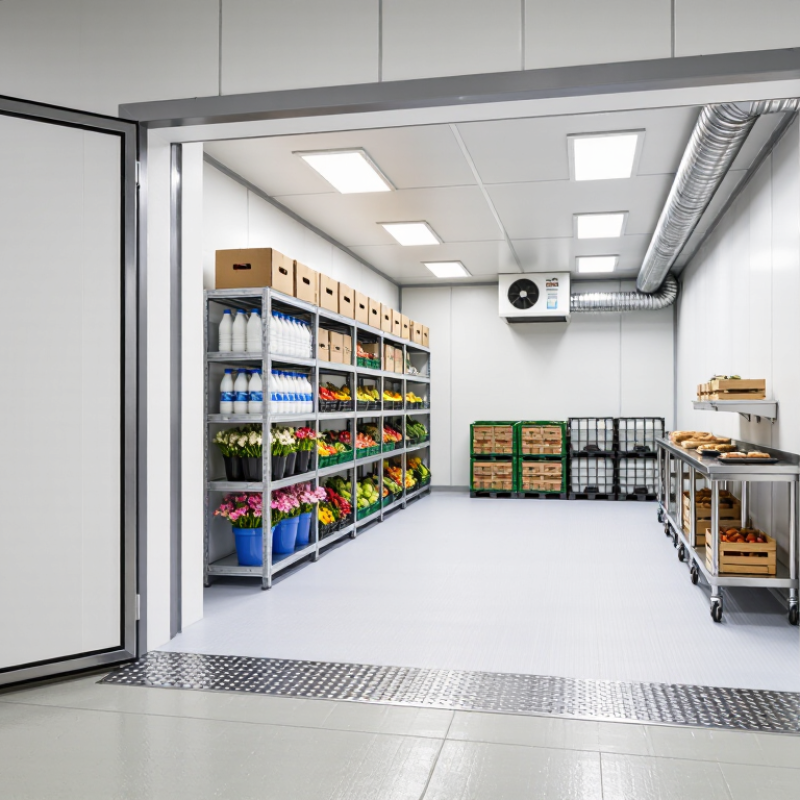
| Walk-in chiller | About 0°C to 5°C | Fresh produce, dairy, drinks, and other chilled goods that should not be frozen. | Maintains chilled storage temperatures when correctly sized, insulated, and used. Product temperature recovery depends on the refrigeration system and door activity. | Planning scenario: approximately 4,000–8,000 kWh | About $600–$1,200 at $0.15 per kWh | Lower energy demand than a comparable freezer in many applications; suitable for frequent picking and access. | Not suitable for long-term frozen storage. Frequent door openings, warm product loading, and poor seals can increase energy use. |
| Walk-in freezer | About −18°C to −20°C | Frozen food and other products requiring frozen storage. | Designed to hold sub-zero storage temperatures. Defrosting, door management, and correct evaporator airflow are important to reliable operation. | Planning scenario: approximately 8,000–15,000 kWh | About $1,200–$2,250 at $0.15 per kWh | Provides frozen storage and helps maintain product quality when temperature is kept stable. | Typically requires more energy than chilled storage because it operates at a lower temperature. Frost build-up and door heat gain can affect performance. |
| Dual-temperature cold room | Separate zones, commonly around 0°C to 5°C and −18°C to −20°C | Sites that need chilled and frozen storage but have limited floor space. | Performance depends on the design: independent insulated zones and properly selected refrigeration equipment help each area maintain its own setpoint. | Planning scenario: approximately 6,000–12,000 kWh | About $900–$1,800 at $0.15 per kWh | Combines two storage temperatures in one installation and can reduce the need for separate room footprints. | More complex to design and operate. Poor partitioning or unsuitable equipment can compromise temperature control and efficiency. |