| 01 | Electric Quarter-Turn Actuator | 90° rotary | Ball, butterfly, plug, and quarter-turn damper valves | Electric motor | Approximately 20–4,000 N·m | On/off or modulating, depending on the control package | Clean operation
Precise positioning, easy integration with PLC and DCS systems, and no instrument-air requirement | Duty cycle, ambient temperature, enclosure protection, emergency operation, and correct valve torque margin | IEC 60529 IP ratings; IEC 60034 motor principles; IEC 61000 EMC requirements where applicable |
| 02 | Electric Multi-Turn Actuator | Multiple rotary turns | Gate, globe, rising-stem, and multi-turn control valves | Electric motor with gearbox | Approximately 10–10,000 N·m at the output | Open/close, throttling, or position control | Versatile
Suitable for large valves, accurate travel control, and locations without compressed air | Stem thrust, travel length, seating load, operating speed, back-driving behavior, and actuator-to-valve interface | IEC 60529 enclosure classification; ISO 5210 interface commonly used for multi-turn valves |
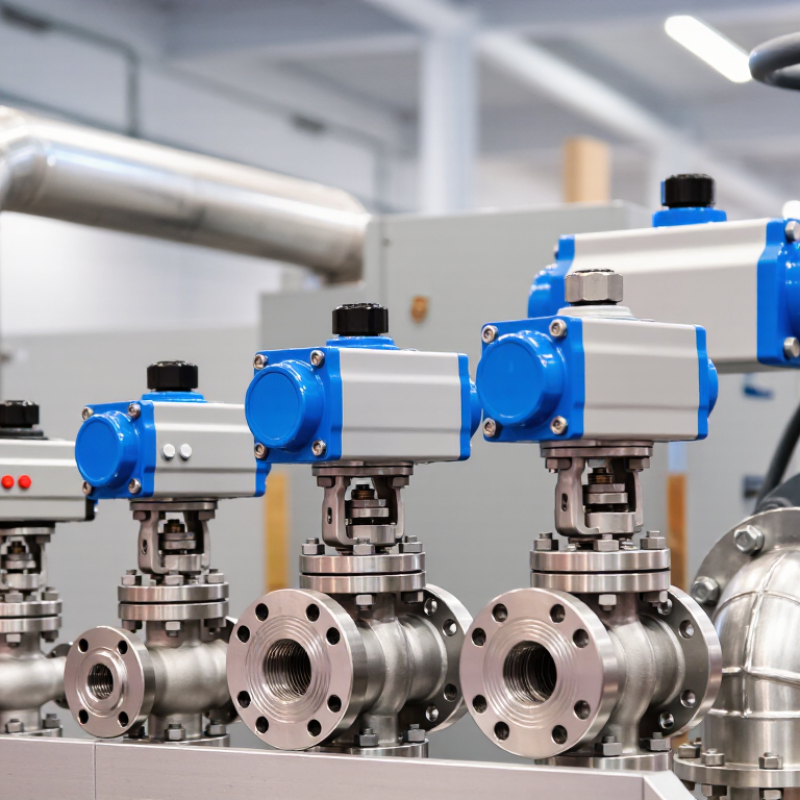
| 03 | Pneumatic Double-Acting Actuator | 90° or linear movement | Ball, butterfly, plug, damper, and process control valves | Compressed air in both directions | Approximately 20–100,000 N·m for rotary designs | Fast on/off operation; modulating control with a positioner | Fast response
Simple mechanical design, high cycle capability, and suitability for hazardous areas with appropriate certification | Available air pressure, air quality, breakaway torque, required stroking time, and behavior during loss of air or power | ISO 5211 mounting interface; ISO 8573-1 compressed-air quality; hazardous-area certification when required |
| 04 | Pneumatic Spring-Return Actuator | 90° or linear movement | Emergency shutdown, fuel-gas isolation, process safety, and fire-safe valve systems | Compressed air plus mechanical spring | Approximately 20–20,000 N·m for common rotary packages | On/off or modulating with suitable accessories | Fail-safe action
Automatically moves to a defined fail-open or fail-closed position after loss of air | Spring direction, fail position, spring-end torque, shutdown time, supply pressure, and partial-stroke testing requirements | IEC 61508 principles for functional safety; ISO 5211 interface; hazardous-area requirements as specified by the project |
| 05 | Hydraulic Quarter-Turn Actuator | 90° rotary | Large pipeline ball valves, subsea valves, hydrocarbon isolation, and high-pressure services | Pressurized hydraulic fluid | Approximately 1,000–1,000,000 N·m | On/off, emergency shutdown, or proportional control | Very high torque
High power density, reliable operation on large valves, and effective control where pneumatic power is insufficient | Fluid compatibility, hydraulic cleanliness, accumulator sizing, leakage control, temperature range, and maintenance access | ISO 5211 interface commonly used; project-specific pipeline, pressure-equipment, and functional-safety requirements |
| 06 | Electro-Hydraulic Fail-Safe Actuator | Rotary or linear | Pipeline emergency shutdown, compressor stations, offshore facilities, and critical isolation valves | Electric pump with hydraulic accumulator or stored-energy system | Approximately 500–500,000 N·m | Remote on/off, emergency shutdown, partial-stroke, and position feedback | Stored-energy safety
Combines electrical control with hydraulic force and can maintain a defined safety position during power loss | Fail action, response time, accumulator autonomy, hydraulic leakage, diagnostic coverage, and hazardous-area certification | IEC 61508 or IEC 61511 project requirements; enclosure and area-classification requirements depend on installation |
| 07 | Electric Linear Actuator | Direct linear stroke | Globe, control, diaphragm, pinch, and linear damper valves | Electric motor, screw, or electro-mechanical drive | Approximately 1–100 kN thrust | On/off or accurate modulating control | Direct stroke control
Good positioning accuracy, reduced pneumatic infrastructure, and useful feedback diagnostics | Required thrust, stroke length, seating force, speed, duty cycle, backlash, and protection against over-travel | IEC 60529 IP ratings; EMC and machinery safety requirements according to the equipment design |
| 08 | Pneumatic Linear Actuator | Direct linear stroke | Globe and control valves, dampers, and process regulating equipment | Compressed air with diaphragm or piston mechanism | Approximately 0.5–100 kN thrust | Modulating control with a pneumatic or electro-pneumatic positioner | Excellent control fit
Widely used for process throttling, fast response, and comparatively simple fail-action arrangements | Spring range, air consumption, thrust at minimum pressure, valve travel, positioner performance, and fail-open or fail-closed action | IEC 60534 control-valve principles; ISO 8573-1 compressed-air quality; hazardous-area requirements when applicable |
| 09 | Manual Override Electric Actuator | Quarter-turn or multi-turn | Water treatment, HVAC, utility systems, and plants requiring local operation during power interruption | Electric motor with handwheel or declutch mechanism | Approximately 20–10,000 N·m | Local manual operation plus remote electric control | Operational flexibility
Allows commissioning, maintenance, and emergency positioning without removing the actuator | Manual override safety, handwheel effort, interlocking, local/remote selector logic, limit switches, and available enclosure space | ISO 5210 or ISO 5211 interface depending on valve movement; IEC 60529 enclosure ratings |
| 10 | Smart Modulating Actuator Package | Quarter-turn, multi-turn, or linear | Water networks, power generation, chemical processing, building services, and automated process lines | Electric, pneumatic, or electro-hydraulic drive with digital controls | Application-dependent; commonly 20–10,000 N·m or 1–100 kN thrust | Continuous positioning, remote diagnostics, digital communication, and configurable control curves | Data-ready
Supports condition monitoring, asset management, position feedback, alarms, and predictive maintenance strategies | Communication protocol, cybersecurity, calibration, control resolution, fail behavior, network redundancy, and lifecycle support | IEC 62443 considerations for industrial cybersecurity; IEC 60529; project-specific fieldbus or industrial Ethernet requirements |