| Fine, shallow ripples | Subtle, closely spaced waves create a restrained texture with limited visual movement. | Office reception areas, meeting rooms, corridors, and refined retail interiors. | Textured metal sheet, molded glass, or formed acrylic, depending on the design and installation. | Works well with soft, even lighting; grazing light can make the fine texture more noticeable. | A practical choice where a textured feature is desired without a strongly sculptural appearance. Specify cleaning access and edge details. |
| Broad, gentle waves | Wide undulations give a calm, flowing appearance and create larger areas of highlight and shadow. | Hotel lobbies, lounges, spa reception areas, and feature walls in commercial interiors. | Formed metal, molded glass, or thermoformed plastic panels. | Use broad, diffuse illumination to preserve a soft effect; point lighting can create stronger reflections. | Check panel flatness, joint alignment, and viewing distance with a full-size sample before ordering. |
| Deep sculptural ripples | Pronounced relief produces a bold, three-dimensional focal point. | Hotel feature walls, restaurant interiors, showrooms, and public-facing atriums. | Formed metal, molded glass, or rigid molded polymer, subject to project requirements. | Directional lighting emphasizes depth but can also produce glare; review the effect from multiple viewpoints. | Allow for projection from the wall, secure fixing, and careful coordination with doors, furniture, and circulation routes. |
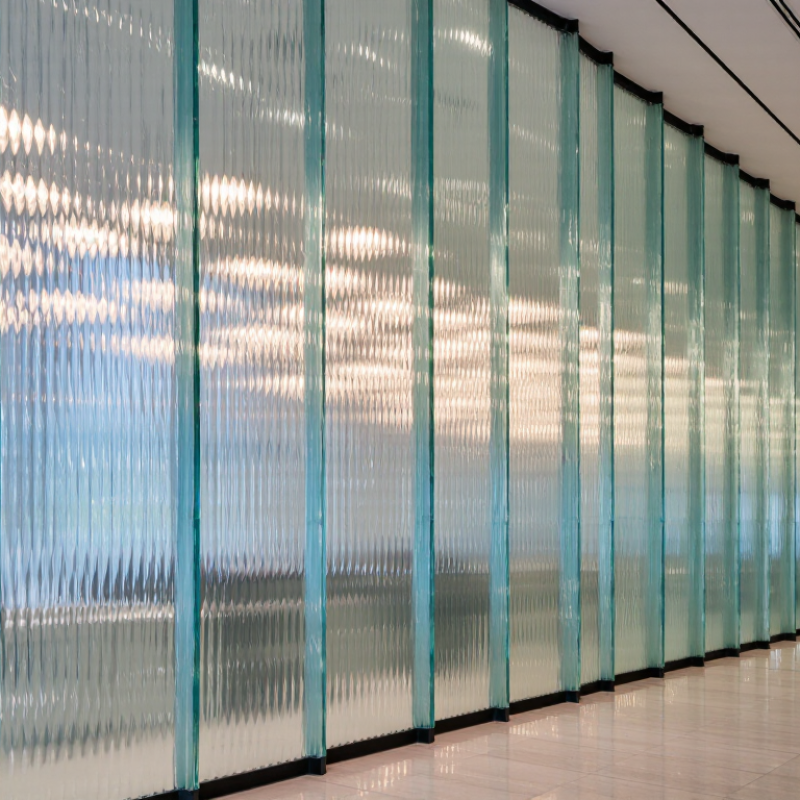
| Vertical ripple pattern | Vertical wave lines can make a wall feel taller and give the surface a regular rhythm. | Lift lobbies, narrow corridors, reception desks, and column wraps. | Roll-formed or pressed metal, molded glass, and rigid sheet materials with a formed texture. | Vertical wall-washing can accentuate the pattern; check that seams do not interrupt the visual rhythm. | Confirm the panel orientation and joint layout in the drawings, particularly around corners and openings. |
| Horizontal ripple pattern | Horizontal waves create a layered, flowing effect and can visually widen a wall. | Restaurant interiors, retail feature walls, reception areas, and hospitality spaces. | Textured or formed metal, molded glass, or suitable rigid polymer panels. | Side lighting can reveal the wave profile; avoid uncontrolled reflections near screens or work areas. | Coordinate horizontal joints with adjacent finishes and confirm how the panel pattern continues at corners. |
| Fine ripple with reflective finish | A reflective surface catches changing highlights, making the texture more prominent as people move through the space. | Retail displays, hotel bars, restaurant feature areas, and selected lobby details. | Polished or coated metal, reflective glass, or reflective-finish acrylic; confirm suitability for the application. | Review under the actual lighting scheme, since reflective finishes can show glare, fingerprints, and nearby objects. | Specify a cleaning method compatible with the finish and consider whether the location is likely to receive frequent contact. |
| Matte ripple finish | A low-gloss surface softens highlights and keeps attention on the relief rather than mirror-like reflections. | Offices, healthcare and education interiors, public corridors, and high-traffic reception areas. | Matte-finished metal, textured glass, or molded polymer with a suitable surface finish. | Diffuse lighting usually gives an even appearance; evaluate the surface under both daylight and installed electric lighting. | Choose the finish based on cleaning needs, expected touch frequency, and the manufacturer’s care instructions. |