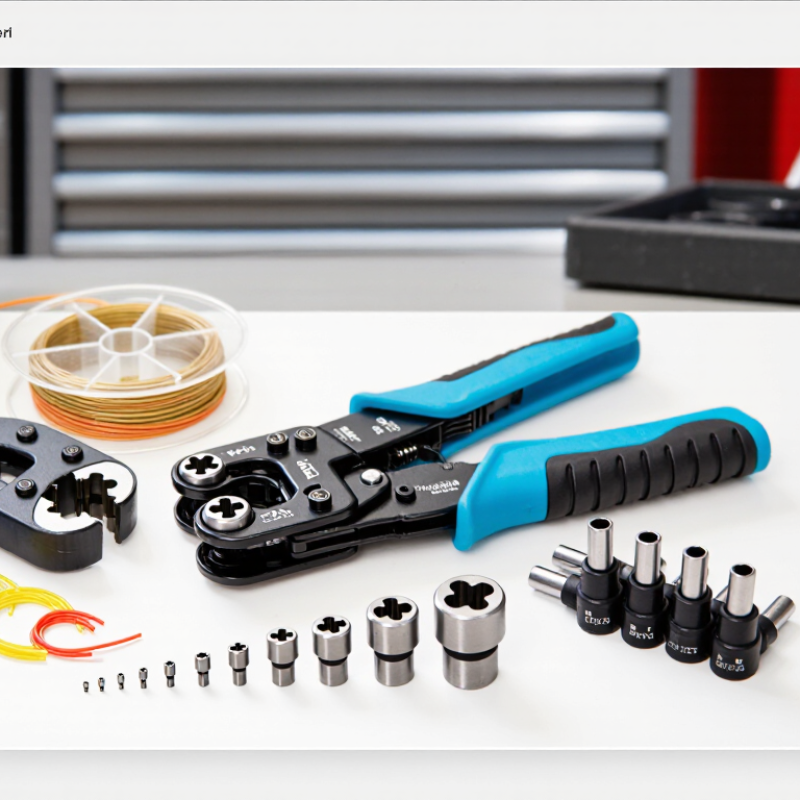
| Manual ratcheting crimper | Hand-operated dies compress a compatible terminal around a conductor. A ratchet mechanism generally prevents release before the tool completes its cycle. | Low- to medium-volume assembly and field wiring with terminals specified for that tool and die. | Portable, requires no power source, and can provide a consistent completed cycle when maintained and used correctly. | Requires suitable, undamaged dies and correct wire-strip length. A ratchet does not by itself prove a crimp meets the terminal specification. | The standard concerns the resulting crimped connection and its evaluation, not a universal ratcheting-tool design. |
| Non-ratcheting hand crimper | Hand pressure closes the jaws directly; the operator controls the force and release. | Some simple, low-volume applications where the terminal maker specifies this type of tool. | Simple construction and easy portability. | Results depend more heavily on operator technique. Use only where the terminal specification permits it; avoid substituting it for a specified controlled-cycle tool. | Connection performance is assessed against applicable requirements and tests; tool style alone is not evidence of conformity. |
| Bench or press crimping tool | A lever, toggle, or powered press drives matched dies through a controlled crimping stroke. | Repeated production work, workstations, and assemblies requiring consistent positioning and cycle control. | Can improve repeatability and reduce operator effort; fixtures can help locate terminals and conductors. | Requires correct setup, die alignment, maintenance, and verification. Press force and stroke must suit the specified terminal system. | Useful in a controlled manufacturing process, but compliance depends on the connection and relevant verification—not simply on using a press. |
| Hydraulic crimper | Hydraulic pressure drives dies to compress larger terminals or conductors. | Power-cable and other larger-terminal applications when the connector system specifies compatible hydraulic tooling. | Provides high crimping force with less manual effort than a comparable hand-operated tool. | Bulkier than many hand tools. Confirm die profile, connector compatibility, conductor range, and any specified crimp sequence. | IEC 60352-2 does not make hydraulic tools universally suitable; check whether the connection falls within the standard’s scope and the connector’s instructions. |
| Battery-powered crimper | A motor-driven mechanism operates the crimping head and matched dies. | Repeated field or production work where portability and reduced manual effort are useful. | Portable powered operation can support repeated cycles without a fixed press. | Check the specified die system, tool condition, battery status, and cycle or inspection requirements. Powered operation alone does not ensure a correct crimp. | The standard addresses crimped-connection requirements and testing, rather than approving a particular power source or tool category. |
| Pneumatic crimper | Compressed air actuates a crimping mechanism, commonly in a fixed or workstation setup. | Higher-volume assembly lines with a suitable compressed-air supply and compatible tooling. | Can support fast, repeatable cycles when correctly configured and maintained. | Needs an air supply and process controls. Verify die setup, operating conditions, and the terminal maker’s tooling requirements. | Process capability and connection verification matter; pneumatic actuation does not itself establish conformity to IEC 60352-2. |
| Interchangeable-die precision crimper | A hand or powered frame accepts dies designed for specific terminal geometries. | Shops handling several compatible terminal families or conductor sizes. | One frame may serve multiple applications when the correct, matched die is installed. | Interchangeability is not universal. Confirm the exact die, terminal, conductor material, and size combination before use. | Evaluate each resulting connection against its applicable product and process requirements; a shared frame does not make different crimps equivalent. |