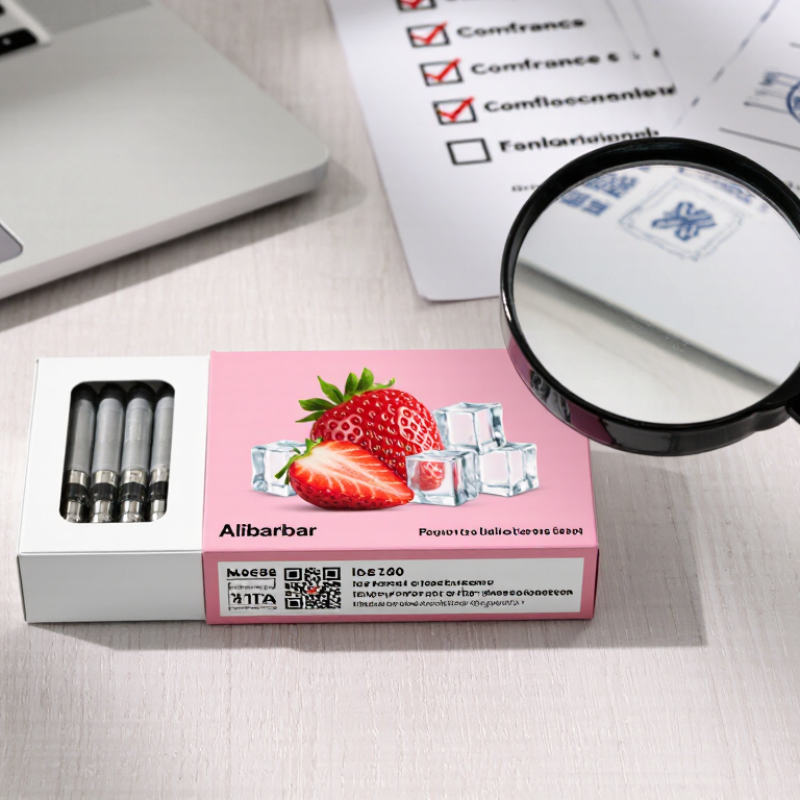
| Product identity and batch traceability | Product name and model, batch or lot code, manufacture date, and package photographs | Confirm that the codes on the unit, retail package, and documents match. Check for altered labels, duplicated codes, broken seals, and inconsistent product details. | Traceability details support an authenticity check but do not, by themselves, prove that a product is genuine or legally marketable. |
| Supply-chain evidence | Dated purchase invoice and records identifying the supplier and product batch | Check that the transaction and product description are consistent and that the seller can explain the product’s supply chain. Independently verify any claimed manufacturer or distributor contact details. | Keep commercial records. Do not treat an invoice or seller assurance as proof of regulatory approval. |
| United States market authorization | FDA marketing granted order applicable to the specific tobacco product, or a matching entry in FDA’s searchable tobacco-product database | Match the authorized product’s manufacturer, product name, and relevant characteristics to the item being offered. Check the FDA source directly rather than relying only on a certificate or screenshot supplied by a seller. | In the United States, a new tobacco product generally cannot be legally marketed without an applicable FDA marketing order. Authorization is product-specific; an order for a different product is not evidence for this one. |
| European Union notification and product limits | Evidence of the required product notification and destination-market records, where applicable | For nicotine-containing e-cigarettes covered by the Tobacco Products Directive, check that nicotine concentration does not exceed 20 mg/ml, refill containers do not exceed 10 ml, and tanks or cartridges do not exceed 2 ml. | EU rules also require notification at least six months before placing a covered product on the market and prescribed health warnings. National rules may add restrictions; verify the specific country and current law. |
| United Kingdom market notification | Evidence of applicable MHRA notification and a matching product listing in the official UK source | Check that the exact product variant and nicotine formulation are covered, and compare the listing details with the package and product documents. | UK requirements are administered separately from EU systems. Confirm current rules for the relevant UK jurisdiction and product category. |
| Nicotine and ingredient information | Product specification and, where available, a batch-specific certificate of analysis (COA) | Compare the stated nicotine concentration and ingredient information with the product label. Check the COA’s sample identity, lot number, test date, methods, and laboratory details. | A COA is supporting evidence, not a substitute for required authorization or notification. A report for a different batch or product variant does not establish the composition of the item in hand. |
| Laboratory report credibility | Laboratory test report and confirmation of the laboratory’s accreditation scope, where relevant | Verify the report directly with the issuing laboratory when possible. Check that the tested sample and methods relate to the specific product and claims being assessed. | ISO/IEC 17025 accreditation can support confidence in a laboratory’s competence for specified tests; it does not certify the product or guarantee legal compliance. |
| Packaging and nicotine warning | Clear photographs of all package panels and the unit label | Check that required warnings, nicotine information, ingredient details, child-safety information, and other market-specific particulars are present, legible, and consistent with the product. | Exact wording, language, placement, and label elements depend on the destination market and whether the product contains nicotine. Do not assume one country’s label satisfies another country’s rules. |
| Child-resistant packaging | Packaging specification or applicable test documentation | Determine whether child-resistant packaging is required for the product and destination. For covered liquid nicotine containers in the United States, check applicable Poison Prevention Packaging Act requirements. | Requirements depend on product form and jurisdiction. Packaging claims should be supported by documentation for the actual packaging configuration. |
| Battery transport safety | UN 38.3 test summary for the installed lithium battery, where applicable | Confirm that the battery type and manufacturer details correspond to the device and that the test summary is available to support applicable transport requirements. | UN 38.3 concerns transport testing of lithium batteries; it is not a general product approval or proof that the device is safe for every use. |
| Safety data sheet (SDS) | SDS for relevant liquid or chemical components, when required or supplied | Check that the SDS identifies the relevant substance or mixture, has current hazard information, and is consistent with the product formulation and destination-market rules. | An SDS may be required in particular workplace, supply, or transport contexts; it is not universally a consumer-product approval document. |
| Flavor and local sales restrictions | Destination-specific regulatory check for flavored vaping products and sales channels | Check national, state, provincial, and local rules on flavored products, online sales, age restrictions, and retail authorization before sale or import. | Rules can differ substantially within a country and may change. A flavor name or lawful sale in one location does not establish compliance elsewhere. |
| Final verification decision | Completed document checklist, product photographs, and records of official database checks | Record the destination market, date checked, product variant, batch code, documents reviewed, and any unresolved discrepancies. Pause purchase or sale if identity or required evidence cannot be verified. | Only accept documents that match the exact product and market. When requirements are unclear, consult the relevant regulator or qualified compliance professional. |