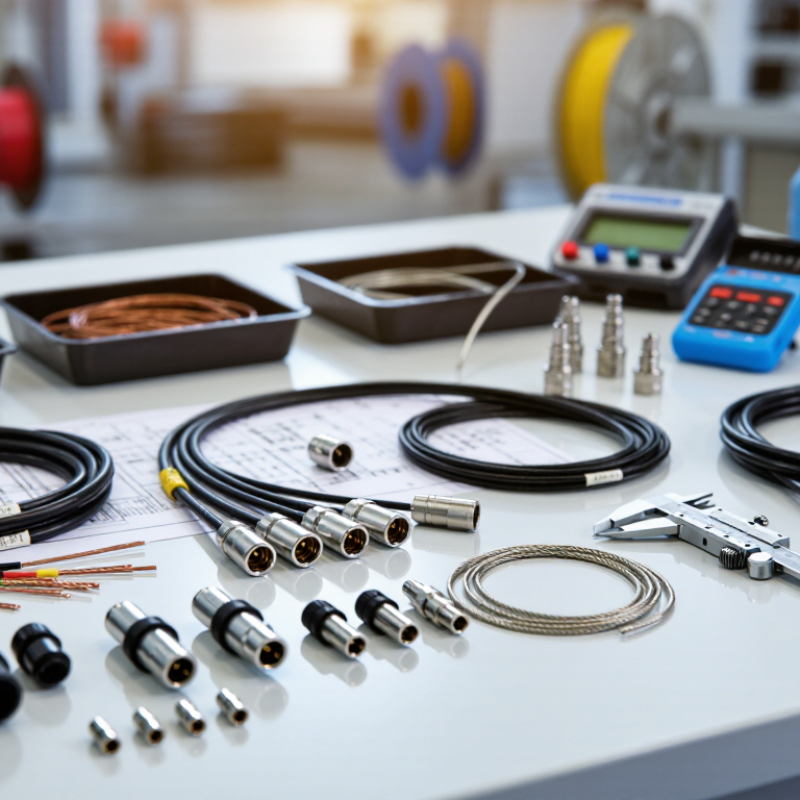
| Cable Category | The cable type should match the electrical function and the connector system used on the bicycle. | Motor cables, battery cables, display cables, brake-sensor cables, throttle cables, lighting cables, charging cables, and extension cables. | Request a wiring diagram, connector drawing, pin assignment, and sample cable before mass production. |
| Conductor Material | Copper conductors are commonly selected for good electrical conductivity and flexibility. | Bare copper or tinned copper; stranded conductors are normally preferred for vibration-prone bicycle applications. | Confirm conductor cross-sectional area, strand construction, resistance, and the material stated on the specification sheet. |
| Wire Size | The required size depends on current, cable length, allowable voltage drop, temperature, and installation conditions. | Common purchasing specifications may use AWG or mm²; power cables are generally larger than signal cables. | Do not select wire size only by appearance; verify continuous current, peak current, voltage, and cable temperature rating. |
| Voltage and Current Rating | The cable assembly must be rated above the system’s operating voltage and expected continuous and peak current. | Low-voltage DC assemblies for battery, motor, control, display, sensor, and lighting circuits. | Ask for rated voltage, current capacity, conductor resistance, insulation rating, and any derating conditions. |
| Insulation and Jacket | The outer jacket should withstand abrasion, bending, moisture, oils, temperature variation, and outdoor use as required. | PVC, TPU, PE, or other specified cable compounds; black is common, while other colors may be produced to order. | Confirm operating temperature range, flexibility, flame performance, UV exposure needs, and jacket thickness. |
| Connector Configuration | Connector selection must match mating parts, contact count, keying, locking method, sealing level, and current requirements. | Overmolded connectors, waterproof circular connectors, sealed inline connectors, multi-pin signal connectors, and battery or motor connection assemblies. | Verify mating compatibility, terminal plating, contact resistance, locking force, insertion cycles, and water-resistance test conditions. |
| Water and Dust Protection | Outdoor e-bike cable assemblies may require an ingress-protection target, but the actual rating depends on the complete assembly. | Sealed connectors, waterproof overmolding, gaskets, cable seals, heat-shrink tubing, and protective conduit. | Request the applicable test method and report; a connector rating alone does not automatically prove the rating of the finished cable assembly. |
| Customization Scope | Most cable assemblies can be customized when the buyer provides clear technical drawings or approved samples. | Length, wire gauge, conductor color, connector orientation, pinout, labels, sleeving, branching, terminals, overmolding, and packaging. | Freeze the drawing revision and sample approval before production; document all changes in writing. |
| Prototype and Sample Stage | A pre-production sample is recommended for fit, function, connector compatibility, and installation validation. | One or more engineering samples, followed by a golden sample retained for production comparison. | Check dimensions, bend radius, pinout, polarity, continuity, insulation, locking, and routing on the actual e-bike. |
| Minimum Order Quantity | MOQ varies by cable complexity, connector tooling, custom molds, materials, and packaging requirements. | Standard cable assemblies may support smaller trial quantities; customized overmolded or tooled parts commonly require higher quantities. | Obtain separate quotations for sample quantity, pilot quantity, and production quantity, including tooling charges if applicable. |
| Typical Production Timing | Timing depends on material availability, sample approval, tooling, order quantity, and factory capacity. | Standard repeat orders may take several weeks; new connector tooling, molds, or complex cable assemblies usually require additional time. | Confirm sample lead time, tooling lead time, production lead time, inspection date, and shipping-ready date separately. |
| Quality Control | Cable assemblies should be checked for electrical performance, dimensions, appearance, connector fit, and workmanship. | Continuity testing, short-circuit testing, polarity verification, crimp inspection, pull testing, dimensional inspection, and visual inspection. | Define acceptance criteria, sampling level, defect classification, inspection records, and corrective-action procedures in the purchase contract. |
| Technical Documentation | Complete documentation reduces errors during quotation, production, customs clearance, and after-sales support. | 2D drawings, 3D files when needed, wiring diagrams, pinout tables, bill of materials, test specifications, packing lists, and revision history. | Ensure the documents identify cable length, tolerance, connector orientation, wire specification, label position, and approved revision. |
| Compliance Requirements | Requirements depend on the destination market, finished e-bike, battery system, and whether the cable is treated as a component or part of a certified assembly. | Material declarations, restricted-substance documentation, safety test records, and destination-specific technical files where applicable. | Ask the importer or compliance specialist which regulations apply; do not assume a cable has certification simply because a supplier provides a general certificate. |
| Packaging | Packaging should prevent tangling, connector damage, moisture exposure, and deformation during storage and transport. | Individual bags, labeled bundles, protective caps, partitioned cartons, moisture protection, and export cartons. | Specify quantity per bag and carton, carton dimensions, gross weight, labels, barcode requirements, and connector protection. |
| Shipping Method | The best method depends on order volume, urgency, destination, customs requirements, and total landed cost. | Express courier for samples, air freight for urgent or medium-sized shipments, and sea freight for larger planned orders. | Compare transit time, chargeable weight, customs service, insurance, delivery terms, and destination handling fees. |
| Trade Terms | The selected Incoterm determines responsibility for freight, export clearance, insurance, import clearance, duties, and delivery. | EXW, FOB, CIF, CPT, DAP, and other terms may be considered according to the buyer’s logistics capability. | Confirm the named place, cost responsibility, transfer of risk, customs responsibility, and whether duties and taxes are included. |
| Export Documents | Accurate documents are essential for customs clearance and should match the physical shipment. | Commercial invoice, packing list, transport document, export declaration information, and certificate of origin when required by the destination. | Verify product description, quantity, value, country of origin, HS classification, carton count, and consignee information before dispatch. |
| Payment Structure | Payment terms should protect both parties and correspond to the sample, tooling, and production stages. | A deposit for order initiation, balance after production or inspection, and separately stated tooling or sample charges. | Record payment milestones, refundability of tooling, inspection rights, bank details, and the procedure for nonconforming goods. |
| After-Sales Support | Long-term supply is easier when technical changes, replacement parts, and quality claims are managed systematically. | Replacement cable arrangements, corrective-action reports, retained samples, drawing updates, and production traceability. | Agree on warranty scope, claim response time, replacement responsibility, traceability codes, and engineering-change procedures. |