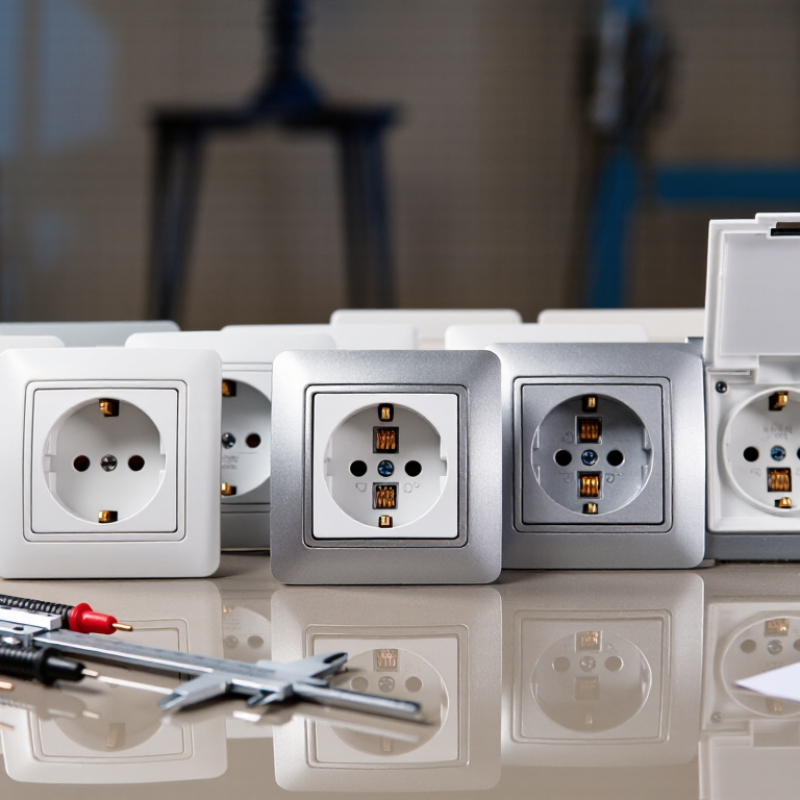
Comparing electrical socket suppliers takes more than checking unit prices.
Buyers should match each product to its intended market and installation, then confirm rated voltage, current, grounding design, terminal type, and mounting dimensions.
A socket that looks suitable in a catalogue may not fit an existing wall box. Small details matter.
Product options can include different outlet layouts, safety shutters, faceplate materials, colors, and wiring methods.
Ask suppliers for current technical sheets, test reports, and clear product photographs. Request samples when dimensions or finish quality are uncertain.
Check how firmly terminals hold a standard wire, whether the faceplate sits flat, and whether markings remain readable.
Not always easy to compare.
Purchasing requirements deserve equal attention.
Confirm minimum order quantities, sample charges, production lead times, carton counts, packaging protection, and procedures for handling defects.
Ask how changes to materials or specifications are communicated between orders. Documentation should identify the tested model, not just a similar product family.
Comparisons are rarely tidy; a low quotation may exclude packaging or inspection.
I would record assumptions beside each price, since overlooked details can distort the comparison.
Where possible, review supplier quality records and arrange an independent inspection before a large shipment.