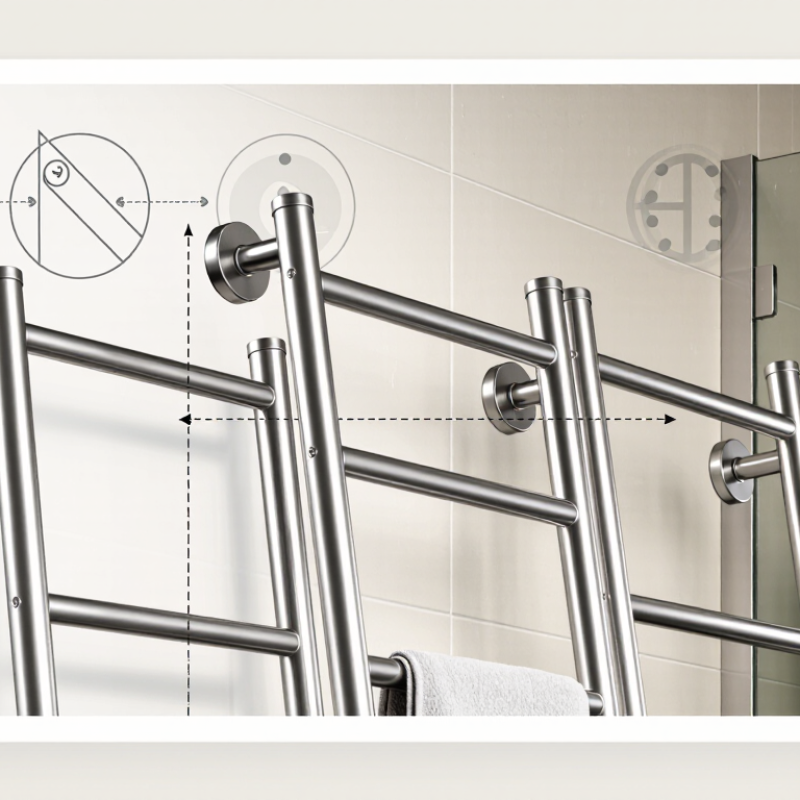
| Product specification | Confirm overall height and width, rail spacing, usable hanging width, material, finish, load guidance, and installation method for each model. | Dimensioned drawing, bill of materials, finish description, installation instructions, and an approved pre-production sample. | Record agreed specifications in the purchase order. Towel ladder dimensions and performance are model-specific; do not rely on a generic product description. |
| Material and finish | Identify the exact metal or other substrate and the surface treatment, such as plating, powder coating, or clear coating. | Material declaration, finish specification, sample approval, and test reports relevant to the buyer’s use and market. | Ask suppliers to state how finish quality is checked and how products are protected from moisture, abrasion, and contact damage during transit. |
| Quality control | Agree inspection points for dimensions, appearance, joints, fasteners, stability, and packaging before production begins. | Written inspection criteria, production inspection records, and a final inspection report where required by the contract. | Define defect categories, sampling or inspection method, acceptance criteria, and responsibility for corrective action in writing. |
| Regulatory scope | Check the rules for the destination country and the exact product configuration. Requirements can differ for decorative, load-bearing, or electrically heated products. | Product classification, applicable-law assessment, declarations or test reports required for the destination market, and technical documentation where applicable. | Do not assume that a particular conformity mark is required for every towel ladder. Confirm obligations with the relevant regulator, importer, or qualified compliance adviser. |
| EU chemical requirements | For products placed on the EU market, assess applicable chemical restrictions, including REACH restrictions relevant to the materials and finishes used. | Material and substance declarations, supplier statements, and laboratory reports where a risk assessment or customer requirement calls for testing. | Applicability depends on product materials and substances. Obtain current, product-specific information rather than relying on a general compliance statement. |
| General product safety | Assess destination-market product-safety duties, including hazards from sharp edges, instability, installation, and foreseeable use. | Risk assessment, safety instructions, traceability details, and a process for handling complaints or corrective actions, as applicable. | For products offered to EU consumers, check the applicable requirements of the General Product Safety Regulation, which has applied since 13 December 2024. |
| Packaging design | Choose individual protection suited to the product’s shape and finish, with parts secured against movement and impact. | Packaging specification, packed-product sample, carton dimensions and gross weight, and photographs of the packing method. | Use protective separation for rails and fittings. Confirm that packaging dimensions and weights meet the buyer’s warehouse and carrier handling needs. |
| Wood packaging | If solid-wood pallets, crates, or dunnage are used in international trade, confirm that applicable import rules are addressed. | Supplier confirmation that regulated wood packaging is treated and marked in accordance with ISPM 15, where required. | ISPM 15 applies to regulated wood packaging material, not ordinary cardboard packaging. Destination-country rules should be checked before dispatch. |
| Carton identification | Agree carton marks that support receiving and inventory control without exposing unnecessary commercial information. | Approved carton-marking artwork showing item reference, quantity, country of origin where required, handling instructions, and any agreed shipping marks. | Ensure marks match the purchase order, packing list, and destination requirements. Confirm label language and barcode requirements with the importer. |
| Export documents | Confirm document requirements before production is complete and before cargo is booked. | Commercial invoice, packing list, transport document, and any required origin or product documents for the shipment. | Document requirements vary by destination, product classification, trade arrangement, and transport mode. Ensure all descriptions and quantities are consistent. |
| Customs classification and origin | Have the importer or customs broker determine the appropriate tariff classification and verify the declared country of origin. | Accurate product description, material composition, manufacturing details, and origin information to support customs declarations. | Do not select a tariff code solely from a supplier’s estimate. Classification and duty treatment depend on the product and destination rules. |
| Incoterms and cost allocation | State the agreed Incoterms® rule, named place or port, and version in the sales contract or purchase order. | Written quotation showing the delivery rule, included charges, insurance arrangements if applicable, and responsibilities for clearance. | Incoterms® 2020 is the current published edition. The chosen rule allocates specified costs and risks; it does not replace the sales contract or determine product compliance. |
| Freight planning | Compare sea, air, and other available services based on shipment size, delivery urgency, and total landed cost. | Quotation stating transport mode, estimated transit schedule, chargeable dimensions or weight, origin and destination charges, and service assumptions. | Transit schedules and charges can change. Confirm booking details, cut-off dates, and any peak-season or routing constraints with the forwarder. |
| Pre-shipment confirmation | Approve product, labels, documents, and packaging before cargo release. | Final inspection results, packing photographs, carton count, shipment measurements, and draft shipping documents for review. | Keep the approved specification and shipment records together so discrepancies can be investigated with the supplier, forwarder, or customs broker. |