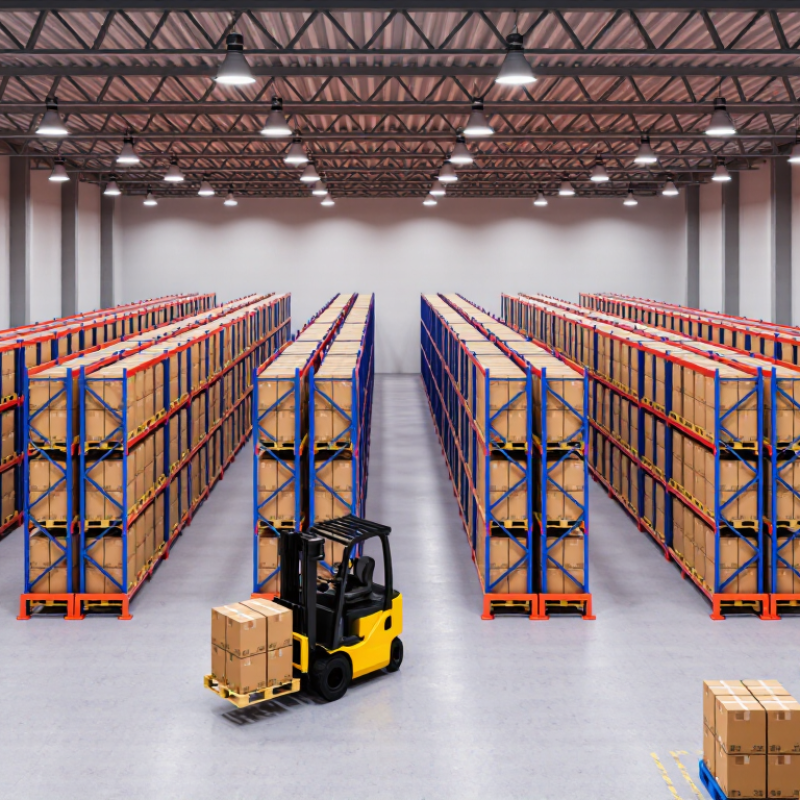
| Selective pallet rack | Warehouses with many product types, frequent picking, or a need to access individual pallets. | Direct access to each pallet; generally lower storage density than systems that store pallets several positions deep. | Commonly served by counterbalance or reach trucks. Aisle width must match the selected truck and its operating requirements. | Check rated load plaques, upright and beam condition, anchorage, frame protection, and required sprinkler and egress clearances. Confirm the rack design with the locally adopted building code and applicable structural requirements. | Pallet dimensions and weights, beam levels, clear height, aisle layout, floor condition, and the truck manufacturer’s aisle and lift-height specifications. |
| Double-deep rack | Operations seeking more pallet positions than a selective layout while retaining access to a range of products. | Stores pallets two positions deep; the rear pallet is less accessible and typically requires the front position to be moved first. | Usually requires a deep-reach truck or an appropriate attachment. Confirm reach, load center, lift height, and aisle requirements with the truck supplier. | Verify rack capacity for the actual load configuration, truck clearances, visibility, and protection at exposed rack ends. Changes to rack layout or components should be reviewed by a qualified designer. | SKU turnover, pallet depth and condition, truck reach capability, required access sequence, and the effect of the layout on picking time. |
| Drive-in / drive-through rack | Large quantities of similar products with relatively low SKU variety. | High storage density because trucks enter the rack lanes. Drive-in systems generally load and retrieve from the same end; drive-through systems can be accessed from opposite ends. | Requires trucks able to enter rack lanes and operate within the specified clearances. Check truck dimensions, turning behavior, mast height, and pallet-handling method. | Truck impact risk is higher within lanes. Assess guide rails, column protection, entry clearances, load-support rails, anchorage, and the fire-protection design for the specific building and storage arrangement. | Number of pallets per SKU, loading sequence, lane depth, pallet quality, inventory rotation needs, and the operating procedure for entering and exiting lanes. |
| Push-back rack | Multiple pallets of the same product stored in each lane where access from the aisle is preferred over driving into the rack. | Stores several pallets deep on carts or a sloped rail system. Typically provides higher density than selective rack, with less direct access to each pallet. | Forklifts load and retrieve pallets from the aisle; the system’s cart design and pallet dimensions must be suitable for the intended loads. | Confirm the engineered capacity of beams, carts, and rails; inspect moving components and stops; and train operators on the system’s loading and retrieval sequence. | Lane depth, pallet dimensions and weight consistency, product mix, cart maintenance requirements, and the impact of last-in, first-out retrieval. |
| Pallet-flow rack | High-throughput operations that benefit from first-in, first-out product rotation, such as dated or batch-controlled inventory. | Gravity-fed lanes move pallets from the loading side toward the picking side. Storage density can be high, but lane design and product flow must suit the load. | Forklifts typically load from one side and retrieve from the other. Check pallet dimensions, underside condition, and load stability for the flow equipment. | Review flow-control devices, lane stops, loading and unloading access, fire-protection arrangements, and maintenance procedures. Do not exceed the system’s engineered load limits. | Required rotation method, pallet consistency, load stability, lane length, throughput, and procedures for clearing a stopped or damaged pallet. |
| Cantilever rack | Long, bulky, or irregularly shaped goods that do not fit readily on standard pallet beams, such as pipe, lumber, or sheet material. | Open-front arms provide flexible storage for long items; capacity depends on the rack configuration and how loads are distributed. | May be served by forklifts or other material-handling equipment suited to the stored item’s length and weight. Confirm aisle and handling clearances. | Check column and arm capacity, base anchorage, load distribution, arm stops where needed, and protection from vehicle impact. Store items securely to prevent rolling, sliding, or overhang hazards. | Item length, weight, shape, center of gravity, support spacing, loading method, and whether the material needs restraints or dedicated supports. |