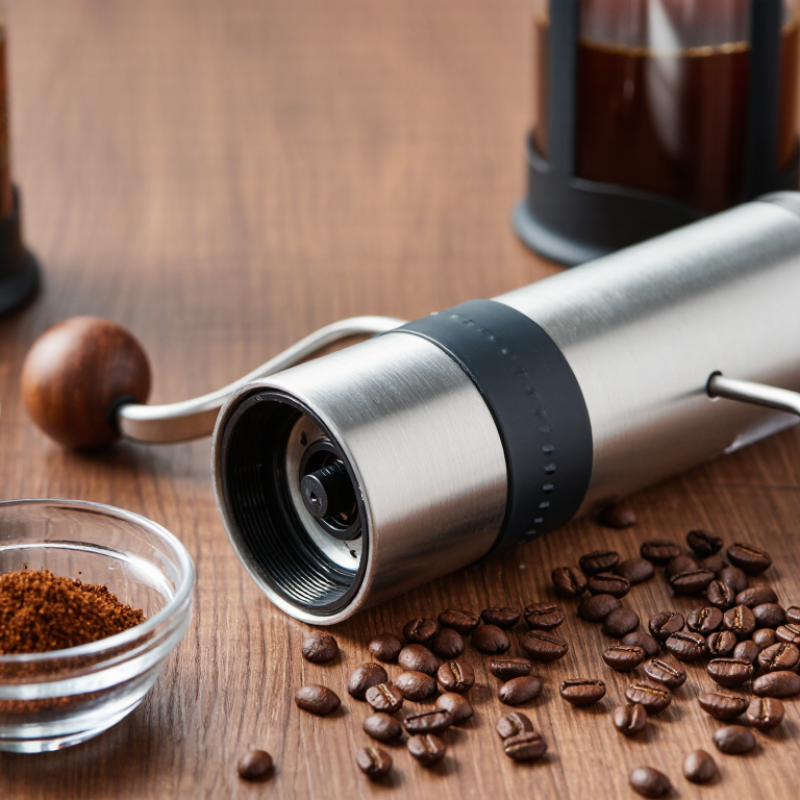
| Ceramic burrs | Two shaped burrs crush and shear beans as the handle turns. The space between the burrs helps determine the grind size. | Look for burrs that sit securely and remain aligned, with no visible cracks or wobble. | Ceramic is hard and resists corrosion, but it can chip or crack if dropped or struck. |
| Adjustment mechanism | A dial, nut, or stepped setting changes the distance between the burrs to produce coarser or finer grounds. | Check that settings are easy to adjust and stay in place while grinding. Confirm that the instructions explain the setting direction. | Coarser grounds are generally used for French press; finer grounds are typically used for espresso. The suitable setting depends on the brewer and recipe. |
| Grind consistency | Burr alignment and spacing influence the distribution of particle sizes. Uneven grounds can extract at different rates. | Check whether the grinder produces a reasonably even grind at the setting you need, rather than relying only on the number of settings. | Very fine brewing methods are especially sensitive to grind consistency. A manual grinder may require more time and effort at finer settings. |
| Handle and shaft | The handle turns a central shaft that drives the burrs. A stable shaft helps keep the burrs aligned during rotation. | Look for a handle that attaches securely, turns smoothly, and is comfortable to hold. | A longer handle can provide more leverage, while a loose or poorly supported shaft can make grinding less steady. |
| Bean capacity | Beans sit in the hopper above the burrs and feed into the grinding area as the handle turns. | Match the hopper capacity to the amount you usually brew, and check that beans do not spill when loading. | Many portable hand grinders hold roughly 20–40 g of beans, but capacity varies by model. Weigh beans separately for repeatable recipes. |
| Grounds container | Ground coffee falls from the burrs into a removable container below them. | Check that the container attaches securely, is easy to empty, and holds the quantity you need. | A container sized for one brewing dose can be convenient for travel; a larger one may suit multiple cups. |
| Cleaning and maintenance | Loose coffee particles and oils can collect around the burrs and adjustment parts over time. | Choose a design that can be disassembled and reassembled without special tools, and follow its cleaning instructions. | Use a dry brush for routine cleaning. Avoid washing ceramic burrs or grinder parts unless the manufacturer states they are washable. |
| Portability and build | The body holds the burr assembly and provides support while the grinder is turned. | Consider weight, grip, materials, and whether the handle or parts can be secured for transport. | A compact grinder is easier to pack, while a sturdier base and comfortable grip can improve stability during daily use. |
| How the grinding process works | Load whole beans, select a grind setting, turn the handle, and collect the grounds from the container. | Check that the grinder is simple to load, adjust, operate, and empty for your preferred brewing method. | Start with a medium setting, brew a test cup, then adjust finer or coarser based on taste and brewing time. |