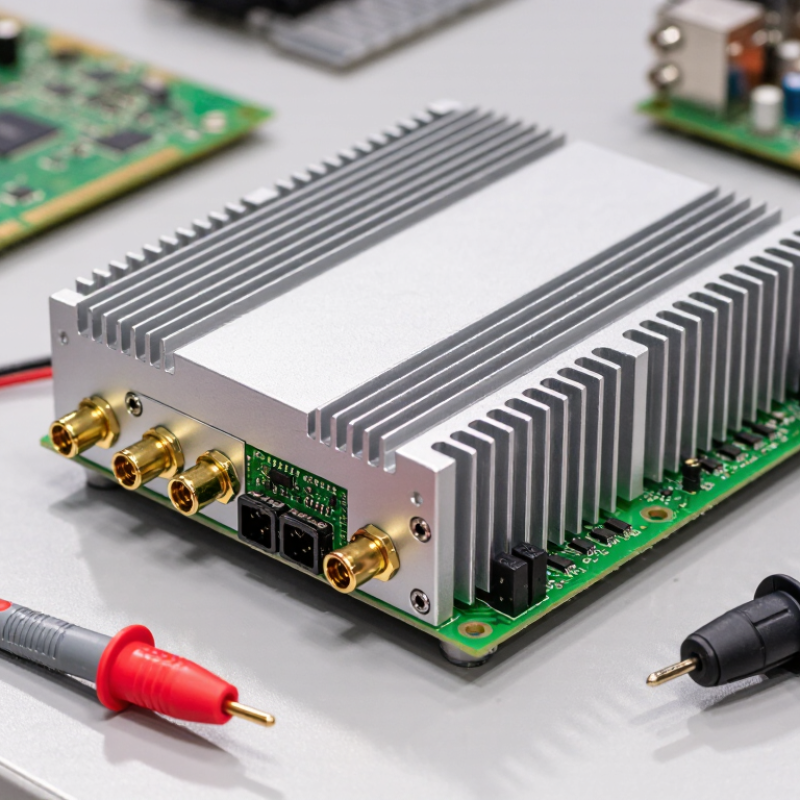
A millimeter-wave power amplifier can meet its output target and still fail in a warm enclosure. Check thermal resistance, maximum junction temperature, and the conditions used for each rating. A rating measured on a large evaluation board may not hold inside a compact radio. Look closely at the airflow, mounting surface, and duty cycle in your design. Heat has few places to escape.
Reliability needs more than a headline lifetime figure. JEDEC’s JESD22-A110 accelerated humidity test uses 130°C and 85% relative humidity for 96 hours; it is a screening method, not a promise of field life.
Ask whether the amplifier’s package and assembly have relevant qualification data, then compare results with your operating profile. GSMA’s Mobile Economy 2024 report forecasts 5.5 billion 5G connections by 2030, underscoring the growing range of deployment environments.
A rooftop unit, a sheltered indoor radio, and a vehicle installation will not share the same temperature swings or airflow.
Test at the intended frequency, supply voltage, output power, and ambient temperature. Measure case temperature after sustained operation, not just during a brief bench test.
One detail is easy to miss: thermal readings depend on sensor placement. A reading beside the package may understate the hottest point.
A little uncertainty remains until the final enclosure is tested.