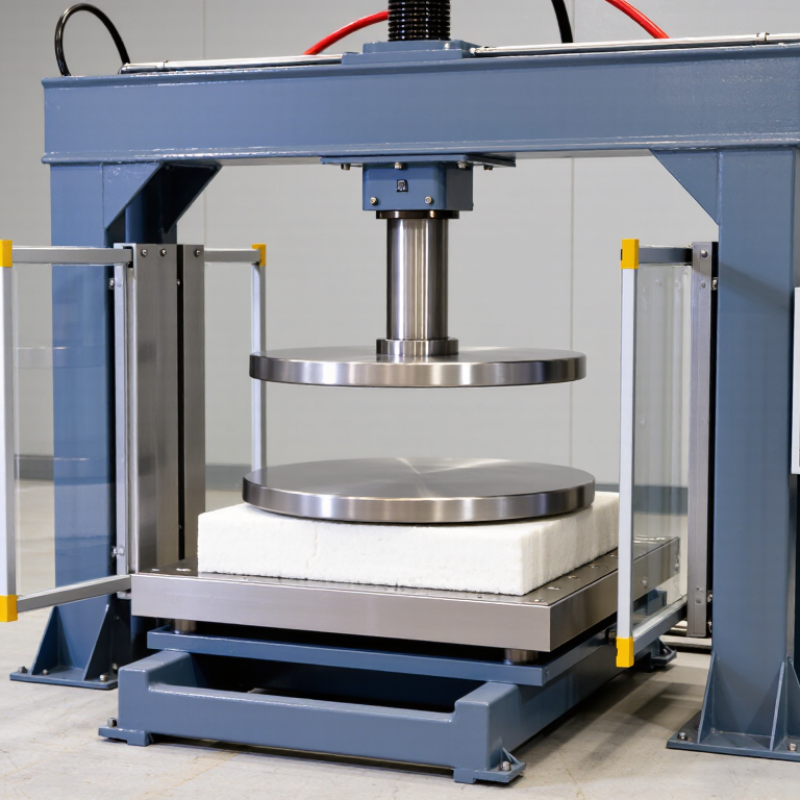
Choosing a salt block hydraulic press starts with the material, not the largest force rating. Salt crystals vary in size, moisture, and binder content, so identical settings can produce different blocks. Estimate the force needed for your die area, then confirm the press can deliver it consistently.
Hydraulic pressure and pressing force are related, but they are not interchangeable; die area matters.
Not always.
Pushing harder may crack edges, create uneven density, or overload tooling instead of improving strength. Dry, free-flowing salt may need a different pressure profile than a damp, fine-grained blend.
Look for a readable pressure gauge and adjustable pressure controls, plus a repeatable way to set stroke and dwell time. Begin with conservative settings and make small changes while checking block dimensions, surface cracks, and handling strength.
Record each batch’s moisture, particle size, force, and hold time; otherwise, a good result is hard to reproduce. Follow the press’s rated limits and tooling guidance, and keep guards in place during trials.
One detail is easy to miss: a pressure reading alone does not prove uniform compaction across a wide die.
Inspect blocks from several positions. A small trial can reveal more than a confident guess.