| Safety and code compliance | Applicable elevator, building, fire, electrical, and accessibility requirements; emergency communication; door protection; and rescue procedures. | Identify the governing codes and approval authority early. Requirements vary by location, building type, and elevator configuration. | Code-compliance schedule, equipment submittals, inspection and acceptance-test plan, and documented emergency procedures. | Mandatory |
| Glazing and enclosure safety | Glass type, impact resistance, edge protection, structural support, attachment details, and safe cleaning access. | Specify glazing and supports for the applicable building loads and safety standards. Coordinate the elevator enclosure with the building structure and façade design. | Glazing specifications, structural calculations, connection details, and cleaning or replacement procedures. | Mandatory |
| Accessibility | Car and door dimensions, clear approach space, controls, handrails, visual and audible signals, and accessible communication. | Confirm requirements with the applicable accessibility code and review the complete passenger route, including entrances and landings. | Dimensioned plans, control-panel layout, accessibility compliance documentation, and an accessible-route review. | Mandatory |
| Capacity and traffic performance | Passenger capacity, expected demand, number of floors, travel distance, door operation, and peak-period waiting time. | Base the selection on a traffic analysis rather than appearance alone. Confirm that rated capacity and performance suit expected building use. | Traffic analysis, rated-load information, operating sequence, and stated performance assumptions. | High |
| Ride quality and noise | Acceleration, leveling accuracy, vibration, door smoothness, and noise transmitted to adjacent spaces. | Set project-specific comfort requirements and consider the effect of the shaft, supports, and surrounding structure on noise and vibration. | Ride-quality criteria, acoustic or vibration assessment where needed, and commissioning test procedures. | High |
| Energy and operating conditions | Drive and control-system energy use, standby behavior, lighting, ventilation, and expected duty cycle. | Compare options using stated operating assumptions. Check that the equipment suits the building’s electrical supply and environmental conditions. | Energy data with test conditions, electrical requirements, and recommended operating settings. | Project-specific |
| Maintenance and service access | Access to machinery and components, inspection requirements, replacement-part availability, and service response arrangements. | Review lifecycle needs before finalizing the layout. Provide safe access for inspection, repair, and cleaning without relying on improvised methods. | Maintenance schedule, access drawings, service scope, spare-parts information, and response-time commitments. | High |
| Reliability and downtime planning | Equipment duty rating, fault monitoring, troubleshooting support, and procedures for taking the elevator out of service. | Consider building occupancy and the consequences of downtime. Establish a plan for passenger communication and alternative accessible routes. | Reliability and service documentation, fault-reporting details, and an outage response plan. | High |
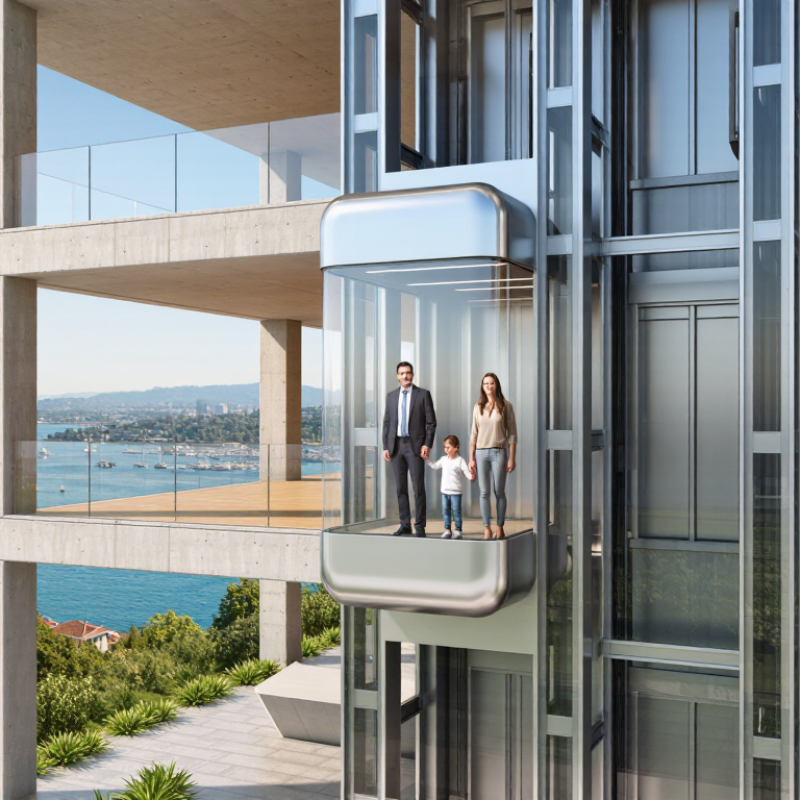
| Architectural integration | Visibility, enclosure location, structural interfaces, lighting, reflections, privacy, and coordination with adjacent spaces. | Coordinate the elevator, shaft, façade, and surrounding finishes during design development to reduce clashes and protect sightlines. | Coordinated plans and sections, interface schedule, finish samples, and lighting review. | Project-specific |
| Installation and commissioning | Site readiness, delivery access, installation sequence, inspections, testing, and handover training. | Coordinate construction tolerances and interfaces early. Include commissioning, required approvals, and operator training in the project schedule. | Installation programme, responsibility matrix, test records, approval documentation, and handover materials. | High |