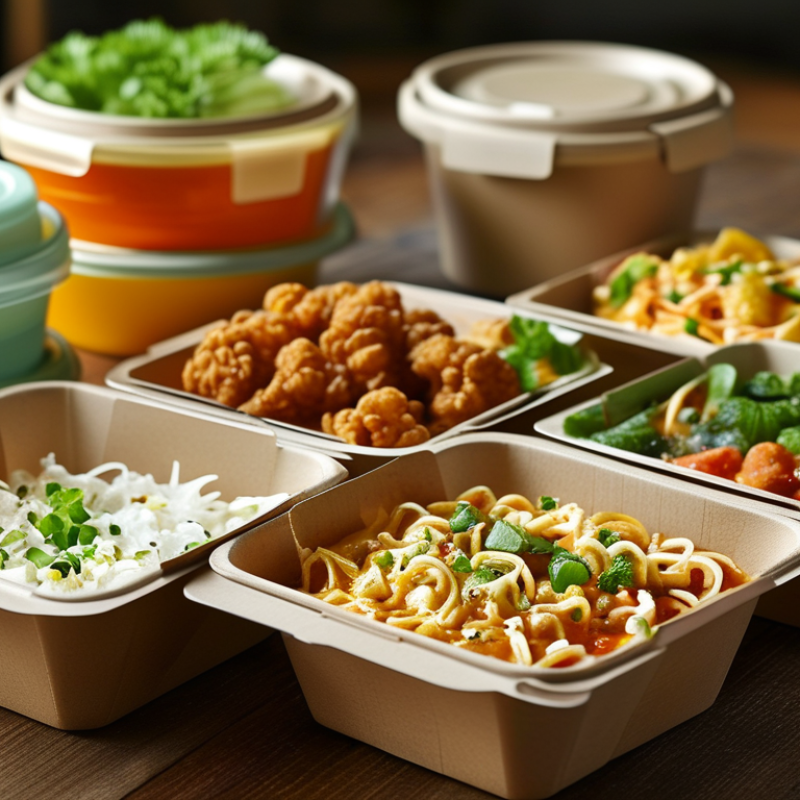
| Paperboard Clamshell | Coated paperboard or molded fiber | Small to large meal portions; commonly about 500–1,500 ml | Generally suitable for hot food; exact limits depend on the coating and structure | Medium to high | Only when specifically labeled microwave-safe; remove any metal components | Uncoated fiber is more widely accepted for paper recycling or commercial composting. Plastic or barrier coatings can reduce recyclability. | Burgers, fried food, sandwiches, bakery items and dry meals | Lightweight, stackable, printable and easy to open | May soften with steam or oily sauces; not ideal for liquid-heavy meals |
| Molded Fiber Bowl | Bagasse, recycled fiber, bamboo fiber or other molded plant fiber | Commonly about 350–1,200 ml | Usually suitable for hot and cold foods within the manufacturer’s stated limit | Medium to high | Only if the product is explicitly labeled microwave-safe | Fiber products may be recyclable or commercially compostable depending on coatings, food residue and local facilities. | Rice bowls, salads, noodles, pasta and side dishes | Firm structure, good heat handling and a plastic-reduction option | Can absorb moisture over time; availability of composting services varies by location |
| Clear PP Container | Polypropylene (PP) | Commonly about 250–2,000 ml | Suitable for many hot foods; follow the product’s temperature rating | High | Often microwave-compatible when labeled accordingly; venting may be needed | PP is technically recyclable in many systems, but actual acceptance depends on local collection and sorting infrastructure. | Curries, soups, meal prep, salads and sauces | Good heat resistance, strong sealing performance and food visibility | Single-use plastic may conflict with waste-reduction goals; thin formats can deform under heavy loads |
| PET Hinged Container | Polyethylene terephthalate (PET) | Commonly about 250–1,500 ml | Best for chilled or room-temperature food; not normally intended for very hot food | High | Generally not suitable for reheating unless specifically labeled | PET is widely recyclable in many regions, but food residue, labels and local collection rules affect recovery. | Cold salads, fruit, desserts, sandwiches and deli products | Excellent clarity, rigid structure and strong product presentation | Limited heat resistance; can become brittle or deform outside its intended temperature range |
| Aluminum Foil Tray | Aluminum | Commonly about 400–3,000 ml | Suitable for hot food and oven use when designed for that application | High | Do not place aluminum in a microwave unless the appliance and packaging instructions specifically permit it | Aluminum can be recycled repeatedly, but recycling depends on local collection. Clean foil is more likely to be accepted than heavily contaminated foil. | Roasted meals, baked dishes, catering portions and heavy food items | Strong, heat-resistant, lightweight and suitable for many oven-to-table applications | Can be crushed, may react with some acidic foods, and is unsuitable for standard microwave use |
| Reusable PP Container | Rigid polypropylene, often with a separate lid | Commonly about 500–2,000 ml | Depends on the reusable system and manufacturer’s temperature rating | High | Often microwave-compatible when labeled, with the lid loosened or vented as instructed | Designed for multiple use. End-of-life recycling depends on material composition, condition and local facilities. | Deposit-return programs, meal subscriptions and frequent customers | Can reduce single-use packaging when returned and washed efficiently | Requires collection, washing, inventory control and a high return rate to deliver environmental benefits |
| Paper Soup Cup | Paperboard with a moisture barrier, often polymer-based or dispersion-coated | Commonly about 350–950 ml | Designed for hot or cold liquids within the stated limit | Medium to high | Only when explicitly labeled microwave-safe; lids are usually not intended for microwave use | Recyclability depends on the barrier coating and local fiber-recycling technology. Compostability requires suitable certification and facilities. | Soups, broths, porridge, desserts and beverages | Lightweight, easy to carry and efficient for portion control | Requires a secure lid; prolonged exposure to heat or liquid can weaken the paper structure |
| Bagasse Clamshell | Molded sugarcane fiber | Commonly about 500–1,500 ml | Usually suitable for hot and cold foods within the product specification | Medium | Only if specifically labeled microwave-safe | May be commercially compostable when certified and accepted by local facilities. Food contamination and coatings can affect disposal options. | Takeaway meals, fried food, rice dishes and catering service | Renewable-fiber appearance, good rigidity and no conventional foam structure | May absorb oil or moisture; composting access is not universal |
| Foam Container | Expanded polystyrene (EPS) or similar foam plastic | Commonly about 500–1,500 ml | Suitable only within the manufacturer’s stated limit; avoid unsuitable hot or oily foods | Medium | Generally not recommended for microwave use | Often difficult to recycle because of low density and food contamination. Local restrictions may apply. | Basic short-distance takeaway where permitted by local regulations | Very lightweight, insulating and low-cost | Limited recycling options, bulky waste volume and possible regulatory restrictions |