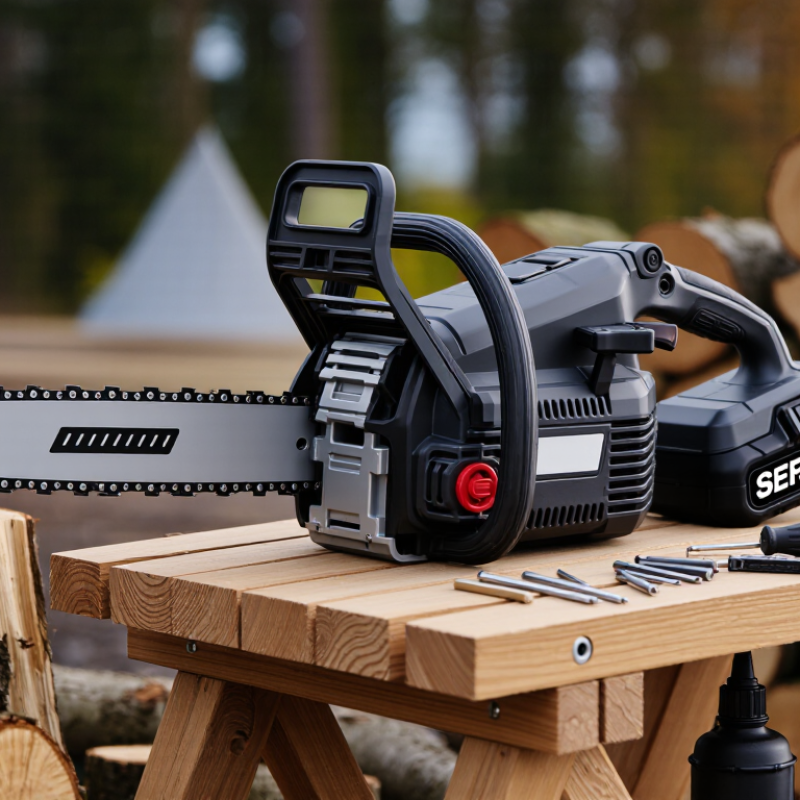
| 1. Prioritize safety features | Chain brake, hand guards, trigger lockout, and a low-kickback chain and bar combination. | Confirm which safety components are included and follow the manual’s instructions. Wear chainsaw-rated protective equipment. | These features can help reduce risk, but they do not prevent every injury or replace safe cutting practices. |
| 2. Match bar length to the job | Bar length, recommended cutting capacity, and the types of wood you expect to cut. | Choose a bar suited to the material and task; a longer bar is not automatically better. Use the saw only within its stated capacity. | An appropriately sized saw is generally easier to control and avoids buying more reach or weight than you need. |
| 3. Test ergonomics and balance | Tool weight with the battery installed, handle shape, grip comfort, and balance in typical working positions. | If possible, hold the saw before buying. Consider how its weight and balance feel during repeated cuts; do not cut one-handed or above shoulder height. | A comfortable, controllable saw can reduce fatigue, which may help you maintain better control. |
| 4. Check noise and vibration | Published sound-pressure and vibration figures, test conditions, and recommendations for hearing protection. | Battery saws avoid engine exhaust and are often quieter than comparable petrol saws, but cutting noise can still be hazardous. Wear suitable hearing protection. | Noise and vibration vary with the saw, chain, wood, and operating conditions; specification figures are useful for comparison, not a guarantee of exposure. |
| 5. Estimate battery runtime realistically | Battery voltage and capacity, included battery count, charging time, and manufacturer runtime conditions. | Runtime changes with wood hardness, cut size, chain sharpness, and technique. For extended work, compare spare-battery cost and availability. | A published runtime may not reflect continuous cutting under your specific conditions. |
| 6. Review chain and bar maintenance | Chain-tensioning method, bar-oil system, replacement-chain availability, and access to routine maintenance points. | Check chain tension and lubrication as directed in the manual. Keep the chain sharp, and clean the saw after use with the battery removed. | Proper lubrication and sharpening support cutting performance and can limit unnecessary strain on the saw. |
| 7. Compare ownership and support | Warranty terms, service access, replacement parts, battery and charger inclusion, and total kit cost. | Check whether the listed price includes a battery and charger, and confirm that compatible replacement chains, bars, and batteries are available. | The purchase price alone may not reflect the cost or convenience of maintaining the saw over time. |