How to Choose the Best Portable Water Air Cooler in 2026?
Choosing the best Portable Water Air Cooler in 2026 requires more than comparing prices and fan speeds. Real performance depends on room size, humidity, airflow, tank capacity, noise, and daily maintenance. A cooler that feels refreshing beside a desk may disappoint in a large bedroom. Small details matter.
Dr. Richard de Dear, a respected thermal-comfort researcher, has emphasized that comfort involves “temperature, humidity, and air movement.” That principle remains useful when judging a modern Portable Water Air Cooler. Cooling is not created by cold air alone. Evaporative models usually work better in dry climates, while humid rooms may need stronger ventilation or a different cooling system. This distinction is easy to overlook.
Look for measurable evidence. Check the airflow rating, water consumption, operating noise, filter design, and claimed coverage area. A visible water-level window helps during busy afternoons. A washable filter can reduce recurring costs. The quietest model may not move enough air. Bigger is not automatically better.
There is no universal winner.
This guide will compare practical features, not just attractive specifications. It will examine real-use comfort, portability, energy demand, cleaning effort, and safety design. Some recommendations may remain imperfect because manufacturers measure performance differently. That uncertainty deserves attention. A careful buyer should test expectations against climate, room layout, and personal comfort before purchasing.
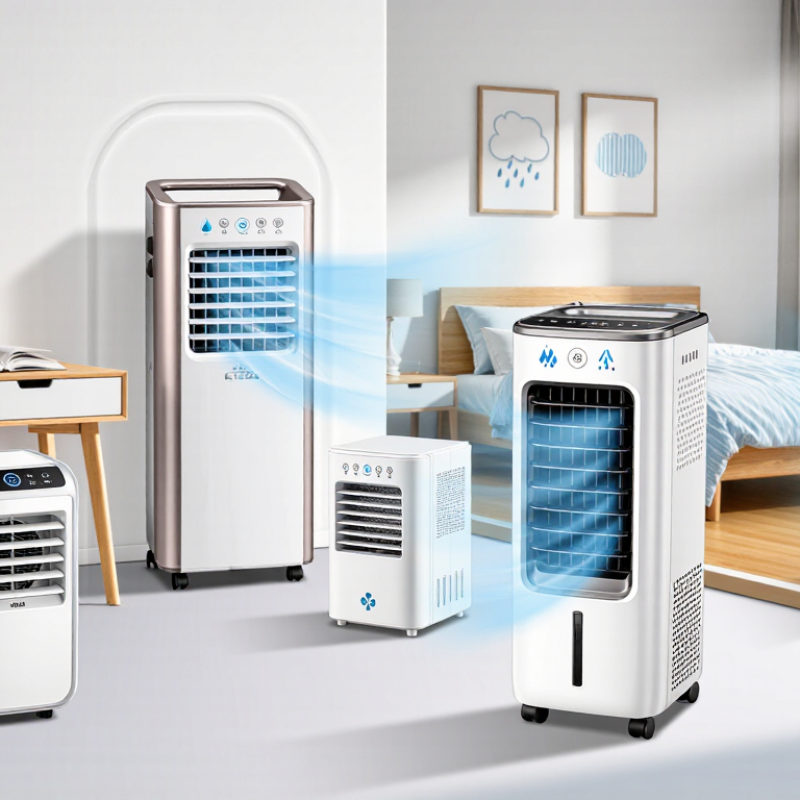
Understanding How Portable Water Air Coolers Work
How to Choose the Best Portable Water Air Cooler in 2026?
A portable water air cooler cools by evaporation, not refrigeration. Its fan pulls warm room air through a wet cooling pad. Water absorbs heat while changing into vapor, and the air leaving the pad feels cooler. The effect is strongest in dry climates. In humid rooms, the air accepts less moisture, so cooling becomes weaker. It is easy to misunderstand this difference.
The U.S. Department of Energy reports that evaporative coolers can use about one-quarter of the electricity consumed by comparable air-conditioning systems. The International Energy Agency also projects that global space-cooling energy demand could triple by 2050. These figures explain the interest in low-energy cooling, but they do not guarantee equal comfort everywhere.
Check the cooler’s airflow rating, tank capacity, pad area, noise level, and water consumption. A larger tank may last through the night, while a smaller unit is easier to carry.
During testing, place the unit near an open window or door. Fresh air helps remove added humidity. A sealed bedroom may soon feel damp, even when the fan remains powerful.
I would also measure room humidity with a small hygrometer. Manufacturer claims can sound precise, yet portable performance changes with temperature, moisture, and placement. The best choice is not always the strongest fan; it is the model that matches your climate, room size, and tolerance for refilling water.
Comparing Portability, Noise Levels, and Energy Efficiency
How to Choose the Best Portable Water Air Cooler in 2026?
Comparing Portability, Noise Levels, and Energy Efficiency
A portable water air cooler should move easily between rooms, not merely look compact. Check its filled weight, handle strength, wheel quality, and tank access. A small tank may reduce weight, but it can require frequent refilling during dry afternoons. Leak protection also matters, especially on wooden floors or beside electronics. I once favored the lightest model, then disliked carrying it after adding water.
Noise needs practical testing, not only advertised figures. Look for a decibel rating measured at a stated distance. A cooler producing 45 decibels may suit a living room, while 55 decibels could disturb sleep. Test every fan speed if possible. Some units remain quiet on low settings but become harsh at maximum airflow. That difference is easy to miss in a bright showroom.
Energy efficiency involves more than low wattage. Compare power consumption with airflow, cooling coverage, and usable operating hours. A 40-watt unit may use less electricity than a stronger model, but it may cool only a nearby chair. Evaporative cooling generally performs better in dry air and less effectively in humid conditions. Keep the tank clean, follow the maintenance instructions, and avoid judging performance from one warm evening. My own assessment would include a power meter, a phone-based sound check, and several days of use. Those measurements are imperfect, but they reveal habits that product labels cannot.
How to Choose the Best Portable Water Air Cooler in 2026? — Comparing Portability, Noise Levels, and Energy Efficiency | Cooler Type | Typical Weight | Water Tank Capacity | Approx. Dimensions
(W × D × H) | Typical Noise Level | Rated Power | Estimated Energy Use
for 8 Hours | Typical Operating Time
per Full Tank | Portability | Best Use |
| Personal Desktop Cooler | 1.5–3 kg | 1–3 L | 18–25 × 15–22 × 25–35 cm | 35–50 dB(A) | 5–25 W | 0.04–0.20 kWh | 4–10 hours | Excellent
Easy to carry with one hand | Personal cooling at a desk, bedside, or small study area |
| Compact Floor Cooler | 4–8 kg | 5–12 L | 25–35 × 25–35 × 55–80 cm | 45–60 dB(A) | 35–100 W | 0.28–0.80 kWh | 6–14 hours | Very Good
Usually has a carry handle | Bedrooms, home offices, dorm rooms, and small living spaces |
| Wheeled Room Cooler | 8–15 kg | 15–35 L | 35–50 × 30–45 × 85–115 cm | 50–65 dB(A) | 80–200 W | 0.64–1.60 kWh | 8–24 hours | Good
Designed to roll between rooms | Large bedrooms, kitchens, patios, and shared indoor areas |
| High-Airflow Outdoor Cooler | 12–25 kg | 20–50 L | 45–65 × 35–55 × 100–140 cm | 55–70 dB(A) | 120–300 W | 0.96–2.40 kWh | 6–18 hours | Moderate
Best moved on large wheels | Well-ventilated patios, workshops, garages, and outdoor events |
How to read the figures: The specifications above represent typical 2026 market ranges for portable evaporative water air coolers rather than brand-specific products. Energy use is estimated from rated power multiplied by eight hours; actual consumption varies with fan speed, pump operation, humidity, water temperature, and control settings. Noise ratings are commonly measured close to the unit and may differ by room acoustics. Evaporative coolers work best in dry, well-ventilated conditions and do not provide the same cooling method as a refrigerated air conditioner.
Choosing the Best Model for Your Space and Budget
How to Choose the Best Portable Water Air Cooler in 2026?
Choosing the Best Model for Your Space and Budget
A portable water air cooler works best in dry, ventilated rooms. It is not a small air conditioner. Evaporation lowers perceived temperature, while an open window removes warm, humid air. The International Energy Agency reports that space cooling already represents more than 10% of global electricity use. This makes efficient cooling worth examining. For a 12-square-meter bedroom, choose a model with adjustable airflow and a tank that lasts overnight. A two to five-liter tank may suit short use, but larger tanks reduce refilling. Check the noise rating too. A low setting should not disturb sleep.
Budget decisions need more than the purchase price. The U.S. Department of Energy explains that evaporative coolers generally use less electricity than refrigerated air conditioning. However, water use and filter replacement still create running costs. Look for a washable filter, visible water-level markings, stable wheels, and automatic shutoff when the tank empties. Measure the floor space before buying. I once underestimated side clearance, and the cooler blocked a drawer. That was avoidable. Bigger is not always better.
Tips: Compare airflow, tank capacity, noise, warranty terms, and replacement-filter prices. Test the lowest setting near your bed. Keep the room ventilated. In humid weather, the cooling effect may disappoint. Reflect on your climate, not just the advertised cooling area.











