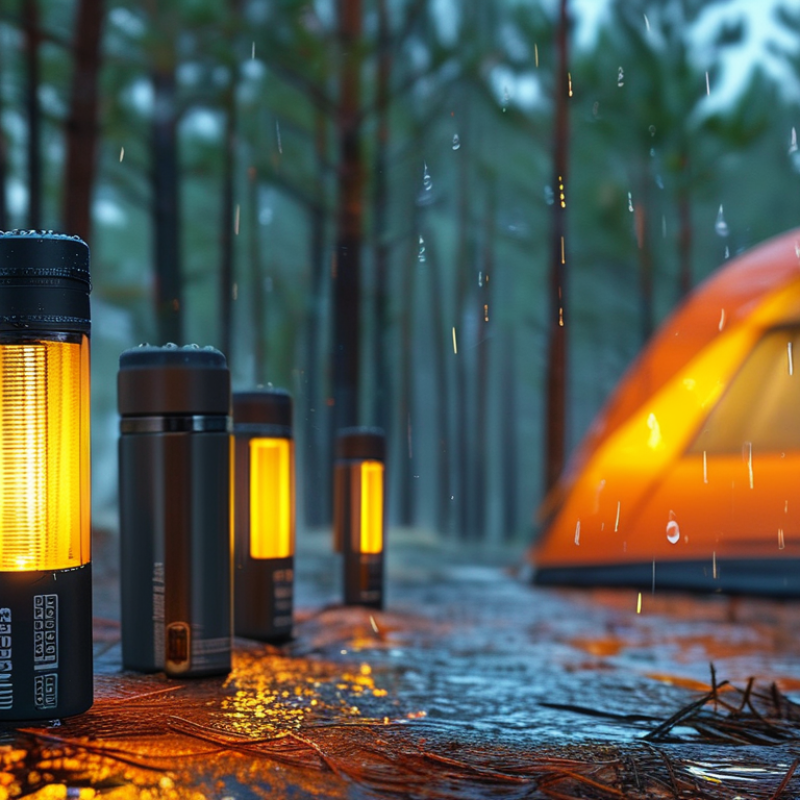
The best solar camping light in 2026 should survive rough handling, not just look bright. I test lights beside wet ground, sharp stones, and a crowded backpack. A rigid frame helps, but excessive weight becomes annoying after several kilometers. A useful target is below 500 grams for hiking. However, lighter designs often sacrifice battery capacity or impact protection.
Weather resistance deserves careful attention. IEC 60529 classifies IPX4 as protection against water splashes, while IPX7 allows temporary immersion up to one meter. Choose at least IPX4 for ordinary camping, and consider IPX7 near rivers or during unpredictable storms. The World Bank’s Global Solar Atlas uses long-term solar irradiation data, showing why charging performance varies strongly by region and season. A lamp charged quickly in Arizona may struggle under northern cloud cover. Manufacturer claims still need real-world testing.
Tips: Check the IP rating, hinge strength, and charging panel angle. Pack a short USB cable. Keep the panel clean. Test the lamp before departure.
Durability also depends on controls and seals. Large buttons work better with cold or wet fingers. Replaceable batteries would improve long-term value, but many current lights lack them. That is a weakness worth acknowledging. A practical light should offer stable illumination, not only a high peak-lumen figure. The U.S. Department of Energy’s lighting guidance emphasizes efficiency and useful light distribution, so inspect the beam near your tent, cooking area, and trail.