| Image Resolution | Approximately 480p–720p | Approximately 1080p | 1440p–4K, depending on application | Higher resolution can reveal more detail, but it also requires greater storage, processing power, and bandwidth. |
| Effective Detail | Adequate for close-range reversing | Clearer view of nearby vehicles, curbs, and obstacles | Better ability to distinguish signs, lane markings, and distant objects | Assess real-world sharpness rather than relying only on pixel count. Lens quality and image processing are equally important. |
| Horizontal Viewing Angle | About 90°–120° | About 120°–150° | About 150°–180° for wide-area coverage | A wider angle improves coverage but may increase edge distortion. Select the angle according to the mounting position and vehicle size. |
| Vertical Viewing Angle | About 60°–80° | About 70°–100° | About 90°–120° | A suitable vertical range helps show both nearby ground areas and higher obstacles without excessive image distortion. |
| Recommended Viewing Distance | Approximately 2–5 m | Approximately 3–10 m | Approximately 5–20 m, depending on lens and resolution | Choose the range based on whether the camera is for reversing, side monitoring, front-view assistance, or long-distance observation. |
| Dynamic Range | Basic exposure control | WDR or HDR support is commonly available | Advanced WDR/HDR with improved highlight and shadow handling | Wide dynamic range helps preserve details when bright headlights, sunlight, and dark areas appear in the same scene. |
| Low-Light Sensitivity | Usable with street lighting | Suitable for typical urban night driving | Better performance in dim roads and uneven lighting | Look for a large, sensitive image sensor, low image noise, and stable color reproduction at night. |
| Infrared Night Vision | Often unavailable or limited | Useful for dark parking areas and close-range monitoring | Integrated IR illumination or enhanced night imaging may be available | Infrared can improve visibility in darkness, but reflected IR may create glare on nearby surfaces or windows. |
| Frame Rate | About 25–30 frames per second | About 30 frames per second | 30–60 frames per second, depending on resolution | Higher frame rates provide smoother motion, but they can increase data usage and reduce available exposure time in low light. |
| Motion Blur Control | Limited | Acceptable for normal vehicle speeds | Improved shutter control and image processing | Test moving vehicles and pedestrians. A high frame rate alone does not eliminate blur if shutter speed is too slow. |
| Lens Distortion | More visible at wide angles | Moderate and often corrected electronically | Advanced correction with better edge preservation | Check whether straight lines remain reasonably straight, especially near the edges of the image. |
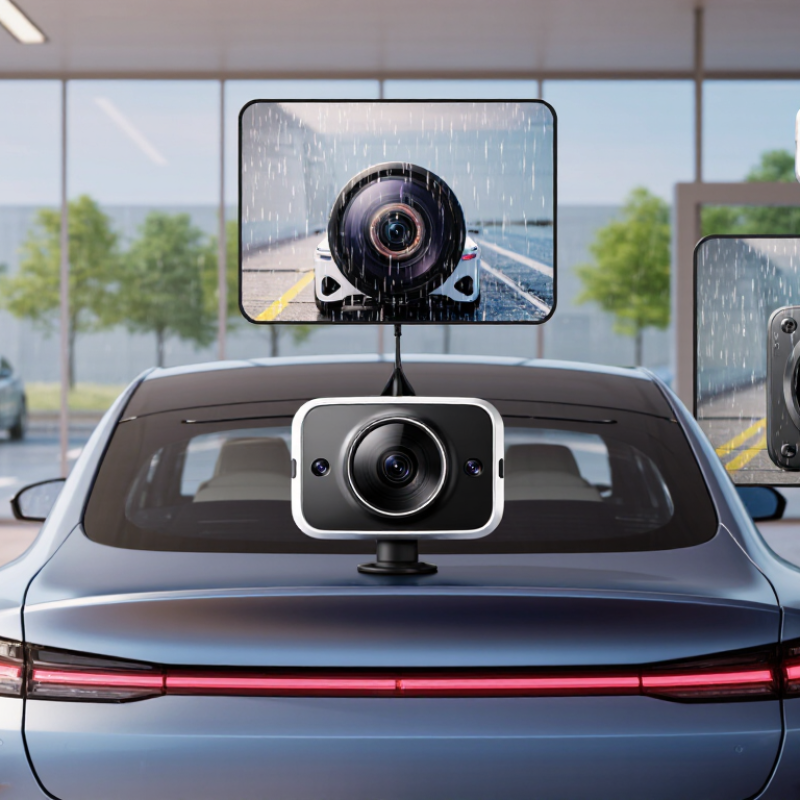
| Weather Resistance | Typically IP54–IP65 | Typically IP65–IP67 | Typically IP67 or higher for exterior installation | For exterior mounting, protection against dust and water is essential. Confirm that the rating applies to the complete installed camera assembly. |
| Operating Temperature | Approximately −20°C to 60°C | Approximately −30°C to 70°C | Approximately −40°C to 85°C | Select a temperature range suitable for the vehicle's climate and mounting location, especially near the engine or windshield. |
| Best Use Case | Basic rear-view or parking assistance | Daily driving, reversing, and general monitoring | ADAS support, fleet monitoring, multi-camera systems, and demanding night conditions | Match camera performance to the task. A more expensive camera is not automatically better for every vehicle. |