How to Choose the Right Commercial Lift for Your Business
Choosing the right Commercial Lifts starts with understanding how people and goods move through your building. A hotel, warehouse, and medical clinic have very different daily demands. A small passenger lift may suit a two-storey office, while a distribution site may need a goods lift with a wider platform and stronger capacity. These differences matter. Start with the basics: expected load, peak traffic, travel distance, available shaft space, and the size of doors and corridors. Then consider what happens during the busiest hour, not only on an average day. Not just today.
The right lift should fit the building and its routine. For passenger use, consider comfort, accessibility, waiting time, and the number of stops. For goods, check the weight and dimensions of typical loads, including carts or pallets. Door configuration, landing space, power supply, and installation constraints can affect both cost and usability. It is easy to focus on the purchase price. That can overlook maintenance access, service response, and long-term operating costs. Ask suppliers for clear capacity and performance details, and confirm that the proposed design meets applicable safety requirements. A qualified lift professional can assess site conditions and explain suitable options. Worth remembering. A well-chosen lift supports smoother daily work, but no single model suits every business. Review actual traffic patterns, and revisit your assumptions before committing. Some needs only become obvious after staff describe their busiest days.
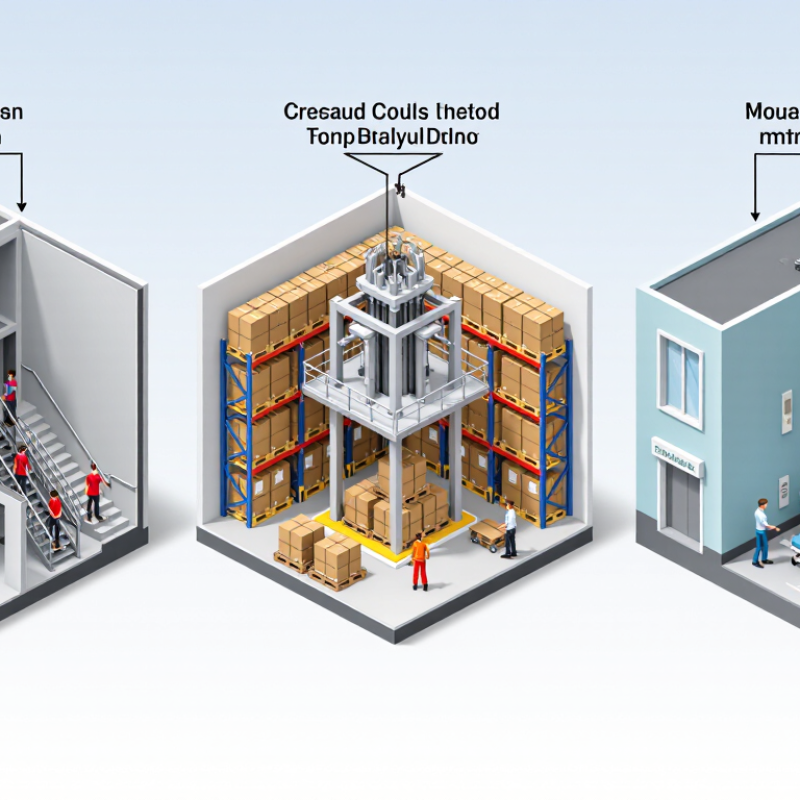
Define Your Business’s Lifting Requirements
Define the load before choosing the lift. List the heaviest routine item, its dimensions, and how it arrives: on a pallet, trolley, or by hand. Include the operator and any attachments in the weight. A lift rated for 1,000 kilograms may still be unsuitable if its doorway cannot clear your widest cart. Small detail, big delay.
Measure the vertical travel, number of stops, and trips during your busiest hour. Note whether loads arrive in short bursts or throughout the day. The U.S. Department of Energy’s 2014 report, Improving Energy Efficiency of Elevators, estimates that elevators use roughly 2–5% of energy in typical buildings, with higher shares possible in taller buildings. Frequent trips and standby time therefore matter alongside rated capacity.
Check the actual route, too. A warehouse lift may need room for a turning pallet; a kitchen lift may face heat, moisture, and frequent cleaning. Record floor space, power availability, and any doorway or overhead restrictions before requesting specifications. It is tempting to plan around today’s busiest load alone. That can be shortsighted. Include likely changes in stock, staffing, and delivery patterns, but avoid paying for capacity your operation will rarely use. It is a balance, and the forecast may be imperfect.
Compare Commercial Lift Types and Their Applications
Commercial lifts serve different jobs, even when their cabins look similar. Passenger lifts suit offices, hotels, and clinics with steady people traffic. Capacity, door width, and travel speed affect comfort during busy periods. A lift that moves quickly but has a narrow entrance may still create queues. Check how many people travel at once, and whether wheelchairs or carts need clear access.
Freight lifts are built for heavier loads, such as pallets, kitchen supplies, or maintenance equipment. Their robust floors and wider doors help protect goods during loading. They may travel more slowly than passenger lifts, which is often acceptable when deliveries can be scheduled. Platform lifts can help bridge short level changes where a conventional shaft is impractical. They are useful in smaller retail spaces or work areas, but their travel height and load limits need careful checking. For small items between floors, a service lift can move dishes or documents without carrying people.
Match the lift to the route, not just the building’s floor count. Measure the largest load, including its trolley, and note turning space at each landing. Also consider peak traffic, available shaft space, power requirements, and maintenance access. A common planning mistake is to focus on speed alone. I would treat any type comparison as a starting point; actual traffic patterns can change the best choice. A site assessment can expose awkward details, like a delivery door that opens directly into a narrow corridor.
Determine Capacity, Platform Size, and Travel Needs
A commercial lift should be sized for the heaviest realistic load, not an average delivery. Include the operator, goods, carts, and any pallet jack in your estimate. Then compare that total with the lift’s rated capacity, allowing for loads that sit unevenly. Measure twice. A long crate can exceed the platform’s usable area even when its weight is within the limit. Check the clear width at doors, turning space, and whether a load can block controls or access points. A tape measure and a sketch of the route often reveal problems early.
Travel needs involve more than the distance between floors. Record the floor-to-floor height, number of stops, available overhead space, and any pit or threshold constraints. Think about the busiest shift, too: frequent short trips may call for different operating needs than occasional heavy deliveries. On site, note where goods wait before loading; a crowded landing can slow work even when the lift is suitable. It is easy to overestimate future demand, but guessing low can be costly as well. Share measured loads and building dimensions with a qualified lift professional, and verify the proposed configuration against the site conditions before ordering.
Assess Site Conditions, Accessibility, and Safety Standards
A commercial lift should fit the building, not just the floor plan. Measure shaft dimensions, pit depth, overhead clearance, door openings, and the route for bringing equipment inside. Check the structure’s load capacity and note where power, drainage, and fire-rated walls may constrain installation. A compact lift can look ideal on paper, yet prove awkward when a trolley must turn through a narrow corridor. Site surveys often reveal details drawings miss.
Accessibility deserves equal attention. The World Health Organization’s 2022 Global Report on Health Equity for Persons with Disabilities estimates that 1.3 billion people—about 16% of the global population experience significant disability. Consider wheelchair turning space, reachable controls, clear door time, tactile or audible signals, and level landings. Confirm applicable local accessibility rules. For safety, specify equipment and inspection requirements against the relevant jurisdiction’s adopted lift code, such as ASME A17.1/CSA B44 where applicable. Standards vary by location.
Tips Walk the route with a tape measure and a loaded trolley. Ask a qualified lift professional to verify pit, headroom, capacity, and emergency access before ordering. Keep a little margin in the layout; tight clearances can become expensive compromises. Then check how routine servicing will reach the equipment. One detail is easy to overlook: a lift may be accessible, while the approach to it is not.
Compare Installation Costs, Maintenance, and Supplier Support
A commercial lift’s purchase price is only one part of its cost. Ask suppliers to separate equipment, building work, electrical upgrades, commissioning, and fees for future service. Compare the same load, travel distance, stop count, and expected door cycles; otherwise, a low quote may simply exclude needed work. Request a site survey before accepting a final price. A narrow shaft or awkward delivery route can change the installation plan.
Maintenance deserves equal attention. Ask which parts are inspected, how often visits occur, what is excluded, and how quickly technicians respond to entrapments or faults. Get the service hours and call-out charges in writing. The International Energy Agency’s 2023 buildings report estimates that building operations account for 30% of global final energy use. That figure is not lift-specific, but it makes standby power and drive efficiency worth checking alongside service costs. Still, a tidy spreadsheet can miss downtime: a lift that stops during a busy delivery window costs more than its invoice suggests.
Supplier support is practical, not just a promise. Check local technician coverage, spare-parts availability, training, and whether service records are shared with your facilities team. Ask for sample maintenance logs and a clear escalation contact. Compare total costs over a realistic ownership period, not just year one. Estimates remain estimates; actual costs depend on building conditions and use.











