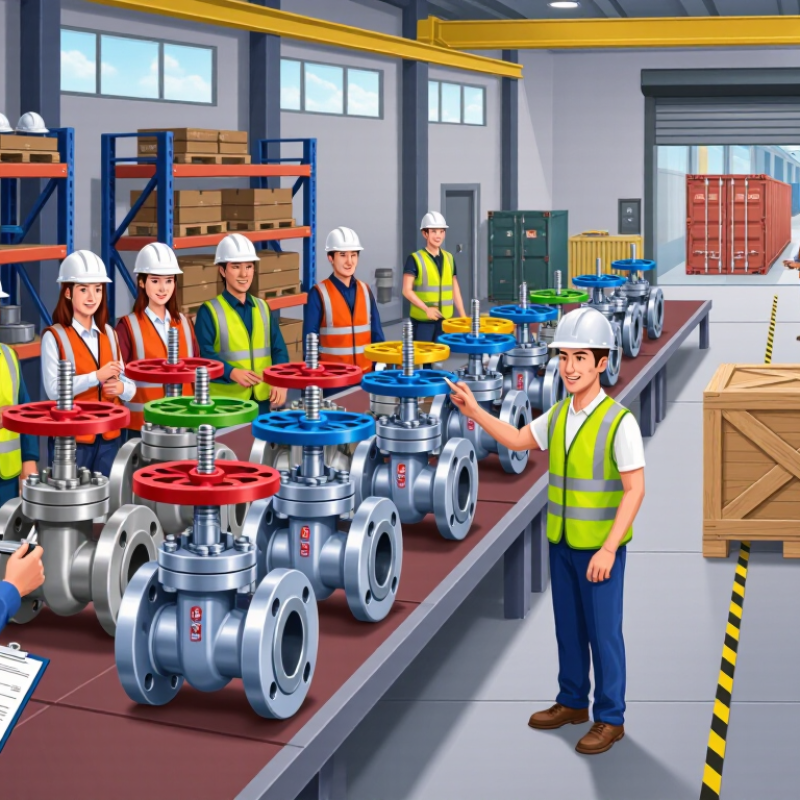
| Outside Screw and Yoke (OS&Y) with Flexible Wedge | Rising stem; the stem moves upward as the valve opens. A flexible wedge uses a one-piece disc with a controlled central flexibility. | Clear visual position indication; reduced risk of wedge binding caused by body-seat distortion; suitable for many industrial pressure services. | Requires additional installation height; exposed threads need protection and maintenance in corrosive or dirty environments. | Steam, water, hydrocarbons, power generation, refining and general process piping. | API 600; ASME B16.34; ASME B16.10; API 598. |
| Non-Rising Stem (NRS) with Resilient Wedge | The stem rotates without moving vertically. The wedge is usually metal-encapsulated or coated with an elastomeric material. | Compact vertical envelope; resilient seating can provide reliable bubble-tight shutoff for clean water service; protected stem threads. | The valve position is not directly visible from stem height; elastomer selection limits temperature and chemical compatibility. | Potable water, raw water, irrigation, fire-protection and buried or space-constrained pipelines. | AWWA C509; AWWA C515; relevant potable-water approval requirements. |
| OS&Y with Solid Wedge | A solid wedge moves between two body seats and is operated by a rising stem. | Simple and robust design; suitable for a broad range of standard shutoff duties; visible stem position. | More sensitive to thermal expansion, piping strain and body-seat alignment than a flexible wedge; may be unsuitable for severe temperature cycling. | General industrial isolation, utility lines and services with relatively stable operating temperatures. | API 600; ASME B16.34; API 598. |
| Double-Disc Parallel-Slide Gate Valve | Two parallel discs are pushed against the seats by internal springs or line pressure, depending on the design. | Low wedging forces; can accommodate certain thermal movements; useful where a full-bore, low-pressure-drop passage is required. | Not normally selected for throttling; sealing performance depends on correct orientation, pressure conditions and seat design. | Steam, boiler and process isolation duties where the design is qualified for the specified pressure and temperature range. | API 600; ASME B16.34; project-specific design and testing requirements. |
| Slab Gate Valve | A single flat gate travels between parallel seats, commonly with a through-conduit bore in pipeline designs. | Full-bore flow path; suitable for pipeline isolation and, in qualified designs, pigging operations; low turbulence when fully open. | Requires clean, compatible service and correct pressure-relief or cavity-pressure management; not intended for flow regulation. | Oil and gas transmission, gathering systems, terminals and pipeline block-valve stations. | API 6D; ISO 14313; ASME B16.34. |
| Expanding Gate Valve | The gate expands mechanically or through a cam-and-segment mechanism to create positive contact with both seats. | Provides tight mechanical isolation when correctly selected; commonly used where double-blocking capability is required by the project design. | More complex internal mechanism; higher procurement, inspection and maintenance requirements than basic wedge designs. | High-integrity isolation, wellhead, pipeline and process applications requiring specific isolation performance. | API 6D; ISO 14313; API 6FA or project fire-test requirements where applicable. |
| Knife Gate Valve | A thin plate-like gate travels through the medium and is often available with a rising or non-rising stem. | Can cut through or isolate slurries, fibrous fluids and solids-bearing media; generally compact in the flow direction. | Seat leakage, wear and flow-direction limits vary significantly by design; many models are not suitable for high-pressure services. | Pulp and paper, mining slurry, wastewater, ash handling and bulk-solids services. | MSS SP-81; EN 1171; manufacturer or project-specific slurry-service requirements. |