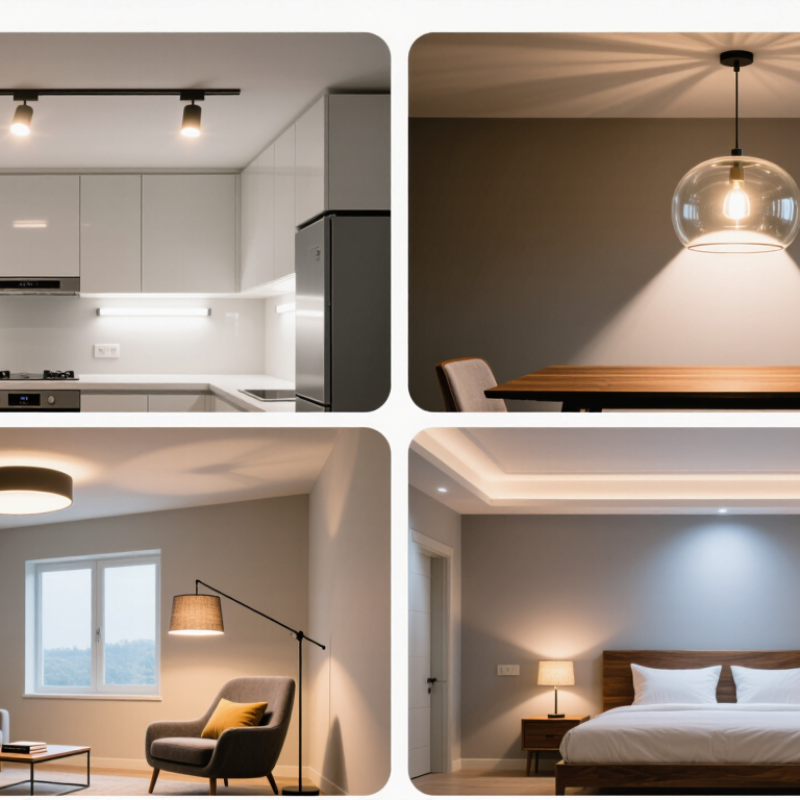
| Kitchen work areas | Recessed or surface-mounted general lighting, supplemented by under-cabinet task lights | Plan roughly 30–50 lumens per square foot for general ambient lighting; add focused task lighting where needed. | 3000–4000 K | CRI 90 or higher helps food and countertop colors appear more natural. | Choose dimmable fixtures and confirm that the LED driver and wall dimmer are listed as compatible. | Use fixtures listed for the actual installation location. Follow clearance and installation instructions, especially around insulation and enclosed housings. |
| Living room | Ceiling fixture or recessed lights combined with floor, table, or wall lamps | About 10–20 lumens per square foot for ambient lighting, with additional task light for reading. | 2700–3000 K | CRI 90 or higher is a useful target for accurate color rendering. | Dimming can help shift between general use and relaxed evening lighting; check LED and dimmer compatibility. | Use a fixture with an appropriate listing for its location and mount it according to its instructions. |
| Bedroom | Ceiling fixture or recessed lighting, with bedside reading lamps | About 10–20 lumens per square foot for ambient lighting; provide separate light for reading. | 2700–3000 K | CRI 90 or higher is recommended when color accuracy matters, such as for clothing or décor. | Use compatible dimmable lamps or fixtures for adjustable brightness; check whether the dimmer requires a minimum load. | Verify the fixture’s listing and mounting requirements, including any specified support for ceiling-mounted fixtures. |
| Bathroom vanity | Vertical lights beside the mirror or a suitable fixture above it | Approximately 1,500–4,000 lumens total at the vanity, depending on mirror size and other room lighting. | 3000–4000 K | CRI 90 or higher is especially helpful for grooming and makeup application. | Use a dimmer only if the fixture or lamp is marked dimmable and compatible with the control. | Check the fixture’s location rating and applicable local electrical requirements for its distance from tubs, showers, and sinks. |
| Shower or tub area | Recessed or surface-mounted fixture specifically designed for the installation location | Choose output to supplement bathroom lighting; avoid relying on a single fixture for the entire room. | 3000–4000 K | CRI 80 or higher is generally suitable; higher CRI may be preferred for better color distinction. | If dimming is desired, confirm the fixture, driver, and dimmer are compatible and approved for the installation. | Use a fixture marked for the applicable damp or wet location. Where it can be exposed to shower spray, verify that its label permits wet-location use. |
| Dining area | Pendant or chandelier over the table, with optional ambient lighting | About 10–20 lumens per square foot for ambient lighting; select the pendant output for the table and room size. | 2700–3000 K | CRI 90 or higher can make food and table settings look more natural. | A compatible dimmer allows adjustment for meals and general activities; verify the fixture’s dimming method before installation. | Confirm the ceiling box and mounting hardware are rated to support the fixture’s weight; follow the manufacturer’s mounting instructions. |
| Hallway or entry | Flush-mount or semi-flush ceiling fixture; wall sconces can supplement longer hallways | About 5–10 lumens per square foot for general circulation lighting. | 2700–3000 K | CRI 80 or higher is typically adequate for general circulation. | Check dimmer compatibility; occupancy or vacancy controls should also be compatible with the installed fixture. | For stairways and narrow passages, position fixtures to limit glare and shadows, and install them in accordance with local electrical requirements. |