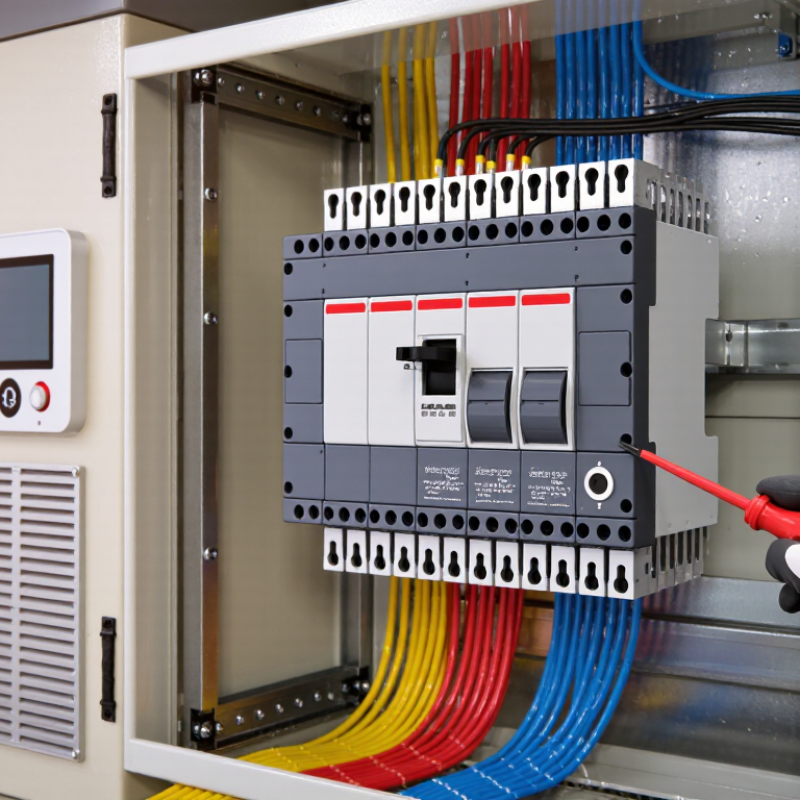
Choosing the right MCCB circuit breaker starts with verifying the applicable standards. IEC 60947-2 is widely used for low-voltage circuit breakers, but local electrical codes may add requirements. Check the breaker’s test certificate, rated voltage, frequency, breaking capacity, and enclosure classification. Do not rely on appearance. Certification markings and technical documents matter more.
Safety features should match the installation, not merely the load. Compare the continuous current rating with the calculated demand and cable capacity. Then confirm the short-circuit rating, including Icu and Ics values. Thermal-magnetic protection suits many basic systems, while electronic trip units offer more precise adjustment. Adjustable overload, instantaneous, and earth-fault protection can reduce unnecessary outages. Selective coordination also deserves attention. Otherwise, one fault may shut down an entire distribution section.
Maintenance needs are often underestimated. Keep the MCCB dry, clean, and accessible. Inspect terminals for heat discoloration, loose connections, dust, or unusual odors. Test the trip mechanism according to the manufacturer’s instructions and site risk assessment. Record results instead of trusting memory. In field inspections, a breaker may appear healthy while its connections are overheating. That detail is easy to miss. Maintenance intervals should reflect humidity, dust, vibration, switching frequency, and fault exposure. A fixed yearly schedule may be convenient, but it is not always enough. Have a qualified electrician verify isolation procedures and test equipment before servicing.