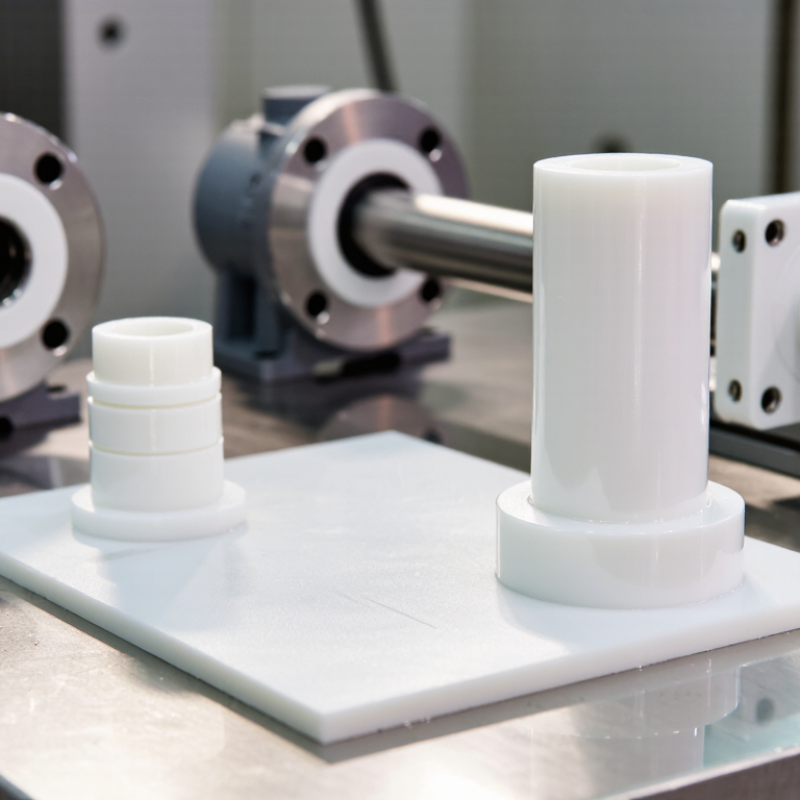
| Seals and gaskets | Sheet, cut shapes, machined rod | Broad chemical resistance and a wide service-temperature range suit many sealing duties. | Used in flanges, pump housings, and process equipment. PTFE can creep under sustained load, so design, grade, and operating conditions matter. |
| Bearings and sliding parts | Machined rod, sheet, or formed components | Low friction and non-stick behavior can help reduce sliding resistance. | Examples include guide strips, wear pads, and low-load bushings. Pure PTFE has relatively low stiffness and can wear or deform; load, speed, and mating-surface design should be checked. |
| Chemical-handling components | Rod-machined parts and sheet linings | PTFE resists many corrosive chemicals and has low surface adhesion. | Used for valve seats, pump parts, and protective linings. Compatibility must be verified for the specific chemical, concentration, temperature, and pressure. |
| Electrical insulation | Rod, sheet, spacers, and machined supports | High electrical resistivity and useful insulating performance support electrical and electronic applications. | Examples include insulating blocks, standoffs, and component supports. Electrical ratings depend on thickness, temperature, and service conditions. |
| Food and laboratory equipment | Sheet, rod-machined parts, and liners | A non-stick surface and resistance to many cleaning chemicals can be useful in equipment design. | Possible uses include guides, liners, and handling components. Confirm that the selected material grade and finished part meet applicable food-contact or laboratory requirements. |
| Thermal and process equipment | Sheet gaskets, spacers, and machined parts | PTFE retains useful properties across a broad temperature range; many grades are used up to about 260°C (500°F) in continuous service. | Actual limits vary by grade, design, load, and environment. Avoid overheating, and follow the material supplier’s technical data for the intended application. |