Consumer electronics are increasingly evolving toward slimmer designs, longer product lifecycles, and more user-centered experiences, making material selection an important factor in product differentiation.
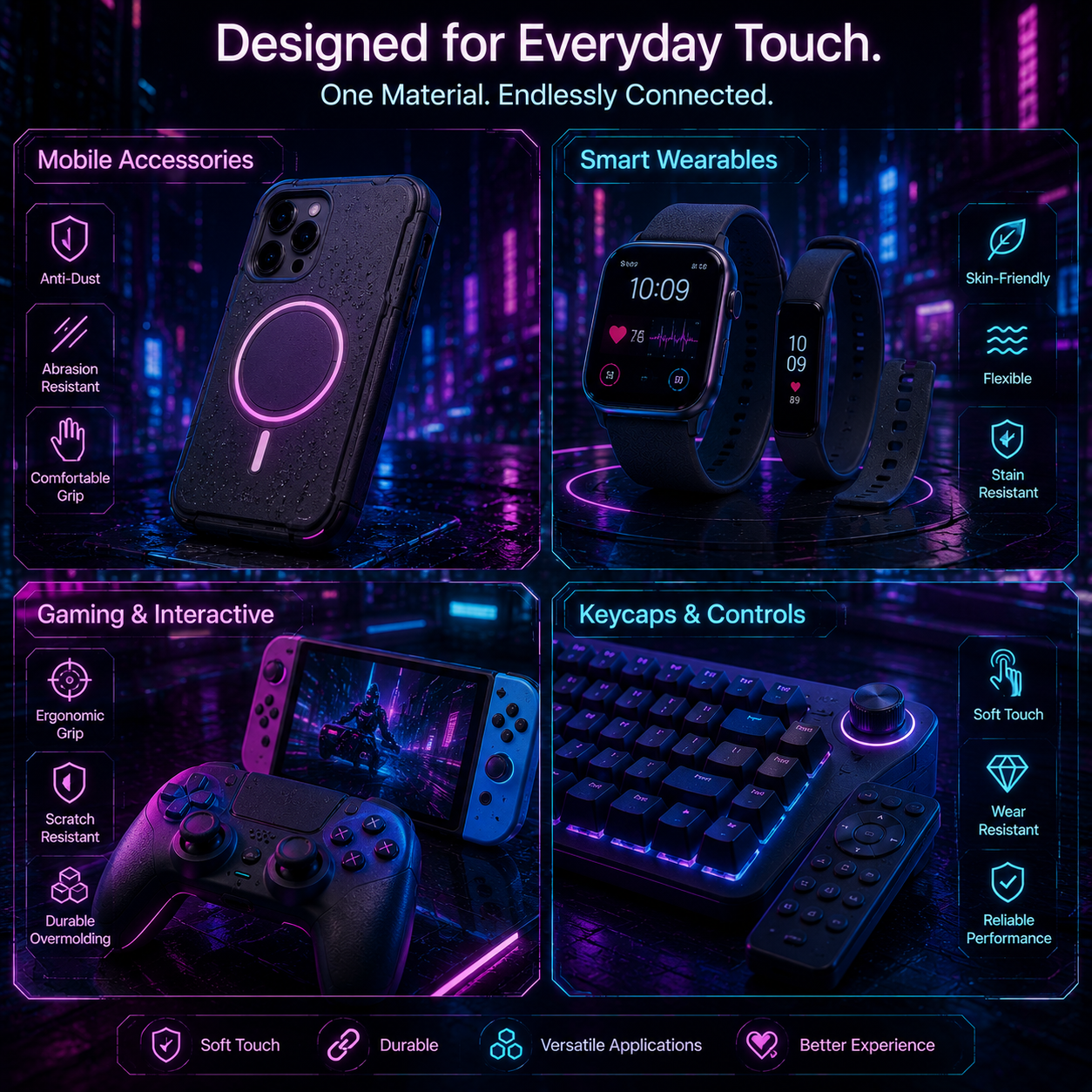
From smartphone accessories and wearable devices to gaming peripherals and portable electronics, manufacturers are facing growing pressure to balance premium tactile comfort, durability, sustainability, and efficient processing. Traditional soft-touch materials such as TPE, TPU, and silicone rubber may provide some of these benefits, but achieving all of them simultaneously can still present challenges.
In many high-contact electronic products, material surfaces may gradually become sticky, attract dust, or show visible wear after prolonged use. At the same time, consumers increasingly expect devices to maintain a clean appearance, comfortable grip, and consistent tactile experience throughout their service life.
These evolving requirements are encouraging manufacturers to explore advanced soft-touch elastomer solutions that could potentially combine silicone-like comfort with thermoplastic processing efficiency.
Emerging Trends in Consumer Electronics Material Design
Several market trends appear to be shaping the development of next-generation electronic materials:
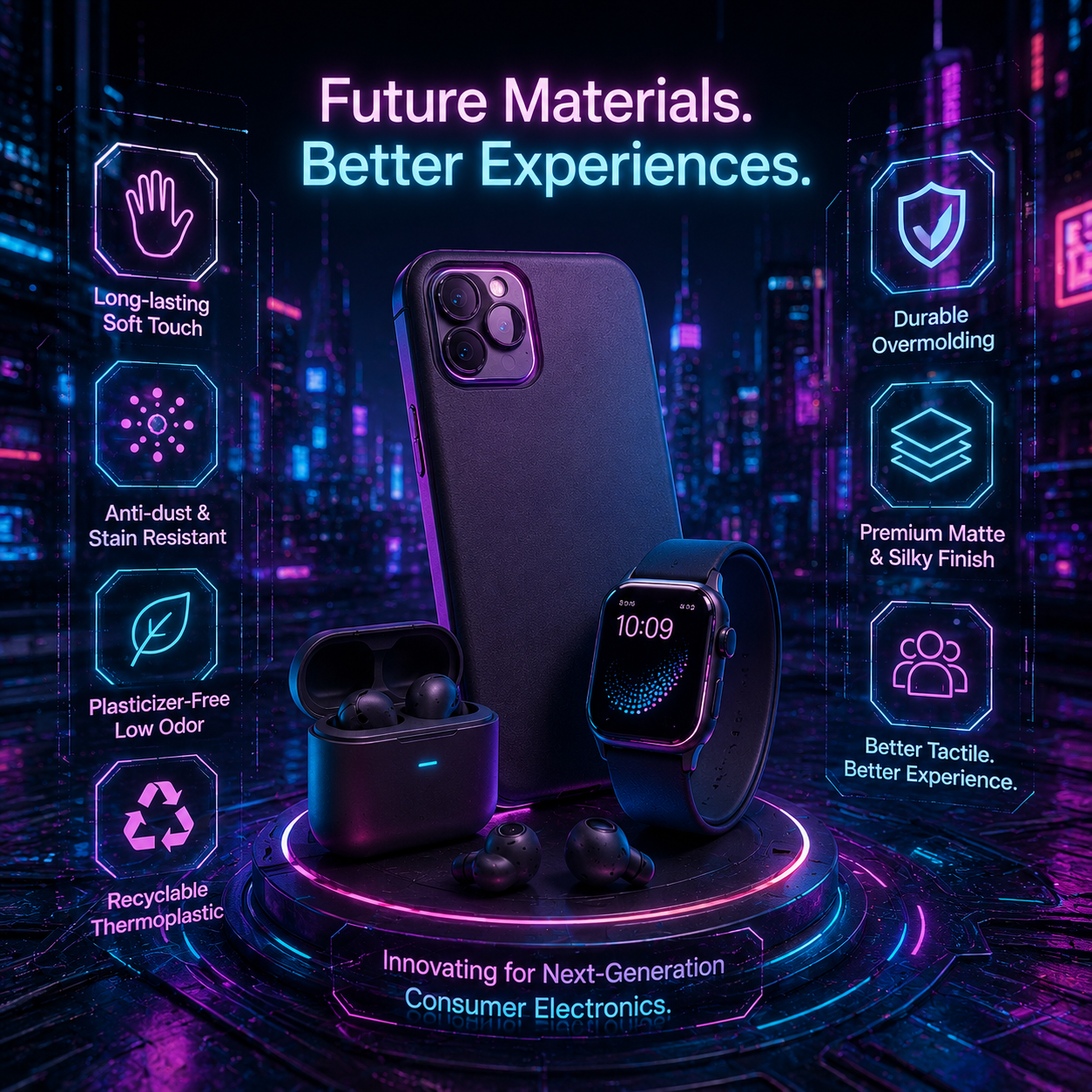
Demand for long-lasting soft-touch surfaces
Increased focus on anti-dust and stain-resistant materials
Preference for plasticizer-free and low-odor formulations
Growing adoption of recyclable thermoplastic materials
Demand for durable overmolding solutions in portable devices
Interest in premium matte and silky surface finishes
As electronic products become more personal and frequently handled, material performance is increasingly evaluated not only by mechanical properties but also by tactile quality and long-term user experience.
This trend may create opportunities for innovative thermoplastic silicone-based elastomers designed specifically for consumer-facing applications.