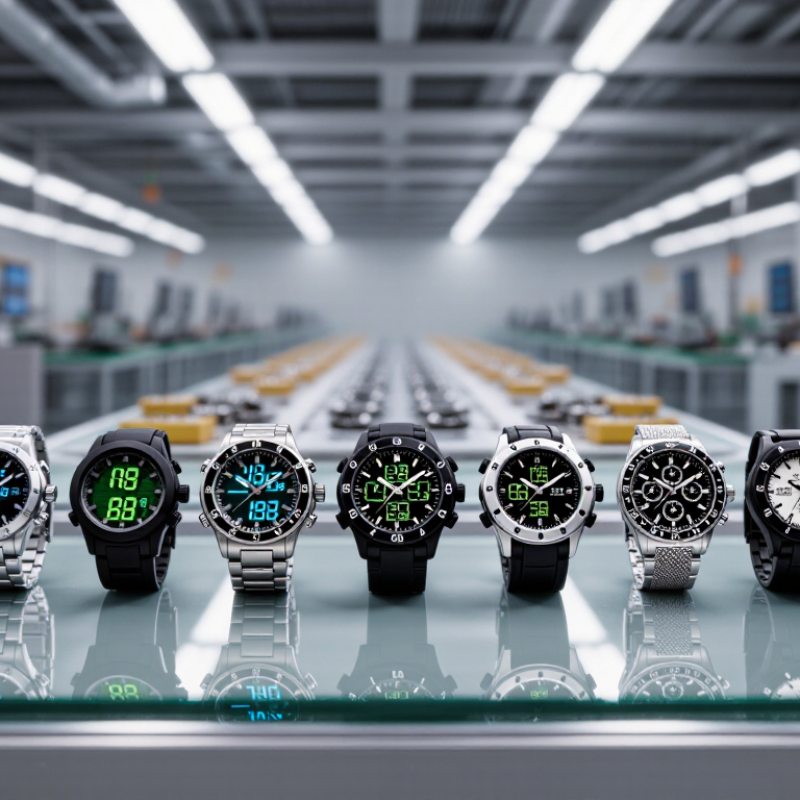
How Digital Watches Are Designed and Manufactured
A digital watch begins with use conditions, not a screen graphic. Designers define readability, water exposure, impact risk, battery life, and target cost. Case dimensions are then tested against actual wrist movement; a watch that looks balanced in a rendering may press uncomfortably against the wrist. Small detail, real consequence.
Engineers select the display, quartz timing circuit, buttons, battery, and sealing structure as one system. A brighter backlight can improve visibility but drain power faster. The circuit board is assembled, programmed, and checked for timing accuracy before fitting into the case. Gaskets and button shafts need careful tolerances: even a slight mismatch can weaken moisture protection. Testing typically includes button-cycle, drop, temperature, and water-resistance checks, with results tied to defined test conditions.
Demand shapes production planning, but market figures need careful interpretation. IDC’s Worldwide Quarterly Wearable Device Tracker reported 534.6 million wearable-device shipments in 2024, up 6.1 percent year over year; that category includes products beyond digital watches. For global buyers, this broader signal supports checking a manufacturer’s capacity, component traceability, inspection records, and ability to keep specifications consistent across production batches. Sample approval matters. So does retesting after a component change. A polished prototype is not proof of stable mass production.