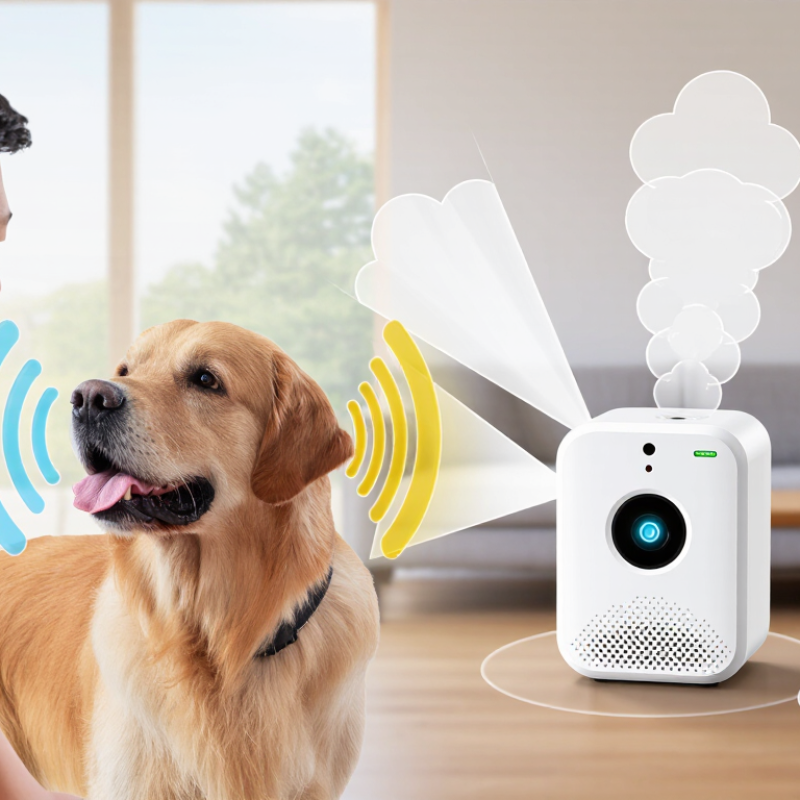
| Ultrasonic Bark-Activated Device | A built-in microphone recognizes the sound pattern or volume of a bark. | It emits a high-frequency sound when barking is detected. The sound may be audible to dogs but is generally difficult for most adults to hear. | Indoor rooms, yards, or areas where barking needs to be interrupted without physical contact. | Non-contact operation; can be used from a distance; usually does not affect people in the same way as an audible alarm. | Dogs differ in hearing sensitivity and temperament, so results are inconsistent. Walls, distance, competing sounds, and multiple dogs can reduce accuracy. |
| Citronella or Scent-Spray Collar | A microphone, vibration sensor, or a combination of both detects barking. | The device releases a small burst of scented spray near the dog’s muzzle after a detected bark. | Short-term interruption of repeated barking, particularly when the dog is wearing the collar under supervision. | Does not use an electric shock; the visible spray can provide immediate feedback for some dogs. | Some dogs ignore or become accustomed to the spray. It requires refills, may be triggered by another dog, and can cause stress or confusion if not paired with training. |
| Vibration Bark Collar | Usually uses a microphone, throat vibration sensor, or both to identify barking from the wearing dog. | It delivers a vibration, often with adjustable intensity or progressive levels, when barking is detected. | Dogs that respond to tactile interruption and can be monitored while wearing the device. | No spray or electrical stimulation; some models provide adjustable settings and automatic shutoff features. | Vibration can still startle or distress sensitive dogs. Fit, coat thickness, false detection, and prolonged wear can affect safety and performance. |
| Static-Stimulation Bark Collar | A microphone, vibration sensor, or dual-sensor system detects barking from the dog wearing the collar. | It delivers an electrical stimulus when barking is detected, typically with adjustable or progressive levels. | Some owners use it for persistent barking, but professional guidance and careful assessment are important. | May interrupt barking quickly in some dogs and can include bark recognition or automatic safety shutoff. | It may cause fear, anxiety, pain, or an association between barking and nearby people, animals, or situations. Positive-reinforcement training and environmental management are generally preferred first. |
| Indoor Sound-Activated Unit | A room-mounted microphone detects sound intensity or a bark-like sound pattern. | Depending on the model, it plays an audible tone, emits ultrasound, or activates a warning sound after barking. | Apartments, rooms, crates, or other fixed indoor locations. | No collar is required; it can monitor a defined area and is easy to reposition. | It may respond to household noises, television, or another dog. It cannot identify the reason for barking or teach an alternative behavior by itself. |
| Remote Manual Trainer | It does not automatically detect barking; the handler activates it using a handheld control. | The handler may deliver a tone, vibration, spray, or another selected signal at a chosen moment. | Training situations where a person can observe the dog and immediately reinforce quiet behavior. | Allows timing and context to be controlled by a person rather than relying entirely on automatic sound detection. | It requires consistent handling and training knowledge. Incorrect timing or aversive use can increase fear, frustration, or unwanted behavior. |