| 1 | Confirm the Intended Use | Identify whether the bench is designed for home training, light commercial use, or frequent commercial use. Check the intended exercise types, including pressing, dumbbell work, abdominal exercises, and rack-compatible training. | Choose a bench whose stated user and equipment capacity exceeds the planned routine. For commercial environments, request evidence of repeated-use testing rather than relying only on a visual inspection. | A clearly defined use category reduces premature wear and helps users select an appropriate level of padding, adjustment, and frame strength. | Request the technical specification sheet, test scope, warranty terms, and instructions showing the permitted exercises and operating conditions. |
| 2 | Check the Total Load Rating | Review the maximum combined load, which normally includes the user’s body weight plus weights being lifted. Verify whether the rating applies to a flat, incline, or decline position. | Do not compare load figures unless they use the same definition. Ask for separate limits for the user, the bench, attachments, and any rack or spotter component. | A suitable safety margin helps reduce frame fatigue, excessive movement, and adjustment-pin stress during dynamic exercises. | Look for documented static-load and durability-test results, test dates, sample identification, and a clear explanation of the test method. |
| 3 | Evaluate Stability and Footprint | Inspect the base width, support-point arrangement, rubber feet, frame geometry, and resistance to rocking during pressing or repositioning. | Compare the assembled length, width, height, folded dimensions, and product weight with the available training and storage area. Confirm that all contact feet sit evenly on the intended floor surface. | Wide, level contact points generally improve stability. Replace worn or hardened rubber feet to prevent slipping and floor damage. | Request assembly drawings, dimensional tolerances, anti-slip-foot specifications, and stability-test records where available. |
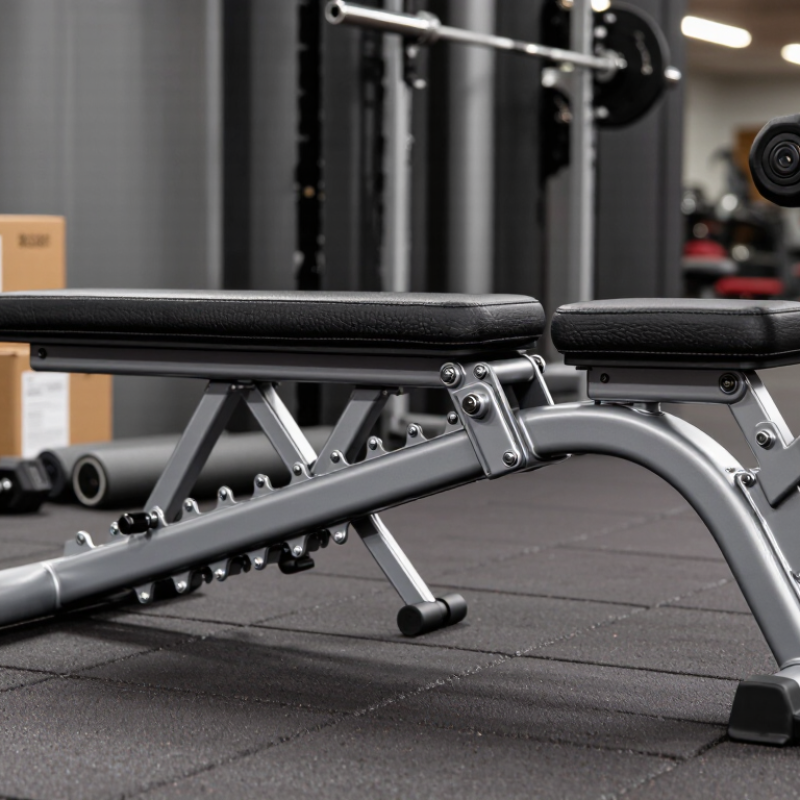
| 4 | Review Adjustment Quality | Examine the backrest and seat adjustment mechanism, hinge design, locking pins, ladder positions, and the ease of changing angles without tools. | Adjustment points should lock positively with no excessive play. Confirm the supported angle range, minimum and maximum positions, and whether the bench remains stable at each position. | Keep hinges and locking interfaces free from dust and inspect them regularly for deformation, loose hardware, or incomplete engagement. | Ask for adjustment-cycle testing, pin shear or retention information, replacement-part availability, and clear user instructions. |
| 5 | Prioritize Comfort and Ergonomics | Assess pad firmness, surface texture, shoulder clearance, seat-to-backrest transition, edge shape, and support across the user’s back and hips. | Request the pad length, width, thickness, density, and angle dimensions. The upholstery should support stable positioning without excessive sinking or sliding. | Use a wipeable, non-absorbent cover with sealed or well-finished seams. Avoid harsh solvents that can damage vinyl or synthetic leather. | Ask for upholstery material specifications, abrasion or tear testing when available, flame-performance information where required, and chemical-resistance guidance. |
| 6 | Inspect Frame and Weld Quality | Check tube consistency, weld continuity, sharp edges, holes, fasteners, surface preparation, and signs of distortion or incomplete coating. | Prefer clean, continuous welds with no visible cracks, major undercutting, exposed sharp edges, or excessive spatter. Confirm the steel grade and tube dimensions stated in the specification. | Keep the frame dry, remove sweat promptly, and inspect welds and fasteners for corrosion or loosening, especially in humid or coastal locations. | Request material declarations, coating specifications, welding quality procedures, inspection records, and corrosion-resistance test results when relevant to the market. |
| 7 | Verify Corrosion and Finish Durability | Review the coating system, surface preparation, exposed metal areas, fastener finish, and resistance to sweat, cleaning products, humidity, and transport abrasion. | For high-use or humid locations, ask whether the finish has been evaluated using a recognized corrosion-test method such as neutral salt spray. Test duration should be stated with the result and failure criteria. | Use a mild detergent and soft cloth. Do not allow moisture to remain around joints, bolt heads, adjustment holes, or damaged coating. | Request coating thickness information, salt-spray or equivalent test reports, batch traceability, and documented touch-up procedures. |
| 8 | Check Applicable Certifications and Standards | Determine which rules apply in the destination market and whether the product is classified as stationary training equipment, strength-training equipment, or another equipment category. | Ask whether the bench has been assessed against applicable parts of the EN ISO 20957 series or equivalent national standards. Requirements may differ by product type, intended use, and market. | Standards compliance should support safe instructions, warning labels, stability, strength, adjustment, and pinch-point control; it does not replace routine inspection. | Request the certificate or declaration, issuing body, standard edition, product model or family covered, test laboratory, and validity details. Avoid accepting an undated logo alone as proof. |
| 9 | Assess Safety Details | Inspect pinch points, exposed threads, sharp corners, moving joints, transport handles, wheels, end caps, and areas where fingers or clothing could become trapped. | All locking devices should be easy to identify and fully engage. Safety labels should be durable, legible, and supplied in the languages required for the destination market. | Train users to verify adjustment locks before loading the bench. Establish a routine inspection schedule for pins, hinges, bolts, feet, upholstery, and frame damage. | Request the risk assessment, user manual, warning-label artwork, assembly instructions, and records showing corrective action for identified safety issues. |
| 10 | Compare Serviceability and Product Consistency | Review spare parts, packaging, assembly time, instruction quality, repair procedures, batch control, and the supplier’s ability to maintain consistent dimensions and materials. | Prioritize replaceable upholstery, feet, pins, bolts, wheels, and adjustment components. Request a parts list with part numbers, lead times, minimum order quantities, and expected service life where available. | A modular design can reduce downtime and disposal costs. Keep an inspection log and retain the manual, batch number, and purchase records for future service. | Ask for pre-shipment inspection criteria, production batch records, final inspection reports, packaging-drop test information, and a written warranty with exclusions clearly stated. |