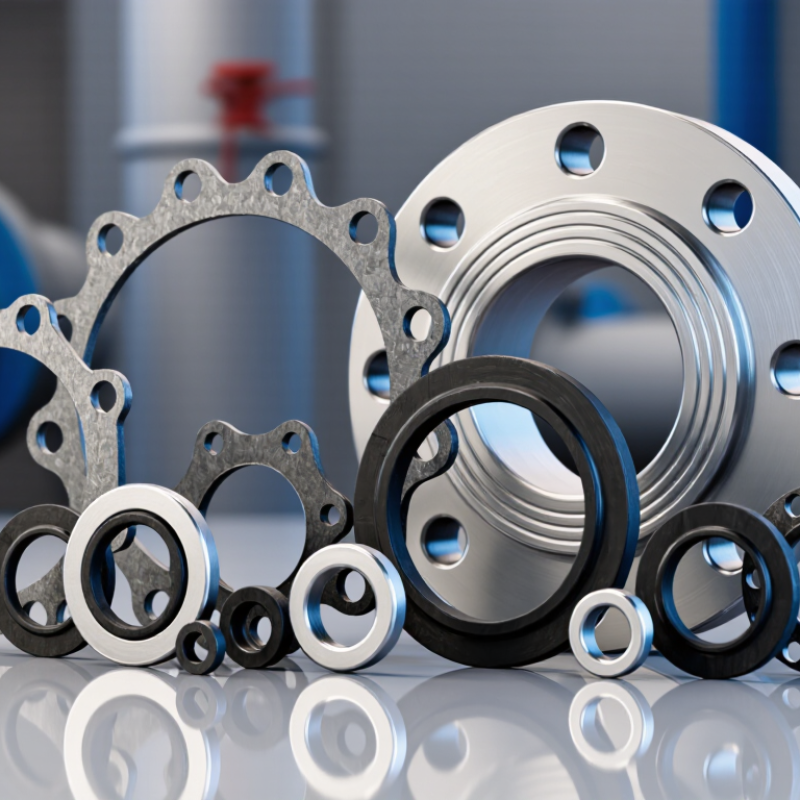
Elastomeric ring
Examples: NBR, EPDM, FKM, silicone | Compresses and elastically deforms to fill small gaps between mating surfaces. | Can provide effective sealing with relatively low closing force; useful for static and, in suitable designs, dynamic seals. | Chemical compatibility, temperature, pressure, and compression set vary by elastomer formulation. Some fluids cause swelling or degradation. | Pumps, valves, pipe connections, hydraulic and pneumatic equipment. | Select the compound for the actual fluid and service conditions. Check groove dimensions, squeeze, surface finish, and extrusion risk. |
| PTFE ring or sheet gasket | A chemically resistant polymer conforms to flange irregularities under compression. | Broad chemical resistance and low friction; suitable for many corrosive services. | PTFE can creep and relax under sustained load, potentially reducing contact stress and causing leakage if the joint is not designed appropriately. | Chemical-processing equipment, piping, and equipment handling compatible fluids. | Account for creep, bolt-load retention, flange condition, and the specific PTFE construction; filled and expanded grades behave differently. |
| Flexible graphite gasket | Compressible graphite conforms to surface imperfections and maintains contact across the joint. | Often used in demanding thermal service and can accommodate some flange movement when correctly installed. | Oxidizing conditions can limit service life at elevated temperatures. Handling, reinforcement, and media compatibility matter. | Industrial piping, heat exchangers, and equipment operating at elevated temperatures. | Check whether reinforcement is needed, and follow the gasket supplier’s requirements for flange loading, installation, and service environment. |
| Compressed fiber sheet gasket | Fibers and binder compress together to conform to flange faces and block leakage paths. | Available in formulations suited to a range of common fluids and flange conditions; can be cut into many shapes. | Performance depends on the fiber, binder, fluid, temperature, and compression. Not every grade is suitable for every service. | General industrial flanges, covers, and equipment joints. | Use the grade-specific data sheet. Consider bolt load, flange flatness, gasket thickness, and whether the joint may need retightening. |
| Cork-rubber sheet gasket | A resilient cork-and-elastomer composite compresses to seal relatively low-pressure joints. | Compressible and conformable; often useful where the mating surfaces are not perfectly smooth. | Generally not intended for high-pressure or high-temperature service; fluid resistance depends on the elastomer binder. | Covers, housings, and low-pressure equipment joints. | Avoid excessive compression that can damage the material. Confirm compatibility with the fluid and the required service conditions. |
Metal ring gasket
Examples: solid metal, spiral-wound, ring-joint | Uses metal deformation, winding, or a shaped contact profile to create a seal under substantial clamping force. | Can suit high-pressure or high-temperature joints when the gasket, flange, and bolting are designed as a compatible system. | Usually needs controlled installation and adequate seating load. Reuse may be unsuitable, and surface damage can compromise sealing. | Process piping, pressure equipment, and other engineered flange connections. | Match the gasket style and material to the flange geometry. Follow specified bolt-up procedures and inspect sealing surfaces. |